
Applesauce Pork Tenderloin is a flavorful oven-baked main dish with juicy seared pork, a glossy apple-Dijon glaze, fresh rosemary, honey, and brown sugar. It is simple enough for weeknights yet polished enough for a relaxed dinner with guests.
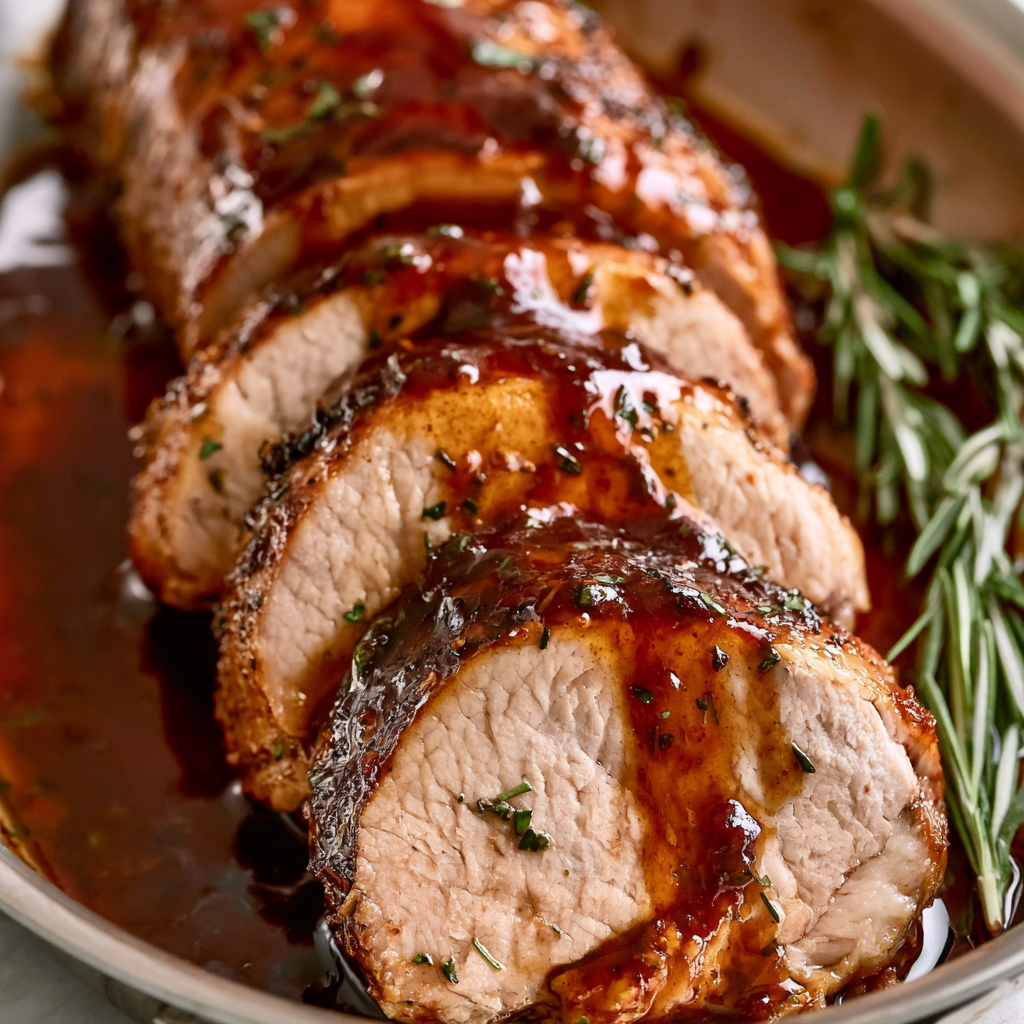
If you want a pork dinner that feels comforting without requiring complicated prep, this is a great one to keep in rotation. The tenderloin cooks mostly in the oven, while the skillet does the important work of creating a deeply browned exterior before baking.
The glaze brings together several flavors that naturally complement pork. Unsweetened applesauce provides mellow fruitiness, Dijon adds tang, and honey and brown sugar help the mixture become rich and caramelized as it cooks. Fresh rosemary keeps all that sweetness balanced with a savory, aromatic note.
Another advantage is that the sauce and pork cook together in the same oven-safe skillet. Once the tenderloin is seared, you simply coat it with the applesauce mixture and transfer everything to the oven. After resting, the pork slices neatly and can be finished with plenty of the thickened glaze from the pan.
Applesauce Pork Tenderloin Ingredients
You only need a short list of familiar ingredients to build plenty of flavor in this dish.
- Pork tenderloin: A lean, tender cut that cooks quickly and absorbs the flavors of the apple and rosemary glaze especially well.
- Unsweetened applesauce: Forms the fruity base of the glaze without making the finished sauce excessively sweet.
- Dijon mustard: Adds acidity and a sharp savory note that balances the applesauce, honey, and brown sugar.
- Brown sugar: Helps deepen the sweetness of the glaze and encourages a darker, more caramelized finish during baking.
- Honey: Adds gentle sweetness while giving the glaze a smooth, glossy consistency.
- Fresh rosemary: Provides an earthy, fragrant flavor that works naturally with both pork and apples.
- Neutral vegetable oil: Allows the tenderloin to sear over higher heat without adding a competing flavor.
- Salt and black pepper: Season the pork itself so every slice has flavor beneath the glaze.

Cooking Steps
STEP 1: Preheat your oven to 350°F and prepare the glaze. Whisk the unsweetened applesauce with Dijon mustard, packed brown sugar, honey, and finely chopped fresh rosemary until the mixture looks smooth and evenly combined. Chopping the rosemary finely helps distribute its flavor throughout the sauce instead of leaving concentrated pieces.
STEP 2: Prepare the pork for searing. Blot the tenderloin thoroughly with paper towels, paying attention to the sides and ends. Removing excess surface moisture makes it easier for the meat to develop a golden crust. Season all sides with salt and freshly ground black pepper.
STEP 3: Heat the vegetable oil in a large oven-safe skillet over medium-high heat. Once the oil is hot and shimmering, carefully add the pork. Let the tenderloin remain undisturbed for about 2 to 3 minutes before turning it. Giving the meat time to sit against the hot pan is what creates the browned exterior.
STEP 4: Continue turning the tenderloin until the main surfaces are golden, then briefly sear each end for about 1 minute. You are not trying to cook the pork completely at this stage. The goal is simply to build color and flavor before the tenderloin goes into the oven.
STEP 5: Spoon or pour the prepared applesauce glaze over the seared pork, coating the top and sides generously. Transfer the entire oven-safe skillet to the preheated oven and bake for about 30 to 40 minutes. Begin checking the thickest portion toward the lower end of the cooking range so the lean pork does not become unnecessarily dry.
STEP 6: Remove the skillet from the oven once the pork has reached the desired internal temperature for this preparation. Let the tenderloin rest for 10 minutes before slicing. Cut it crosswise into pieces about 1/2 inch thick, then spoon the warm, caramelized applesauce mixture from the skillet over each serving.
What to Serve with Pork Tenderloin and Applesauce
This sweet and savory pork works especially well with simple side dishes that can catch some of the extra glaze.
- Creamy mashed potatoes: Their mild flavor makes a great base for the rosemary and applesauce pan sauce.
- Roasted vegetables: Carrots, Brussels sprouts, green beans, or roasted squash provide a savory contrast to the sweeter glaze.
- Rice or buttered noodles: Either option turns the pork into a more substantial dinner while giving you something to serve underneath the extra sauce.
Can I prepare the applesauce glaze ahead?
Yes. You can whisk the applesauce, Dijon mustard, honey, brown sugar, and chopped rosemary together earlier in the day and refrigerate the mixture in a covered container.
Give it a good stir before pouring it over the seared pork. Preparing the glaze ahead is especially useful when you want to reduce dinner-time prep.
Helpful Tips
- Dry the pork before searing. A dry surface browns much more effectively than damp meat, so take a moment to blot the tenderloin thoroughly.
- Avoid constantly moving the pork. Leave each side in contact with the skillet long enough to form a proper golden crust before turning.
- Check the temperature near the end. Pork tenderloin is quite lean, so keeping an eye on it during the final minutes helps preserve its juicy texture.

Can I use sweetened applesauce instead?
Unsweetened applesauce is preferable because the glaze already contains both brown sugar and honey. Using sweetened applesauce can make the finished sauce noticeably sweeter.
If sweetened applesauce is all you have, you may want to reduce some of the added sweetener to keep the apple, mustard, and rosemary flavors balanced.
Keeping Leftovers Fresh
Allow leftover pork to cool before transferring it to a covered container. Keep the sliced tenderloin with some of the applesauce glaze so the meat stays moist while refrigerated. Leftovers are best used within about 3 to 4 days.
For reheating, place the sliced pork and a spoonful of glaze in a covered skillet over low heat until warmed through. You can also reheat individual portions gently in the microwave. Short intervals work better than prolonged heating because tenderloin can dry out when reheated too aggressively.
For longer storage, freeze the cooked and cooled pork in an airtight freezer-safe container for up to about 2 to 3 months. Include some glaze with the meat before freezing, then thaw it in the refrigerator before reheating.
How do I keep pork tenderloin juicy?
The two most important steps are monitoring the pork toward the end of baking and allowing it to rest before slicing.
Because tenderloin is lean, extending the baking time unnecessarily can quickly affect its texture. The 10-minute rest is also important because it allows the juices inside the meat to settle before you cut into it.
Can I make this without an oven-safe skillet?
Yes. Sear the pork in a regular heavy skillet as directed, then transfer it to an oven-safe baking dish.
Pour the applesauce glaze over the browned tenderloin before placing the dish in the oven. You may lose a little of the convenience of a one-pan preparation, but the overall cooking method remains essentially the same.
The finished pork should have a well-browned exterior, a tender interior, and plenty of thick apple-rosemary glaze to spoon over the slices. The combination of fruity applesauce, sharp Dijon, rosemary, honey, and caramelized brown sugar makes this an especially useful main course when you want familiar ingredients to feel a little more special.
Applesauce Pork Tenderloin
Ingredients
For the Pork Tenderloin
- 2 lb pork tenderloin brought to room temperature before cooking
- 1/4 tsp freshly ground black pepper
- 2 tbsp neutral vegetable oil such as canola
- 1/2 tsp salt
For the Applesauce Glaze
- 3 tbsp Dijon mustard
- 1 cup unsweetened applesauce
- 2 fresh rosemary sprigs finely chopped
- 1/4 cup firmly packed brown sugar
- 2 tbsp honey
Instructions
- Preheat the oven to 350°F.
- In a bowl, thoroughly whisk together the unsweetened applesauce, packed brown sugar, Dijon mustard, honey, and finely chopped rosemary until the mixture is evenly blended.
- Blot the pork tenderloin thoroughly with paper towels to remove surface moisture, which helps create a well-browned exterior during searing.
- Season the tenderloin evenly with the salt and freshly ground black pepper, covering the sides and ends as well as the main surface.
- Pour the vegetable oil into a large oven-safe skillet and heat it over medium-high heat until the oil begins to shimmer.
- Carefully add the seasoned pork tenderloin. Sear it without unnecessary movement for approximately 2–3 minutes per side, allowing a golden-brown crust to develop over the exterior.
- Sear each end for about 1 additional minute so the tenderloin develops an evenly caramelized surface.
- Pour the prepared applesauce mixture over the browned pork tenderloin, spreading the glaze so it coats the top and sides evenly.
- Place the oven-safe skillet in the preheated oven and bake at 350°F for 30–40 minutes. Cook until a meat thermometer inserted into the thickest portion of the tenderloin registers 155°F.
- Begin checking the internal temperature roughly 5 minutes before the expected cooking time is complete to help prevent the tenderloin from becoming overcooked.
- As the pork bakes, the applesauce mixture will reduce and lightly caramelize, forming a glossy, deep-colored coating around the meat.
- Remove the skillet from the oven and allow the pork tenderloin to rest for 10 minutes before cutting it. This resting period gives the juices time to redistribute throughout the meat.
- Cut the tenderloin crosswise into slices approximately 1/2 inch thick. Spoon the caramelized applesauce glaze from the skillet over the sliced pork before serving.
Notes
Finely chopping the fresh rosemary helps distribute its flavor more evenly throughout the glaze.
Unsweetened applesauce keeps the glaze balanced while the brown sugar and honey provide sweetness and a glossy finish.
Leaving the pork undisturbed while each surface sears encourages more consistent browning.
Pork tenderloin can become dry when overcooked, so monitoring its internal temperature near the end of baking is especially important.