
This Anti-Inflammatory Turmeric Chicken Soup is a cozy, one-pot meal with tender chicken, turmeric, aromatic vegetables, coconut milk, and fresh parsley. It’s creamy without feeling heavy, practical for meal prep, and ready in about an hour.
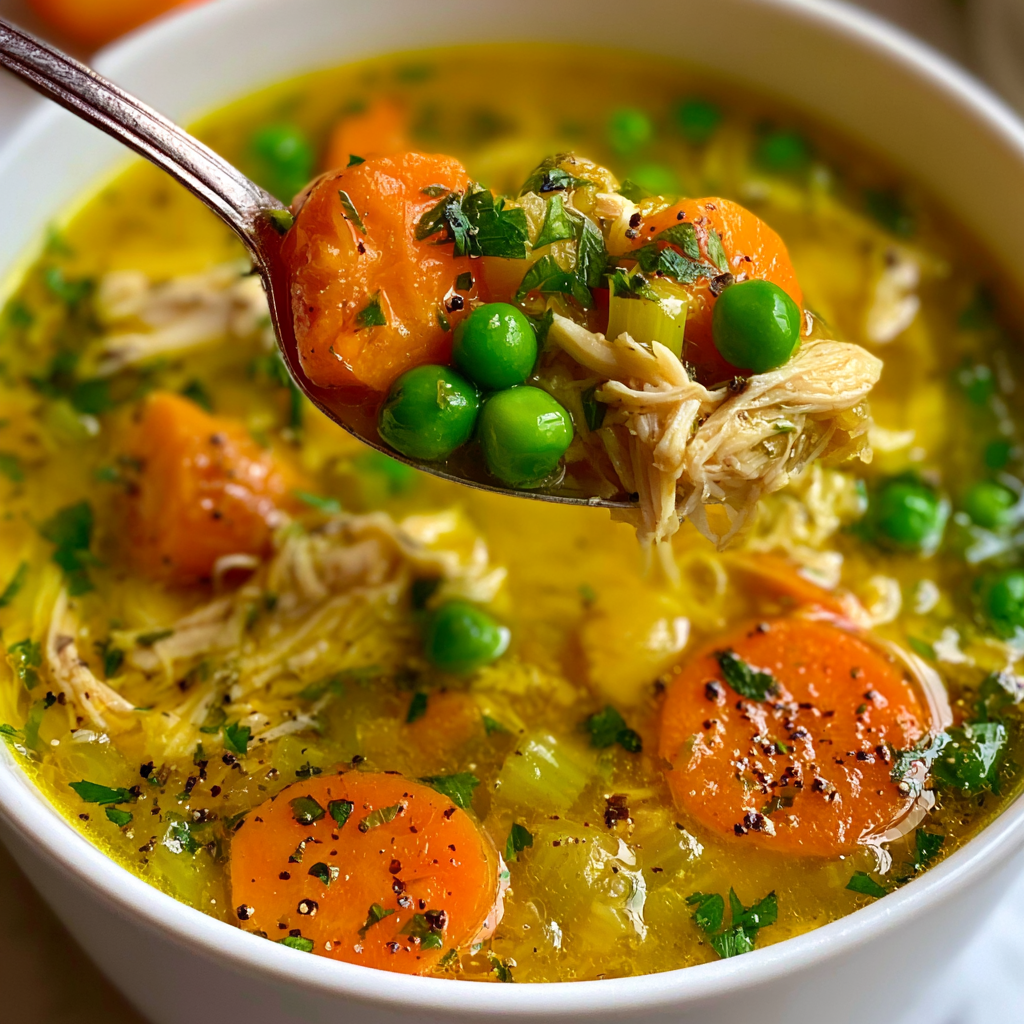
When you want a comforting soup that still feels bright and satisfying, this is a great one to keep in your rotation. Onion, leek, carrots, and celery cook slowly in olive oil until softened and lightly caramelized, giving the broth much more depth than simply simmering everything together.
Turmeric and poultry seasoning add warm, savory flavor, while coconut milk rounds out the broth with a smooth, creamy finish. The chicken cooks directly in the soup, so there is no separate pan to clean and its juices become part of the broth.
You can use either chicken thighs or breasts depending on what you have available. Finish the pot with parsley and optional peas, and you have a colorful, hearty chicken soup that works especially well for weeknight dinners, make-ahead lunches, or a warming meal on a cool day.
Anti-Inflammatory Turmeric Chicken Soup Ingredients
Boneless skinless chicken provides the main protein. Chicken thighs stay especially tender during simmering, while chicken breasts give you a leaner, slightly firmer result.
Chicken broth forms the savory base of the soup and gives the vegetables and seasonings plenty of flavor to build on.
Coconut milk adds richness and creates the smooth, creamy broth without requiring dairy.
Ground turmeric gives the soup its distinctive golden color and earthy, gently warming flavor.
Yellow onion creates the first layer of savory sweetness as it softens in the olive oil.
Leek adds a mild onion flavor that becomes soft and mellow after the longer sauté.
Carrots bring subtle sweetness, color, and texture to the finished soup.
Celery contributes its familiar savory flavor and balances the sweeter carrots and coconut milk.
Fresh garlic intensifies the aromatic base and pairs naturally with turmeric and poultry seasoning.
Poultry seasoning adds a convenient blend of herbs that complements both the chicken and vegetables.
Olive oil helps the vegetables soften and lightly caramelize before the liquid ingredients are added.
Fresh parsley brightens the creamy broth just before serving.
Frozen peas are optional, but they add extra color and a tender bite without requiring additional preparation.
Kosher salt and black pepper bring all the flavors together and should be adjusted to suit the saltiness of your chicken broth.

Cooking Steps
STEP 1: Heat the olive oil in a large soup pot over medium heat. Add the diced onion, sliced leek, carrots, celery, and 1 teaspoon of kosher salt. Cook for about 14 to 16 minutes, stirring occasionally, until everything is tender and the vegetables have started developing a little color.
STEP 2: Add the roughly chopped garlic, ground turmeric, and poultry seasoning. Stir continuously for another 2 to 3 minutes. Briefly cooking the spices in the oil helps deepen their flavor and keeps the finished broth from tasting flat.
STEP 3: Pour in the chicken broth and coconut milk. Stir well while scraping the bottom of the pot so any flavorful browned bits from the vegetables become incorporated into the broth. Add the raw chicken, making sure the pieces are mostly submerged.
STEP 4: Partially cover the pot and reduce the heat so the soup reaches a gentle simmer rather than a hard boil. Cook for approximately 15 to 20 minutes, or until the chicken is completely cooked through and the vegetables are tender.
STEP 5: Transfer the chicken to a cutting board and let it rest briefly until it is comfortable to handle. Shred the meat with two forks for a rustic texture, or cut it into bite-size pieces if you prefer more defined pieces of chicken.
STEP 6: Return the chicken to the pot. Stir in the frozen peas, if using, along with the chopped fresh parsley. Simmer gently for about 5 more minutes so the chicken reheats and the peas become tender.
STEP 7: Taste the broth before adding the remaining seasoning. Add black pepper and additional kosher salt as needed. Keep the soup warm over low heat until you are ready to serve, avoiding a vigorous boil.
Recipe Tips
- Give the vegetables enough time to soften. The longer initial sauté is important because it builds the savory foundation of the soup before the broth is added.
- Keep the heat gentle after adding coconut milk. A slow simmer helps maintain a smoother-looking broth and cooks the chicken more gently.
- Season at the end as well as the beginning. Chicken broth varies considerably in saltiness, so tasting the completed soup is the most reliable way to decide how much additional salt it needs.
What to Serve with Turmeric Chicken Soup
A piece of warm crusty bread is one of the simplest pairings. It is especially useful for soaking up the creamy coconut and chicken broth at the bottom of the bowl.
For something fresh alongside the rich soup, serve it with a simple green salad dressed lightly with lemon or a mild vinaigrette. The crisp vegetables offer a pleasant contrast to the tender chicken and cooked vegetables.
You can also serve the soup with steamed rice for a more substantial dinner. Spoon a small amount of rice into each bowl before adding the soup, or keep it on the side so everyone can add as much as they like.
Can I use chicken breasts instead of thighs?
Yes. Both boneless, skinless chicken breasts and thighs work well here. Thighs tend to remain especially juicy during simmering, while chicken breasts have a slightly firmer texture. Whichever you choose, cook the chicken gently and remove it once it is fully cooked rather than continuing to boil it.
Can I leave out the coconut milk?
The coconut milk is responsible for much of the creamy texture and helps balance the turmeric and savory seasonings. You can make the soup without it, but the broth will be noticeably lighter and less creamy. If omitting it, you may need a little additional broth to maintain the desired consistency.
Are the frozen peas necessary?
No. The peas are completely optional and can simply be left out. They provide color, mild sweetness, and an additional vegetable, but the soup still has plenty of carrots, celery, onion, and leek without them. If you do use peas, add them near the end so they do not overcook.
Why should I avoid boiling the soup?
Once coconut milk has been added, a gentle simmer is preferable to a vigorous boil. High heat can cause the coconut mixture to look separated and may also make lean chicken breast tougher. Low, steady heat cooks the chicken thoroughly while preserving a smoother broth.

Can I make this chicken soup ahead of time?
Yes. This soup is well suited to advance preparation because the flavors remain nicely blended after chilling. Prepare the full pot, cool it promptly, and refrigerate it in a covered container. Reheat only the portion you need so the chicken and vegetables are not repeatedly heated.
Keeping Leftovers Fresh
Allow leftover soup to cool before transferring it to airtight containers. Store it in the refrigerator for 3 to 4 days. Keeping individual portions in smaller containers can make quick lunches and weeknight reheating especially convenient.
For longer storage, freeze the soup for about 2 to 3 months. Coconut milk can occasionally separate slightly after freezing and thawing, but gentle reheating and thorough stirring usually bring the broth back together. Leave some space at the top of freezer containers because the soup will expand as it freezes.
Thaw frozen soup overnight in the refrigerator when possible. Reheat it in a saucepan over medium-low heat, stirring occasionally, until the chicken and broth are steaming hot throughout. Avoid rapidly boiling it during reheating.
If the refrigerated soup has thickened slightly or you simply prefer more broth, stir in a small splash of chicken broth while it warms. Finish with a little fresh parsley and another grind of black pepper to bring back the bright, freshly made character of the soup.
Anti-Inflammatory Turmeric Chicken Soup
Ingredients
Soup Base
- 6 cups chicken broth
- 3 garlic cloves roughly chopped
- 1 large leek using the white and pale-green sections, thinly sliced
- 1 teaspoon ground turmeric
- 1¼ pounds boneless skinless chicken thighs or chicken breasts
- 3 celery stalks cut into thin slices
- ¼ cup olive oil
- 1 medium yellow onion diced
- 1 teaspoon poultry seasoning
- 3 large carrots thinly sliced
- 1 can 13.5 ounces coconut milk
- 1 teaspoon kosher salt
For Finishing
- ½ teaspoon ground black pepper
- ¼ cup fresh parsley chopped
- 1 bag 10 ounces frozen peas, optional
- 1 teaspoon kosher salt or enough to adjust the final seasoning
Instructions
- Sauté the vegetables. Heat the olive oil in a large soup pot over medium heat. Add the onion, leek, carrots, celery, and 1 teaspoon kosher salt. Cook for approximately 14–16 minutes, stirring from time to time, until the leek has softened and the vegetables begin to lightly caramelize.
- Toast the aromatics and seasonings. Stir the chopped garlic, ground turmeric, and poultry seasoning into the softened vegetables. Continue cooking for 2–3 minutes, stirring frequently, until the garlic and spices become highly fragrant and begin to toast lightly.
- Add the broth, coconut milk, and chicken. Pour the chicken broth and coconut milk into the pot, then add the raw chicken thighs or breasts, making sure the meat is submerged. Scrape any browned bits from the bottom of the pot, partially cover, and bring the mixture to a very gentle simmer over low heat.
- Cook until tender. Maintain a low simmer for 15–20 minutes, or until the chicken is completely cooked and the vegetables are tender. Avoid a vigorous boil, as excessive heat may cause the coconut milk to separate.
- Shred or cut the chicken. Transfer the cooked chicken to a cutting board and allow it to cool briefly. Shred it with two forks or cut it into bite-size pieces.
- Finish with peas and parsley. Return the chicken to the soup. Add the frozen peas, if using, along with the chopped fresh parsley. Bring the soup back to a gentle simmer and cook for about 5 minutes, until the peas are tender and bright green and the chicken is thoroughly reheated.
- Adjust the seasoning and serve. Taste the soup and add up to 1 teaspoon additional kosher salt, or the amount needed, together with ½ teaspoon black pepper. Serve hot, with additional fresh parsley as an optional garnish.