
Sun-Dried Tomato Bagels are chewy, savory sourdough bagels with tangy tomato flavor in every bite, a crisp golden crust, and an overnight cold ferment that makes them especially flavorful and reliable for breakfast or lunch.
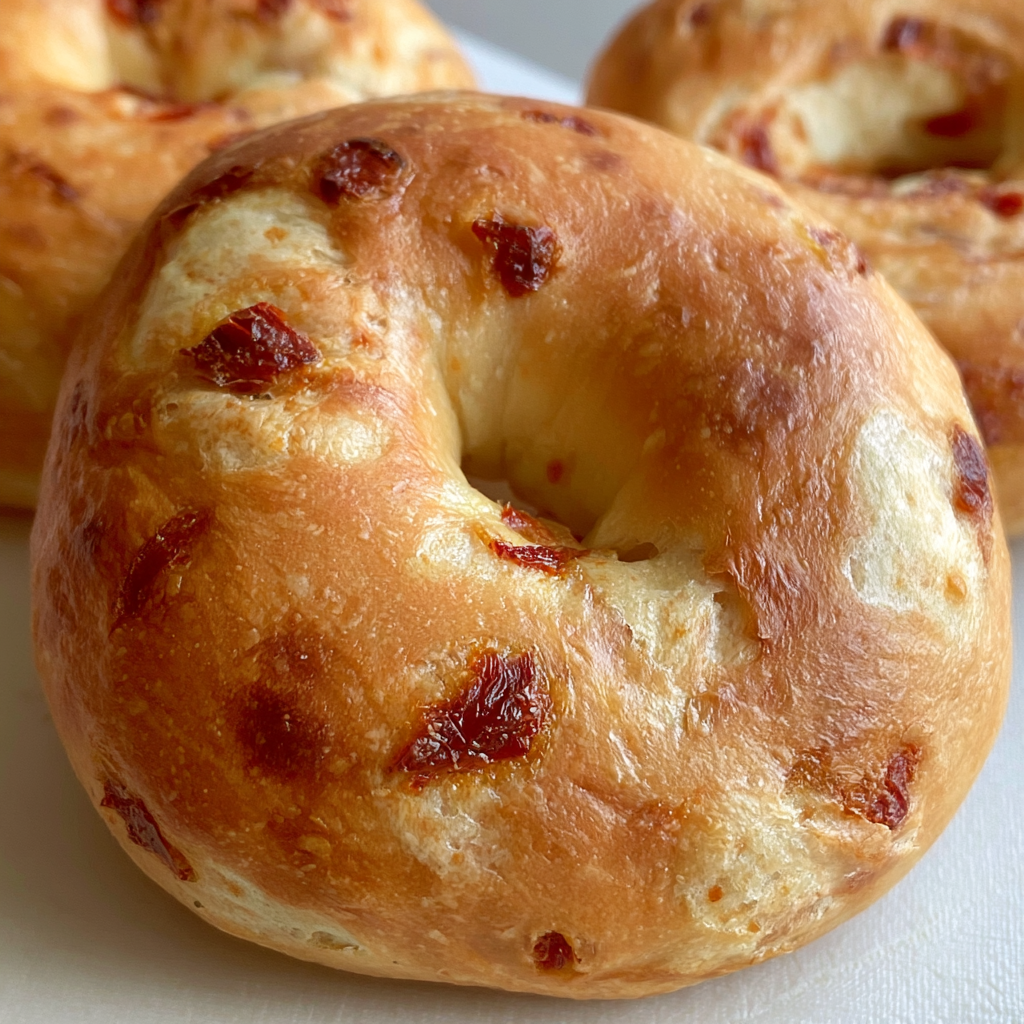
If you enjoy homemade bagels with a little more personality than the classic plain version, these are an excellent addition to your baking routine. Finely chopped sun-dried tomatoes are worked directly into a sturdy sourdough dough, giving the finished bagels concentrated tomato flavor without making the crumb overly wet.
The process takes time, but most of that time is hands-off fermentation. The dough develops at room temperature before the bagels are shaped, lightly proofed, and refrigerated overnight. That slower schedule helps build flavor while making the final morning workflow surprisingly manageable.
Boiling is what brings everything together. A short boil sets the exterior before baking, helping create that familiar chewy bagel crust while the inside remains pleasantly tender. Brush the tops with egg wash before they go into the oven, and you get a beautifully browned finish that works just as well for breakfast sandwiches as it does with a simple layer of cream cheese.
Sun-Dried Tomato Bagels Ingredients
You only need a short list of bread-making staples for these savory bagels, but the condition of your starter and tomatoes makes a noticeable difference.
- Active sourdough starter: Provides the natural fermentation that gives the bagels their rise and characteristic sourdough flavor. Use starter that is active and bubbly rather than one that has been sitting dormant in the refrigerator.
- Bread flour: Forms the majority of the dough and provides the gluten strength needed for a satisfyingly chewy bagel.
- Whole wheat flour: Adds a little extra depth and heartiness without making the dough excessively dense.
- Warm water: Hydrates the flours and helps bring the firm dough together. It should feel comfortably warm rather than hot.
- Sun-dried tomatoes: Supply the concentrated savory tomato flavor. Drain them extremely well and chop them finely so they spread evenly through the dough.
- Honey: Adds subtle sweetness that balances the tomatoes and supports fermentation.
- Sea salt: Seasons the dough and helps strengthen its structure.
- Egg: Used as a wash after boiling to encourage a shiny, deeply golden surface during baking.

Step-by-Step Sun-Dried Tomato Bagels
STEP 1: Drain the sun-dried tomatoes thoroughly, especially when using tomatoes stored in oil. Blot away excess oil if necessary, then finely chop them. Smaller pieces are easier to distribute through the stiff dough and are less likely to create oily pockets.
STEP 2: Combine the bread flour, whole wheat flour, active sourdough starter, warm water, honey, salt, and chopped tomatoes in a mixing bowl. Work everything together by hand for about 2 minutes, until no major dry patches remain and a firm ball of dough begins to form. Cover and rest for 30 minutes so the flour can fully hydrate.
STEP 3: Knead the rested dough for another 2–3 minutes. Bagel dough is intentionally firmer than ordinary sandwich bread dough, so do not expect it to become extremely soft or loose. Continue until the exterior looks smoother and the dough feels cohesive.
STEP 4: Cover the dough and allow it to ferment at room temperature for roughly 6–8 hours, or until it has approximately doubled. You can perform several stretch-and-fold sets during this period if you want additional dough strength, spacing them well apart rather than working the dough continuously.
STEP 5: Turn the fermented dough onto your work surface and divide it into 6–8 portions. Shape each piece into a tight ball, then press an opening through the center. Gently stretch and rotate the dough around the opening until you have an evenly formed bagel ring with enough space in the center to account for expansion.
STEP 6: Place the shaped bagels on a lightly greased surface or inside a suitable covered container. Let them proof at room temperature for 1–2 hours, until they look slightly fuller and puffy. Cover securely and refrigerate overnight to deepen the flavor and complete the cold fermentation.
STEP 7: The next day, heat the oven to 425°F. Bring a wide pot of water to a full boil and prepare a parchment-lined baking sheet. Boil the chilled bagels in small batches for about 1 minute per side. Drain them well, place them on the prepared sheet, brush the tops with egg wash, and bake for approximately 20–23 minutes, until richly golden. Cool for at least 10 minutes before slicing.
How to Store & Reheat
Fresh sourdough bagels are at their finest once they have cooled enough for the crumb to set, but leftovers keep well when stored properly.
For short-term storage, allow the bagels to cool completely before placing them in an airtight container or tightly sealed bag. Keep them at room temperature for about 1–2 days. Refrigeration can make bread become firm faster, so room-temperature storage is generally preferable when you plan to eat them quickly.
For longer storage, freezing is the better option. Slice the cooled bagels before freezing so you can toast them without having to thaw an entire bagel first. Wrap them securely and place them in a freezer-safe container or bag. They can be frozen for up to about 2–3 months.
To reheat, toast sliced bagels directly from room temperature or frozen. Whole bagels can also be warmed briefly in a moderate oven until heated through. Avoid overheating them, since too much dry heat can make the crust excessively firm.
Why do my sourdough bagels turn out dense?
A dense bagel can result from an underactive starter, insufficient fermentation, or shaping before the dough has developed enough volume. Bagel dough should be firm, but it still needs adequate fermentation. Look for clear expansion during the first rise rather than relying only on the clock.
Can I use oil-packed sun-dried tomatoes?
Yes. Oil-packed tomatoes work well as long as you drain them thoroughly before chopping. Excess oil can interfere with the dough’s texture and make shaping more difficult. Blotting the drained tomatoes with a paper towel is helpful when they still feel particularly oily.
Helpful Tips
- Use a lively starter. Because there is no commercial yeast in the dough, the sourdough starter needs to be active enough to support the long room-temperature fermentation.
- Keep the tomato pieces small. Finely diced tomatoes distribute more evenly and are less likely to tear the dough while you shape the rings.
- Watch the dough, not just the timer. Fermentation speed changes with room temperature and starter strength. If the dough has not expanded sufficiently after the suggested time, give it longer before shaping.

Serving Ideas for Sun-Dried Tomato Bagels
These bagels already have plenty of savory character, so they work especially well with simple toppings that complement rather than cover the tomato flavor.
Cream cheese is the most straightforward pairing. Its mild, creamy texture balances the chewy crust and the concentrated flavor of the tomatoes.
Eggs and cheese turn a sliced and toasted bagel into a substantial breakfast sandwich. The savory tomato notes make the bagel particularly suitable for egg-based fillings.
A simple lunch sandwich is another practical choice. Use the toasted bagel as the base for your preferred cheese, greens, or other sandwich fillings when you want something more flavorful than ordinary bread.
Do I have to refrigerate the shaped bagels overnight?
The overnight cold fermentation is strongly recommended because it develops flavor and fits naturally into the sourdough process used here. It also allows you to shape the bagels one day and handle the boiling and baking the following morning rather than completing everything in one long session.
Why are bagels boiled before baking?
Boiling begins setting the outside of the dough before it enters the oven. That step contributes to the dense, chewy crust that distinguishes a bagel from an ordinary bread roll. Boiling both sides also helps the rings hold their shape while baking.
Can I make the bagels smaller or larger?
Yes. Dividing the dough into six portions creates larger bagels, while eight portions gives you smaller ones. Aim for reasonably even pieces so they ferment, boil, and bake at a similar rate. Larger bagels may need to stay in the oven toward the longer end of the baking range.
These sun-dried tomato sourdough bagels are especially rewarding when you want a homemade bread project that can be spread across two days without requiring constant attention. The firm dough is straightforward to handle, the overnight proof develops deeper flavor, and the combination of boiling and high-temperature baking delivers the chewy texture you expect from a proper bagel.
Once you have the fermentation timing working well in your kitchen, they are also easy to fit into a routine: mix and ferment the dough during the day, shape and refrigerate in the evening, then boil and bake the following morning. Served warm or toasted later, the concentrated tomato pieces make every batch flavorful enough to enjoy with even the simplest topping.
Sun-Dried Tomato Bagels
Ingredients
For the Bagel Dough:
- 1/2 cup active sourdough starter
- 1 1/2 teaspoons sea salt
- 1/3 cup sun-dried tomatoes thoroughly drained and finely diced
- 3/4 cup warm water approximately 105–115°F
- 1/3 cup whole wheat flour
- 1 tablespoon honey
- 2 3/4 cups bread flour
For Assembly:
- Eggs as needed for the egg wash
Instructions
- Drain 1/3 cup of sun-dried tomatoes thoroughly, particularly if they have been packed or soaked in oil. Chop them into small, fine pieces so they can disperse evenly through the dough without contributing excess oil.
- Place the bread flour, whole wheat flour, warm water, active sourdough starter, honey, sea salt, and prepared sun-dried tomatoes in a medium mixing bowl. Mix by hand for approximately 2 minutes, or until the ingredients come together into a cohesive ball of dough.
- Cover the bowl and allow the dough to rest for 30 minutes. This resting period gives the flour time to absorb the moisture and allows gluten development to begin.
- Knead the rested dough for 2–3 minutes, continuing until its exterior becomes relatively smooth.
- Transfer the dough to a covered container and leave it at room temperature for 6–8 hours, or until it has approximately doubled in volume.
- For additional dough strength and improved crumb structure, 3 optional sets of stretch-and-folds may be performed during this initial fermentation. Space the sets approximately 1–1 1/2 hours apart. During each set, stretch each side of the dough and fold it over itself, rotating the container as you work.
- Turn the fermented dough out onto a work surface and divide it into 6–8 equal portions. For more precise sizing, each piece should weigh approximately 80–120 grams.
- Form each portion into a ball by drawing the edges or corners upward and folding them toward the center. Make an opening through the middle of each ball, then carefully stretch and rotate the dough until it forms an evenly shaped ring.
- Arrange the formed bagels inside a greased container or on a greased baking sheet, allowing enough room between each one for expansion. Cover them securely to prevent the surfaces from drying.
- Leave the shaped bagels at room temperature for 1–2 hours, or until they appear noticeably puffy.
- Keep the bagels covered and transfer them to the refrigerator for an overnight cold fermentation. The extended chilled proof develops additional flavor while contributing to the finished texture.
- The following day, preheat the oven to 425°F (220°C). Line a clean baking sheet with parchment paper.
- Bring a large, wide pot of water to a full boil. Carefully lower 1–2 bagels into the water at a time, ensuring they have sufficient room to float freely.
- Boil the bagels for 1 minute on the first side, turn them over, and boil for another 1 minute. Lift them from the water with a slotted spoon and allow excess water to drain before transferring them to the parchment-lined baking sheet.
- Brush the tops of the boiled bagels with egg wash. This coating produces a glossy appearance and encourages the exterior to become attractively crisp.
- Bake for 20–23 minutes, or until the bagels develop a rich golden-brown color.
- Allow the baked bagels to cool for at least 10 minutes before slicing. This brief resting period helps retain moisture within the crumb and makes the bagels easier to cut cleanly.
- Serve sliced with cream cheese or another preferred topping.