
Tangy Dill Pickle Sourdough Bread bakes into a crisp-crusted, tender artisan loaf with pickle brine, fresh dill, and diced dill pickles folded into naturally leavened dough.
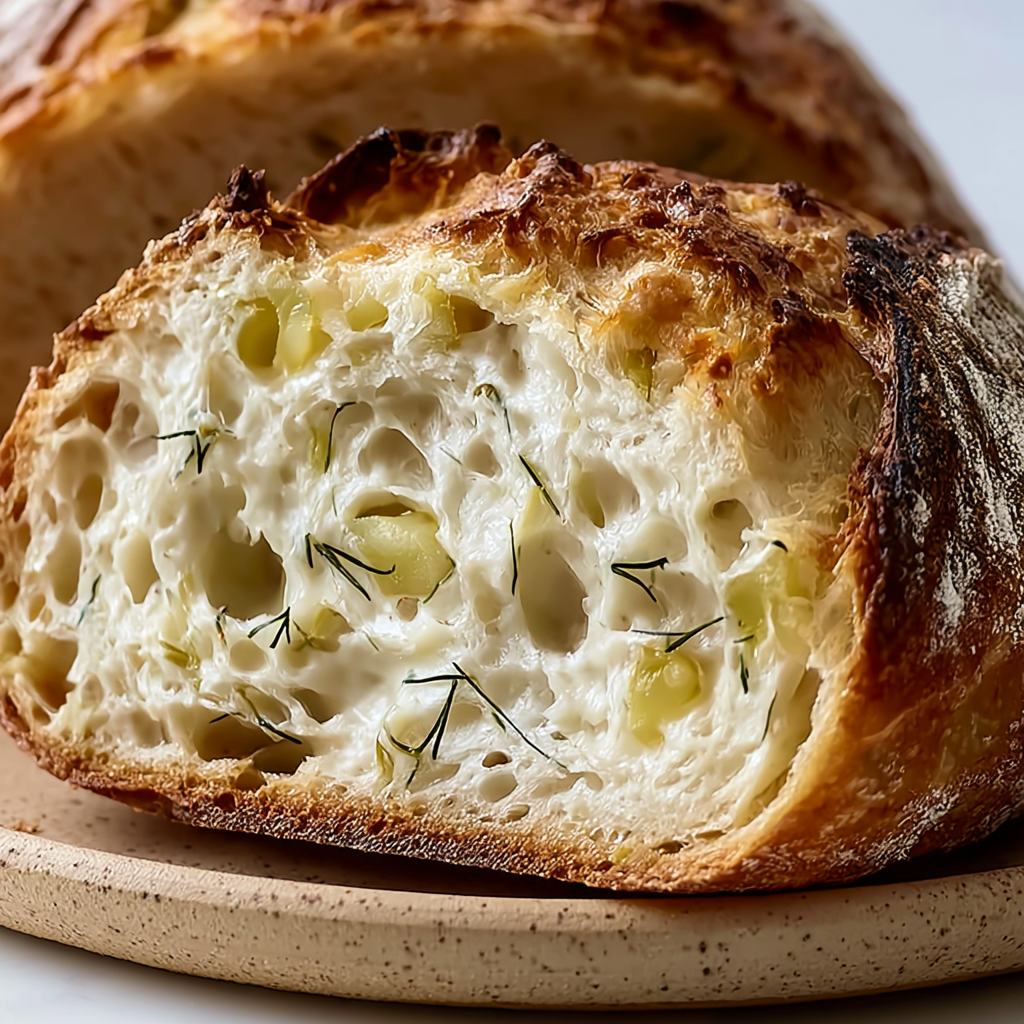
This is the kind of loaf you make when you want sourdough that feels familiar but still has a fun, savory twist. It has the classic chew and crackly crust of a Dutch oven sourdough, with a bright pickle flavor that makes every slice stand out.
The dough gets its tang from two places: the sourdough starter and the dill pickle brine. That means the flavor is layered rather than sharp, with the brine adding saltiness and depth while the fresh dill keeps the loaf aromatic and fresh.
It is especially good for sandwiches, toast, snack boards, and soup nights. You get a bread that feels homemade and rustic, but also practical enough to slice, freeze, and use throughout the week.
Ingredients
Active sourdough starter gives the bread its natural rise and signature sourdough flavor. Use a bubbly, recently fed starter for the strongest fermentation.
Filtered water hydrates the flour and helps create a soft, workable dough. Warming it slightly to about 85°F helps the starter wake up without overheating it.
Dill pickle brine brings the tangy, savory pickle flavor into the dough itself. It also adds saltiness, so the bread tastes seasoned from the inside out.
White bread flour provides strength and structure. Its higher protein content helps the loaf hold shape and develop a chewy, open crumb.
Whole wheat flour adds a little earthy flavor and depth. Even a small amount makes the loaf taste more complex.
Fine sea salt balances the tang and strengthens the dough. It is added after the first rest so it can be worked in evenly.
Dill pickles add small bursts of pickle flavor throughout the loaf. Blot them dry before adding so they do not make the dough too wet.
Fresh dill gives the bread a fragrant, herby finish. Finely chopping it helps it spread evenly through the dough.

Cooking Steps
STEP 1: Stir the active starter, warm filtered water, and dill pickle brine together in a large bowl until the starter loosens and blends into the liquid. Add the white bread flour and whole wheat flour, then mix with a spatula and your hand until a shaggy dough forms with no dry patches.
STEP 2: Sprinkle the fine sea salt over the dough, cover the bowl with a damp cloth, and let it rest for 40 minutes. After resting, knead the dough firmly by hand for about 2 minutes so the salt is fully incorporated and the dough begins to feel smoother.
STEP 3: Perform the first stretch and fold by lifting one side of the dough, stretching it upward, and folding it back over the center. Turn the bowl and repeat from several sides until the dough feels gently tightened. Cover and rest for 30 minutes.
STEP 4: Scatter the blotted diced pickles and minced fresh dill over the dough, spreading them toward the edges instead of piling them in the center. Do another stretch-and-fold round, using the folds to tuck the mix-ins into the dough as evenly as possible.
STEP 5: Continue with two more stretch-and-fold rounds, resting the dough for 30 minutes between each one. By the final fold, the dough should look smoother, hold together better, and feel more elastic, even with the pickle pieces inside.
STEP 6: Keep the dough covered and let it bulk ferment at room temperature until it has risen by roughly 75 percent. At about 74°F, this may take around 4 hours after the folds, but cooler kitchens will need more time and warmer kitchens may move faster. Look for a glossy surface, a slightly domed shape, and a few small bubbles.
STEP 7: Turn the dough onto a lightly floured surface and let it rest for 10 to 15 minutes. Shape it into a tight loaf, then place it seam-side up in a floured, linen-lined banneton. Cover and proof overnight in the refrigerator for up to 12 hours, or leave it at room temperature for about 1 1/2 hours until puffy.
STEP 8: Preheat the oven to 450°F with a Dutch oven inside. Invert the loaf onto parchment, score the top at least 1/2 inch deep, and transfer it into the hot Dutch oven. Bake covered for 25 minutes, then uncover, reduce the oven to 435°F, and bake for 20 minutes more. Cool on a rack for at least 1 hour before slicing.
Helpful Tips
- Blot the pickles well before folding them in. Too much extra moisture can make the dough slack and harder to shape.
- Watch the dough, not just the clock. Sourdough timing changes depending on room temperature, starter strength, and how warm your ingredients are.
- Let the loaf cool fully before cutting. Slicing too early can make the crumb seem gummy even when the bread is properly baked.
Perfect Pairings
This pickle sourdough is excellent with creamy soups because the tangy loaf cuts through rich, comforting flavors. Try it with potato soup, broccoli cheddar soup, or a simple vegetable chowder.
For sandwiches, it works beautifully with turkey, roast chicken, tuna salad, egg salad, or grilled cheese. The dill flavor gives simple fillings more personality without needing extra seasoning.
You can also serve thick slices on a snack board with butter, soft cheese, crisp vegetables, and pickles. Toasted pieces make a great savory bite for dipping or spreading.
Can I use any kind of dill pickles?
Yes, but classic dill pickles work best because their flavor matches the brine and fresh dill in the dough. Avoid sweet pickles, bread-and-butter pickles, or heavily sugared brines unless you want the loaf to taste noticeably sweeter.
Why do the pickles need to be dried first?
Diced pickles carry extra liquid, and that moisture can loosen the dough during folding and shaping. Blotting them dry keeps the pickle flavor while helping the loaf maintain better structure in the banneton and oven.
Can I make this without an overnight proof?
Yes. After shaping, you can let the loaf proof at room temperature for about 1 1/2 hours, or until it looks slightly risen and puffy. The overnight refrigerator proof develops deeper flavor and makes scoring easier, but it is not the only option.
How do I know when the loaf is ready to bake?
The shaped dough should look airy and slightly expanded, not flat or dense. If you gently press the surface, it should slowly spring back while leaving a faint impression. If it collapses or feels overly loose, it may be overproofed.

How to Store & Reheat
Store the cooled loaf at room temperature for up to 2 days, loosely wrapped in a clean towel or kept in a paper bag. This helps preserve the crust better than sealing it tightly in plastic right away. Once sliced, place the cut side down on a board to slow drying.
For longer storage, slice the loaf and freeze it for up to 2 months. Place parchment between slices if you want to remove one piece at a time, then store everything in a freezer-safe bag with as much air pressed out as possible.
Avoid refrigerating sourdough unless your kitchen is very warm and you need to slow spoilage. The fridge can make bread dry and firm faster. If you do refrigerate it, toast or warm the slices before serving.
To reheat a slice, toast it until crisp at the edges and warm in the center. For a larger piece, warm it in a 325°F oven for 8 to 12 minutes. Frozen slices can usually go straight into the toaster, which makes this loaf convenient for quick breakfasts, sandwiches, and soup nights.
Tangy Dill Pickle Sourdough Bread
Ingredients
For the dough:
- 35 g whole wheat flour
- 30 g dill pickle brine used to add tang and depth to the dough
- 375 g white bread flour
- 50 g lively active sourdough starter
- 260 g filtered water warmed to 85°F
- 7 g fine sea salt
For the mix-ins:
- 80 g dill pickles diced and blotted dry to reduce extra moisture
- 1 1/2 tablespoons fresh dill finely minced for even distribution
Instructions
- In a large mixing bowl, combine the active sourdough starter, warm filtered water, and dill pickle brine. Stir with a fork until the starter has loosened and dispersed through the liquid.
- Add the white bread flour and whole wheat flour. Begin mixing with a spatula, then continue by hand until a rough, shaggy dough forms and no dry flour remains visible.
- Scatter the fine sea salt over the surface of the dough. Cover the bowl with a damp cloth and allow the dough to rest for 40 minutes.
- After the resting period, knead the dough firmly by hand for 2 minutes to work the salt fully into the dough.
- Complete the first stretch-and-fold sequence by lifting one section of dough upward, stretching it gently, and folding it back over itself. Continue around the bowl until the dough has been folded from several sides.
- Cover the bowl again and let the dough rest for 30 minutes.
- After the rest, distribute the diced dill pickles and finely chopped fresh dill evenly across the dough, reaching toward the edges of the bowl.
- Perform another round of stretch and folds, working the pickles and dill into the dough as evenly as possible.
- Cover the dough and let it rest for another 30 minutes.
- Continue with 2 additional stretch-and-fold rounds, each followed by a 30-minute rest, for a total of 4 stretch-and-fold cycles. These folds help strengthen the dough and develop its structure.
- Once the folding sequence is complete, keep the dough covered with a damp cloth and leave it on the counter for bulk fermentation until it has risen by roughly 75%.
- At approximately 74°F, bulk fermentation will take about 4 hours. Cooler conditions may require more time, while warmer conditions may shorten the rise.
- The dough is ready for shaping when it is glossy, slightly under doubled in size, and showing a few bubbles near the surface.
- Gently transfer the dough onto a lightly floured work surface. Allow it to rest undisturbed for 10 to 15 minutes.
- Shape the dough as desired, then place it seam-side up in a flour-dusted, linen-lined banneton.
- Cover the banneton with a shower cap or damp cloth and allow the dough to complete its final proof.
- For the final rise, refrigerate the dough overnight for up to 12 hours, or let it proof at room temperature for about 1 1/2 hours.
- When the dough has risen slightly and looks visibly puffy, prepare to bake.
- Preheat the oven to 450°F with a Dutch oven inside.
- Place a sheet of parchment paper over the dough, then carefully invert it so the seam side faces down.
- Score the top of the loaf at least 1/2 inch deep to help steam escape and guide expansion during baking.
- Lift the dough with the parchment and place it into the hot Dutch oven. Cover with the lid.
- Bake at 450°F for 25 minutes.
- Remove the lid, reduce the oven temperature to 435°F, and continue baking for another 20 minutes, or until the crust is deeply golden and crisp.
- Transfer the loaf to a cooling rack and let it cool for at least 1 hour before slicing so the interior can set properly and avoid a gummy texture.