
Carbonara pasta is the five-ingredient Italian icon that proves creaminess doesn’t require cream.
Hot spaghetti, salty guanciale, eggs, and finely grated Parmigiano Reggiano transform into a glossy sauce. It clings to every strand.
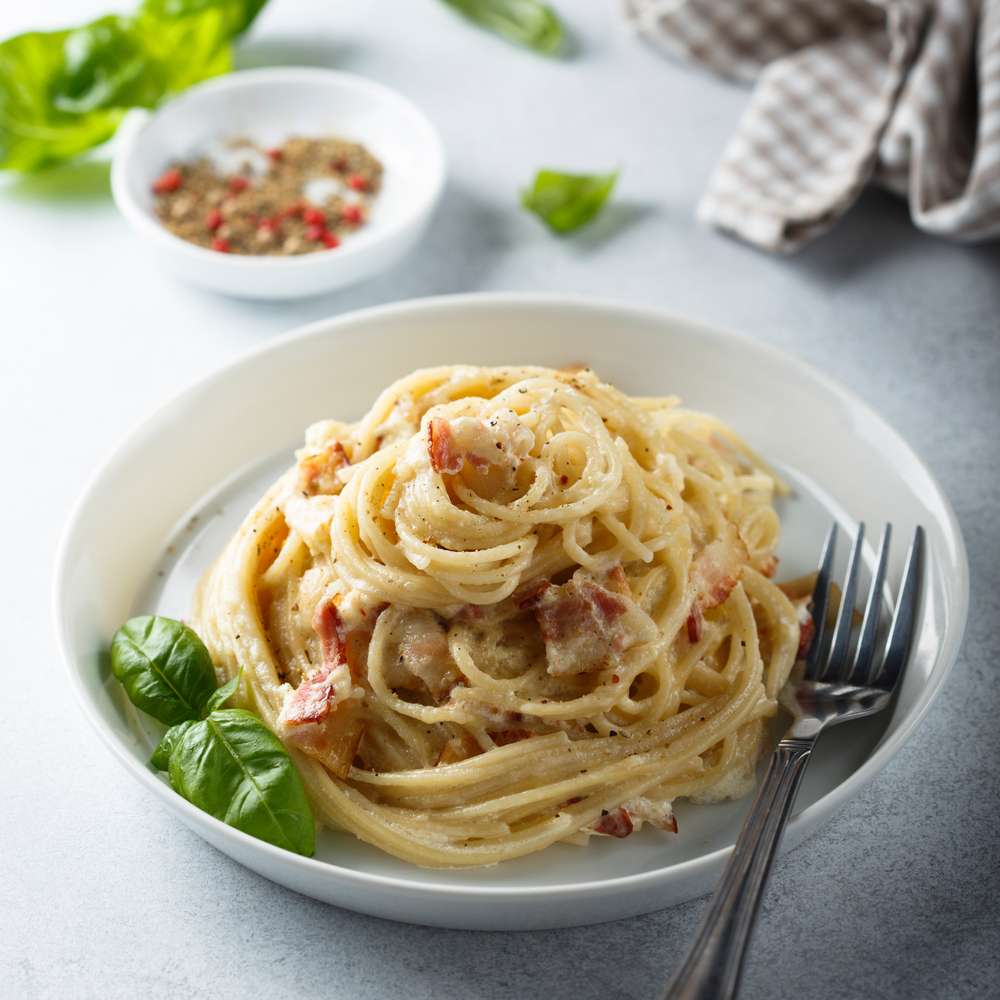
It’s weeknight-easy yet dinner-party elegant, delivering deep porky flavor, peppery bite, and silken texture in minutes.
This version stays true to tradition—no cream, just technique.
Render guanciale until crisp, then toss in just-cooked pasta. Whisk off heat with eggs, cheese, and starchy water to form a satiny emulsion.
Serve immediately in warmed bowls for maximum gloss and heat, and prepare for the table to fall silent.
What You’ll Need for carbonara pasta
- Spaghetti – The classic shape; its smooth surface lets the sauce sheath every strand.
- Guanciale (or pancetta/bacon) – Renders savory fat that seasons, crisps, and forms the sauce base.
- Eggs + extra yolks – The custardy backbone that turns silky when tempered with heat and pasta water.
- Parmigiano Reggiano or Pecorino Romano – Salty, nutty depth that melts into the emulsion.
- Freshly ground black pepper – Sharp, warming bite that balances richness.
- Starchy pasta water – Natural emulsifier that loosens and glosses without adding cream.
Guanciale Rendering Sets the Sauce Foundation
Start the guanciale in a cool pan, then ease the heat to medium so the fat slowly liquefies before the meat crisps.
You’re aiming for golden edges and a shallow pool of clear, flavorful fat—this becomes your “butter.”
If you rush and scorch, the fat turns bitter and the pork goes leathery.
Batons give a meaty chew; thin strips crisp faster but render less.
If substituting pancetta or bacon, choose streaky cuts so enough fat renders to carry the emulsion.
Reserve everything in the pan; those drippings are liquid gold you’ll toss with the pasta.
Fast Track to carbonara pasta
Boil spaghetti in well-salted water until just shy of al dente.
Meanwhile, whisk eggs, extra yolks, finely grated cheese, and pepper in a large bowl.
Crisp guanciale gently, then add drained pasta to the pan to coat in the rendered fat.
Move everything into the egg bowl with a splash of hot pasta water.
Toss vigorously off heat until glossy and silky, then serve immediately.

Heat Management Keeps the Eggs Silky
The magic is controlled temperature.
Transfer the pasta to the egg bowl off the burner so residual heat gently thickens the eggs without scrambling.
Add hot pasta water gradually; it loosens at first, then the starch helps the sauce tighten and cling.
Stir with speed and intention for about a minute.
If it looks too thick, add a spoon of water.
If too loose, keep tossing—viscosity increases as the cheese melts and starch activates.
Avoid returning the bowl to direct heat, which risks curdling.
Carbonara Pasta Tips & Tiny Twists
Work quickly and confidently.
The pasta should be steaming hot, the bowl generous for tossing, and the cheese grated ultra-fine so it melts on contact.
Salt the water well so you need little or no extra salt at the end.
Remember, the pork and cheese are salty.
If guanciale is hard to find, pancetta or streaky bacon makes a worthy stand-in.
Render it patiently.
For a subtle aromatic note, rub a cut clove of garlic around the pan before cooking.
Finish with a crack of pepper and a whisper of chopped parsley.
Eat from warmed bowls for peak silk.
Ultra-Fine Grating Improves Melt and Mouthfeel
Cheese texture is everything in carbonara.
Finely grated Parmigiano Reggiano or Pecorino Romano melts faster, integrates smoother, and resists clumping.
Pre-grated cheese often contains anti-caking agents that block melting.
Grate by hand with a microplane or fine rasp, and pack it lightly to measure.
Mix the cheese directly with the eggs rather than sprinkling it in later.
This disperses fat and proteins evenly so they thicken uniformly when hit by hot pasta.
If strands look dotted, you likely used too coarse a grate or the cheese met heat before it was fully hydrated.
How to Store Leftovers (If You Must)
Carbonara shines the minute it’s made, but leftovers can be kept airtight in the fridge for up to 3 days.
Expect the sauce to tighten as starch gels and fat firms when chilled.
Freezing isn’t ideal because the egg emulsion can break on thawing, so keep portions small and rewarm gently.
Always re-season with fresh pepper to revive the aroma.
Gentle Reheating Restores (Most) of the Silk
Reheat carbonara low and slow.
Place a portion in a nonstick skillet with a tablespoon or two of water.
Warm over low heat, tossing constantly until loosened and glossy.
Add tiny splashes of water as needed.
Avoid high heat or boiling, which scrambles the egg proteins and squeezes out fat.
A microwave works on 30–40% power in short bursts, stirring between each.
If you saved a spoon of rendered pork fat, whisk in a drizzle at the end for suppleness.

Frequently Asked Questions (FAQ)
Is it safe to use raw eggs?
The eggs are gently cooked by the heat of the pasta and water, not served raw.
Use the freshest eggs you can, handle them properly, and serve immediately.
If you’re concerned, look for pasteurized shell eggs.
Can I use bucatini or rigatoni instead of spaghetti?
Yes. Spaghetti is traditional, but bucatini’s hollow center grabs sauce beautifully, and rigatoni’s ridges catch bits of guanciale.
Cook just to al dente and keep the rest of the method the same.
Can I make carbonara without pork?
For a pork-free version, use olive oil and a knob of butter for the fat, then add sautéed mushrooms for savoriness.
It won’t be classic, but the emulsion technique still delivers a silky sauce.
Why warm the bowls?
Warm bowls keep the emulsion fluid longer.
A cold plate cools the sauce, causing it to thicken and lose gloss before you finish the first forkful.
Carbonara Pasta
Ingredients
- 2 whole large eggs room temperature
- 1 garlic clove very finely chopped (optional)
- 175 grams 6 oz of guanciale, skin removed and sliced into small batons (alternatively, use pancetta or slab bacon)
- 1 tablespoon coarse salt for boiling pasta water
- 2 large egg yolks
- 100 grams about 3.5 oz parmigiano reggiano, tightly packed after fine shredding (can substitute pecorino romano or parmesan)
- 1/4 teaspoon freshly ground black pepper
- 400 grams 14 oz spaghetti
- 1/2 cup reserved hot pasta water
Optional for garnish:
- Additional parmigiano reggiano freshly grated
- Finely chopped fresh parsley
Instructions
- Slice the guanciale into strips about 0.5 cm thick. Set aside while preparing the other ingredients.
- In a large mixing bowl, combine the whole eggs and additional yolks. Whisk until fully blended, then incorporate the finely shredded cheese and ground black pepper. Set this mixture aside.
- In a large pot, bring approximately 4 liters (4 quarts) of water to a rolling boil. Season generously with the coarse salt. Add the spaghetti and cook according to the package instructions until al dente.
- Before draining the pasta, reserve approximately 1 cup of the starchy cooking water. Drain the pasta promptly.
- While the pasta cooks, heat a non-stick skillet over medium-high heat. Add the guanciale and cook for 4–5 minutes until golden and crisp, allowing the rendered fat to accumulate in the pan. If using garlic, stir it in during the final minute of cooking.
- Transfer the hot, drained pasta directly into the skillet with the guanciale. Toss well to ensure the pasta is fully coated with the rendered fat.
- Quickly move the pasta and all pan contents into the bowl with the egg-cheese mixture. Immediately pour in 1/2 cup of the reserved pasta water. Using the handle of a wooden spoon, stir the pasta vigorously for about a minute until the sauce thickens into a creamy consistency that envelops the noodles.
- Serve the pasta promptly in warmed serving bowls. If desired, sprinkle with additional grated cheese, a dash of pepper, and a small amount of chopped parsley.
Notes
- Guanciale is the traditional choice for this dish and imparts a rich, savory depth. If unavailable, use thick-cut bacon or pancetta for a worthy alternative. Ensure it’s streaky for adequate fat content.
- Large eggs typically weigh between 55–60 grams (2 oz).
- For best results, use cheese you’ve grated yourself, as pre-shredded varieties often contain anti-caking agents that interfere with melting.
- Although garlic is not customary in traditional carbonara, it adds a subtle layer of flavor if desired.
- This dish is best consumed immediately. While leftovers can be refrigerated for up to three days, the sauce may lose its original texture.