
These christmas cookies with cocoa powder are rich, soft-centered, and deeply chocolatey, with dark brown sugar and a hint of espresso enhancing the cocoa flavor. A smooth chocolate glaze and festive sprinkles make them perfect for holiday cookie trays, parties, and seasonal baking.
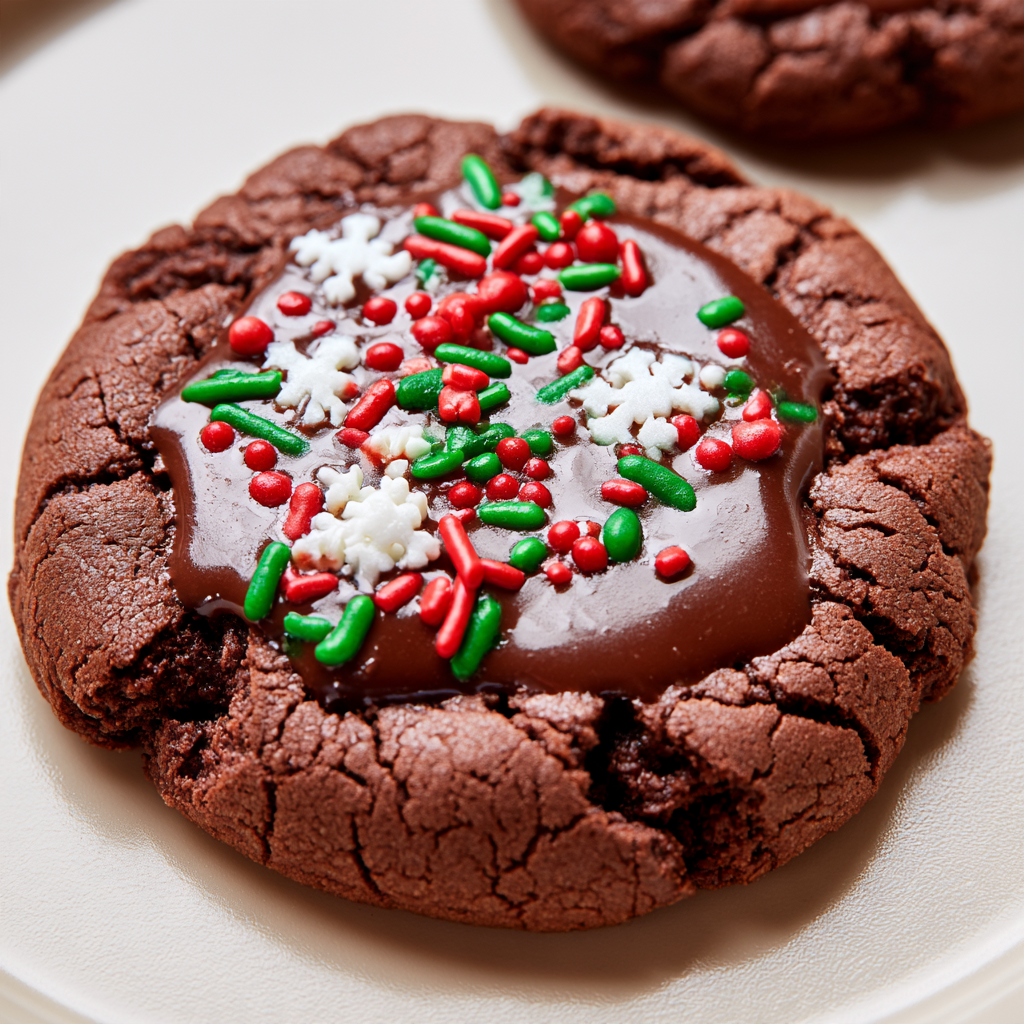
When you want a Christmas cookie that feels festive without requiring complicated decorating, these chocolate cookies are a great choice. The dough comes together with familiar baking ingredients, and the cookies stay simple enough for a relaxed afternoon of holiday baking.
Dark brown sugar gives the cookies extra moisture and a subtle molasses note, while unsweetened cocoa creates the rich chocolate base. A small amount of instant espresso powder supports the chocolate flavor without making the cookies taste strongly of coffee.
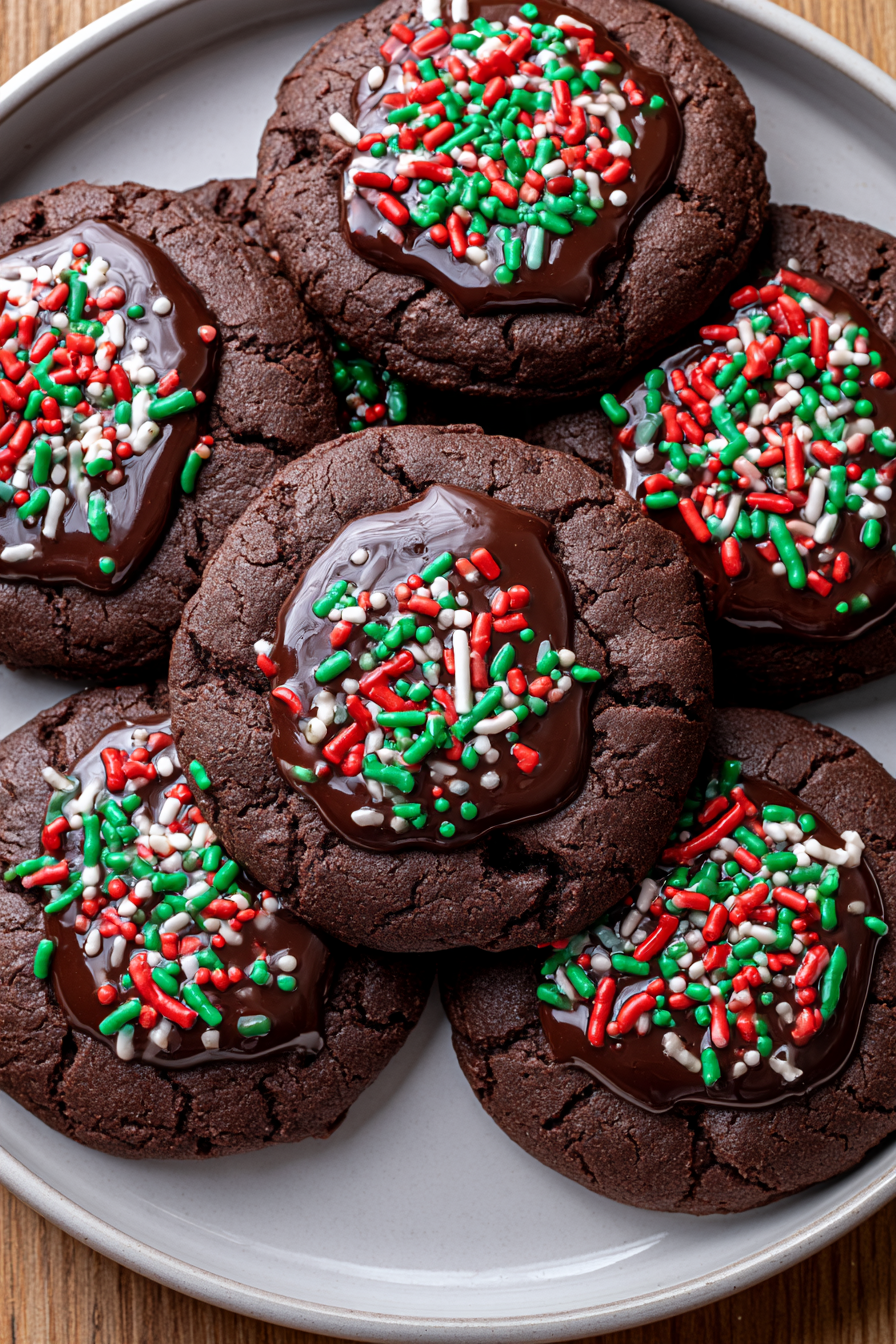
The finishing touch is a pourable cocoa glaze that settles over the cooled cookies. Add colored sugar or jimmies while the glaze is still wet, and you have an easy festive finish that works beautifully for Christmas platters, cookie exchanges, or homemade gifts.
Ingredients
Unsalted butter: Melted and cooled butter provides richness while helping create a soft, tender cookie.
Dark brown sugar: Adds sweetness, moisture, and a deeper molasses flavor than granulated sugar would provide.
Plain flour: Gives the cookie dough enough structure to hold its rounded shape during baking.
Unsweetened cocoa powder: Supplies the main chocolate flavor in both the cookies and their glaze.
Instant espresso powder: A small amount deepens the cocoa notes without turning these into coffee-flavored cookies.
Egg and egg yolk: The whole egg binds the dough, while the additional yolk contributes richness and softness.
Vanilla extract: Adds warmth and rounds out the chocolate flavor in both components.
Baking soda and baking powder: Provide controlled lift so the cookies become slightly puffed as they bake.
Salt: Balances the brown sugar and intensifies the chocolate flavor.
Powdered sugar: Forms the smooth, sweet base of the chocolate glaze.
Milk: Thins the glaze to a spoonable consistency. Whole milk can create a slightly richer coating.
Colored sprinkles or jimmies: Give the finished cookies their festive Christmas appearance.
Cooking Steps
STEP 1: Heat the oven to 350°F (175°C), then line two baking sheets with parchment paper. Preparing both sheets before mixing the dough makes portioning the cookies much easier.
STEP 2: Whisk the flour with the cocoa powder, espresso powder, baking soda, and baking powder in a medium bowl. Mixing these ingredients separately helps distribute the cocoa and leavening evenly throughout the dough.
STEP 3: Melt the butter in a large microwave-safe bowl and allow it to cool. Once it is no longer hot, whisk in the dark brown sugar, vanilla, and salt until the mixture looks smooth and the sugar is evenly incorporated. Mix in the whole egg and additional yolk.
STEP 4: Fold the cocoa and flour mixture into the wet ingredients just until a cohesive chocolate dough forms. Stop mixing once you no longer see obvious dry patches. Overworking the dough can make the baked cookies firmer than intended.
STEP 5: Scoop about 2 tablespoons of dough for each cookie and shape it into a rounded portion. Arrange the dough balls about 2 inches apart on the lined baking sheets. Leave them rounded rather than pressing them flat.
STEP 6: Bake one baking sheet at a time for about 15 minutes, rotating the pan halfway through. The cookies are ready when they look slightly puffed and the outer edges are just beginning to set. Avoid waiting for the centers to look completely firm.
STEP 7: Leave the cookies on the baking sheet for about 5 minutes after removing them from the oven. Transfer them carefully to a wire rack and allow them to cool completely before adding the glaze.
STEP 8: Sift the powdered sugar and cocoa powder together for the glaze. Whisk in the vanilla and begin with 4 tablespoons of milk, adding more gradually until the glaze pours smoothly from a spoon. Set the cooled cookies on a rack over a rimmed baking sheet, spoon the glaze over each cookie, and immediately add festive sprinkles. Let the coating set before serving or storing.
Why shouldn’t I flatten the cookie dough?
Keeping the portions rounded helps control how the cookies spread in the oven. The dough naturally relaxes as it heats, giving you thicker cookies with softly set centers rather than thin cookies that may bake too quickly around the edges.
How do I know when chocolate cookies are done?
Chocolate dough can make visual doneness harder to judge because you cannot rely on browning. Look instead for slightly puffed cookies with edges that have just set. The centers may still appear soft when the pan comes out of the oven, which is what you want.
They continue setting during the five-minute rest on the hot baking sheet.
Can I glaze the cookies while they are warm?
Wait until the cookies are completely cool. A warm surface can melt the glaze and cause it to become thin, translucent, or run off the edges rather than creating a smooth chocolate coating.
Cooling also gives the cookies time to finish setting before you handle them.
Does espresso powder make the cookies taste like coffee?
The small amount used here is intended to complement the cocoa rather than create a noticeable coffee flavor. It adds depth to the chocolate profile, especially alongside dark brown sugar and vanilla.
For the intended flavor balance, use instant espresso powder rather than brewed coffee, which would introduce additional liquid.
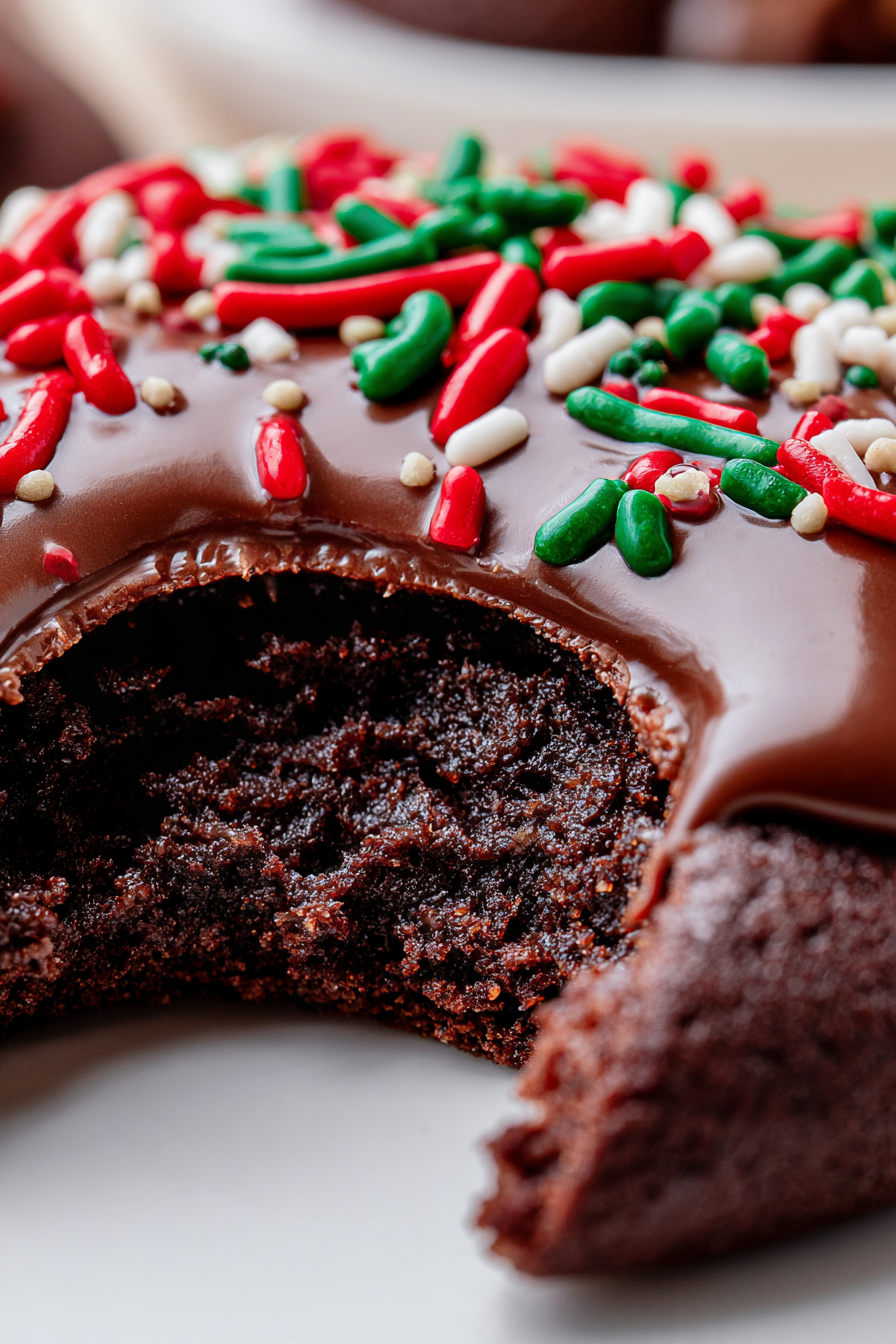
When should I add the Christmas sprinkles?
Add the colored sugar or jimmies immediately after spooning glaze onto each cookie. The wet glaze acts like an adhesive and holds the decorations in place as it sets.
If you wait until the coating has dried, the sprinkles will not stick nearly as well.
Helpful Tips
- Cool the melted butter before adding the egg. Very hot butter can affect the texture of the dough and may begin warming the egg before everything is properly mixed.
- Measure the flour carefully. Too much flour can make cocoa cookies dry. Spoon flour into the measuring cup and level it rather than packing it down.
- Add glaze milk gradually. Start with the smaller quantity and whisk well before adding more. It is much easier to thin a thick glaze than to correct one that has become too runny.
Perfect Pairings
Serve these chocolate Christmas cookies with cold milk for a classic combination that balances the rich cocoa flavor.
For a cozy holiday dessert, pair them with hot chocolate. The soft cookies and chocolate glaze fit naturally alongside a warm mug without needing any additional dessert.
They also work well as part of a Christmas cookie platter with contrasting cookies such as vanilla sugar cookies or lightly spiced holiday cookies. The darker chocolate color and bright sprinkles add visual variety to a mixed tray.
How to Store & Reheat
Allow the chocolate glaze to set completely before stacking or packing the cookies. If the coating is still tacky, the cookies can stick together and the decorated tops may become damaged.
Store the finished cookies in an airtight container at room temperature for about 3 to 4 days. Place parchment paper between layers if you need to stack them.
For slightly longer storage, refrigerate the cookies in a tightly sealed container for up to 1 week. Let refrigerated cookies sit at room temperature before serving so their texture can soften again and the chocolate flavor is more pronounced.
The cookies can also be frozen for up to 2 months. For the neatest appearance, place fully set cookies in a freezer-safe container with parchment between the layers. Thaw them in the container at room temperature to help protect the glaze from excess condensation.
These cookies generally do not require reheating, especially after glazing. If you prefer a slightly warmer unglazed cookie, warm it only briefly so it does not dry out. Glazed cookies are better brought naturally to room temperature because heat can melt or soften the chocolate coating.
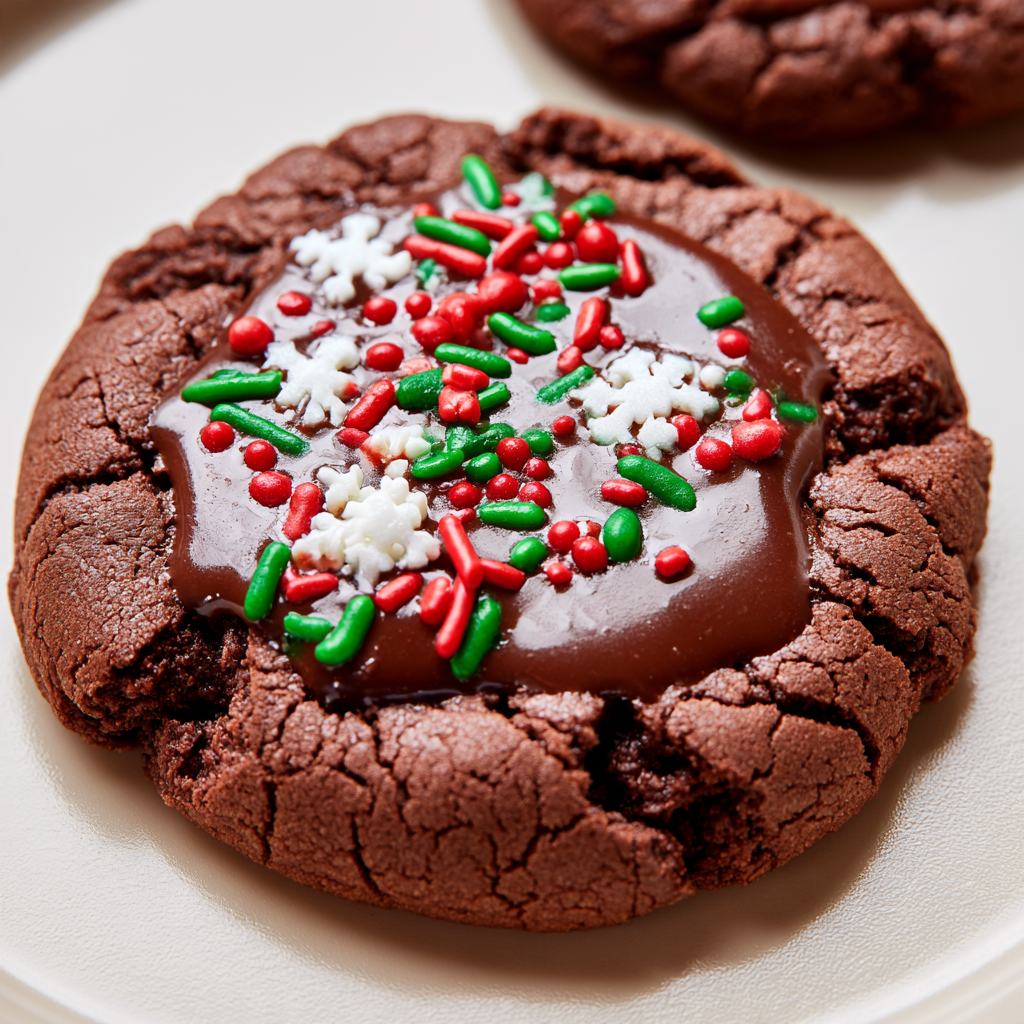
Christmas Cookies with Cocoa Powder
Ingredients
For the cookies:
- 14 tablespoons unsalted butter softened to room temperature before melting
- 1 1/2 cups plus 2 tablespoons plain flour
- 1 tablespoon pure vanilla extract
- 1/4 teaspoon baking powder
- 1 large egg and 1 additional large egg yolk
- 1 3/4 cups firmly packed dark brown sugar preferably for its pronounced molasses character
- 1/2 teaspoon salt
- 3/4 cup 100% unsweetened cocoa powder
- 1/2 teaspoon baking soda
- 1/2 teaspoon instant espresso powder
For the glaze:
- 1 1/2 cups powdered sugar
- 4 to 8 tablespoons milk with whole milk providing a creamier texture
- 3/8 cup cocoa powder
- 2 teaspoons vanilla extract
For the decoration:
- Colored sugar sprinkles or jimmies for a festive appearance
Instructions
- Preheat the oven to 350°F (175°C). Cover two baking sheets with parchment paper and reserve them for the cookie dough.
- In a medium bowl, thoroughly whisk together the plain flour, unsweetened cocoa powder, instant espresso powder, baking soda, and baking powder. Set the combined dry ingredients aside.
- Transfer the butter to a large microwave-safe bowl and melt it. Leave the melted butter to cool before continuing.
- Once the butter has cooled, whisk in the packed dark brown sugar, vanilla extract, and salt until the mixture becomes smooth and no noticeable lumps remain.
- Add the whole egg and extra egg yolk, mixing until they are fully incorporated into the butter and sugar mixture.
- Fold the prepared dry ingredients gently into the wet mixture, stopping as soon as a cohesive dough forms. Avoid excessive mixing so the finished cookies retain a soft texture.
- Portion the dough into balls using approximately 2 tablespoons of dough for each cookie. Arrange them on the parchment-lined baking sheets, leaving about 2 inches of space between each portion. Keep the dough balls rounded rather than flattening them.
- Bake one tray at a time in the preheated oven. Turn the baking sheet halfway through the baking period so the cookies bake evenly.
- Continue baking for approximately 15 minutes, or until the cookies appear slightly puffed and their outer edges have only just begun to set.
- Remove the tray from the oven and allow the cookies to remain on the baking sheet for 5 minutes. Carefully transfer them to a wire cooling rack and leave them until completely cooled.
- For the glaze, sift the powdered sugar and cocoa powder together into a medium mixing bowl.
- Add 4 tablespoons of the milk along with the vanilla extract, then whisk until the glaze is smooth. Gradually incorporate additional milk as necessary, using only enough to create a glaze with a pourable consistency.
- Position a wire rack over a rimmed baking sheet. Arrange the fully cooled cookies on the rack with approximately 1/2 inch of space between them.
- Spoon the prepared chocolate glaze over the cookies, then leave them undisturbed until the coating has set firmly.
Notes
- Pure vanilla extract is preferred for baking when available.
- Using dark brown sugar contributes a deeper molasses flavor to the cookies.
- Whole milk may be used in the glaze to produce a richer, creamier consistency.
- Do not overmix the cookie dough, as minimal mixing helps preserve a softer finished texture.
- The cookie dough portions should remain rounded before baking and should not be flattened.
- Colored sugar sprinkles or jimmies are included as the festive decoration for this recipe.