
This lemon cake is tender, bright, and richly citrusy, with almond and coconut flour creating a soft crumb beneath smooth lemon cream cheese frosting. It’s a reliable layered dessert for birthdays, spring gatherings, or make-ahead entertaining.
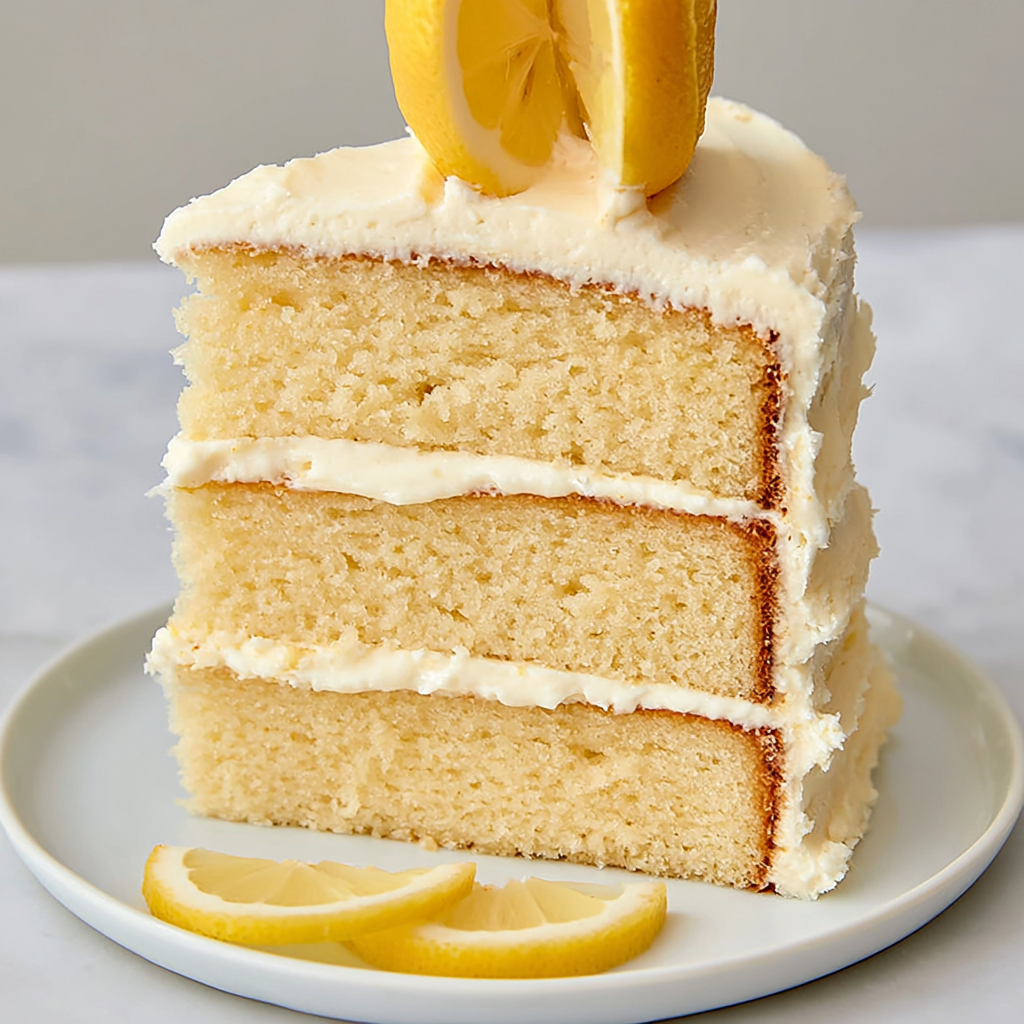
If you love lemon desserts that actually taste like fresh citrus, this cake deserves a spot in your baking plans. Fresh lemon juice, grated peel, and lemon extract work together to give every layer a noticeable lemon flavor without overwhelming the delicate cake.
The combination of almond flour and coconut flour creates a tender structure, while eggs and coconut oil keep the layers moist. A quick almond milk and vinegar mixture also helps create a softer crumb and balances the richness of the batter.
Once everything is cooled, the fluffy cream cheese frosting adds a creamy contrast to the bright cake layers. Give the finished cake a short chill before slicing and you’ll get cleaner, more defined pieces that look especially nice on a dessert table.
Lemon Cake Ingredients
You’ll use a combination of citrus, gluten-free flours, and simple baking ingredients to build the cake and its creamy frosting.
Blanched almond flour: Forms the main structure of the cake while contributing a tender, slightly rich crumb.
Coconut flour: Works alongside the almond flour to absorb moisture and give the cake enough structure for layering.
Eggs: Provide lift, stability, and moisture. Room-temperature eggs blend more smoothly into the batter.
Monk fruit sweetener: Sweetens the cake batter without changing the main lemon flavor.
Coconut oil: Adds richness and helps keep the baked layers tender. Let it cool slightly after melting.
Fresh lemon juice: Brings clean citrus acidity and fresh lemon flavor directly into the batter.
Lemon peel and zest: Add fragrant citrus oils to both the cake and frosting.
Lemon extract: Strengthens the lemon flavor so it remains noticeable after baking and chilling.
Vanilla extract: Softens the sharper citrus notes and rounds out both the cake and frosting.
Almond milk: Adds necessary moisture and combines with vinegar to make a quick buttermilk-style mixture.
Vinegar: Reacts with the leavening ingredients and helps support a lighter cake texture.
Baking powder and baking soda: Give the almond-and-coconut-flour batter the lift it needs.
Cream cheese: Creates the creamy, slightly tangy base for the frosting.
Unsalted butter: Helps the frosting become fluffy, rich, and stable enough for layering.
Powdered monk fruit sweetener: Sweetens and thickens the frosting to a spreadable consistency.
Fresh lemon slices: Provide a simple finishing decoration for the assembled cake.

Cooking Steps
STEP 1: Heat your oven to 350°F (175°C). Grease three 6-inch round pans or two 8-inch round pans, then line the bottoms with parchment rounds. Preparing the pans carefully makes the delicate almond flour layers easier to release after baking.
STEP 2: Whisk the almond flour, coconut flour, baking powder, baking soda, and salt together in a medium bowl. In a separate cup, stir the room-temperature almond milk with the vinegar and leave it for about 5 minutes so it can lightly curdle.
STEP 3: In a large mixing bowl, whisk the eggs with the granulated monk fruit sweetener. Add the cooled coconut oil, lemon juice, grated lemon peel, vanilla, and lemon extract. Pour in the almond milk mixture and stir until everything is evenly combined.
STEP 4: Add the dry ingredients gradually to the wet mixture. Stir gently just until you no longer see pockets of dry flour and the batter looks smooth. Avoid excessive mixing once the flours have been incorporated.
STEP 5: Divide the batter evenly between your prepared pans and smooth the tops. Bake for 19–24 minutes. Begin checking around 19 minutes, especially when using smaller pans. The layers are ready when a toothpick inserted near the center comes out clean.
STEP 6: Let the cakes cool in their pans for at least 30 minutes before carefully turning them out onto wire racks. Allow them to reach room temperature completely. Meanwhile, beat the softened butter until light and fluffy, add the cream cheese, and continue beating until smooth. Gradually mix in the powdered sweetener, lemon zest, lemon and vanilla extracts, and almond milk.
STEP 7: Place the first cooled layer on your serving plate and spread frosting evenly across the top. Continue stacking and frosting the remaining layers, then coat the outside if desired. Finish with fresh lemon slices and refrigerate the assembled cake for 1–2 hours before slicing.
Helpful Tips
- Watch the baking time closely. Almond flour cakes can lose moisture quickly when overbaked, so start checking the layers at the earliest suggested time.
- Cool every layer completely. Even slightly warm cake can soften cream cheese frosting and make stacked layers slide.
- Use properly softened frosting ingredients. Soft butter and cream cheese blend much more smoothly than cold ingredients, but they should not be melted or excessively warm.
Can I bake this cake in 8-inch pans?
Yes. The batter can be baked in two 8-inch round cake pans instead of three 6-inch pans. Divide the batter as evenly as possible and begin checking for doneness around the 19-minute mark, since actual baking time can vary slightly with pan size and individual ovens.
Why does the almond milk need vinegar?
The vinegar lightly acidifies the almond milk, creating a quick buttermilk-style mixture. That acidity works with the baking soda and contributes to the cake’s rise and tender texture. Letting the mixture sit for several minutes before using it gives the vinegar time to do its job.
Can I use another milk instead of almond milk?
Yes. You can substitute another preferred milk for the almond milk. Keep the quantity the same so the overall moisture level of the batter remains balanced. Room-temperature milk is particularly useful because it blends more easily with the eggs and melted oil.
Can I make the cake ahead of time?
Absolutely. The cake is especially convenient for occasions because both the layers and finished cake can be prepared ahead. Keep cooled, unfrosted layers tightly wrapped, or refrigerate the assembled cake after frosting. The chilling period also gives the cream cheese frosting time to become firmer.
How do I know when almond flour cake is finished baking?
Use both appearance and a toothpick test. The centers should look set rather than wet, and a toothpick inserted into the middle should come out clean or with only a few moist crumbs. Avoid extending the baking time unnecessarily once the layers test done.

Serving Ideas for Lemon Cake
This layered cake is flavorful enough to serve without complicated accompaniments. Let it stand briefly after refrigeration so the cake softens slightly while the frosting remains pleasantly firm.
Fresh berries: Strawberries, raspberries, or blueberries provide a fresh contrast to the sweet, creamy lemon frosting.
Fresh fruit platter: A simple assortment of seasonal fruit makes a light accompaniment when serving the cake after a larger meal.
Coffee or tea: The bright lemon flavor pairs naturally with coffee, black tea, or a mild herbal tea for brunches, showers, and afternoon gatherings.
Keeping Leftovers Fresh
Because the frosting contains cream cheese, store the finished cake in the refrigerator. Cover the cake well or place individual slices in an airtight container to protect the crumb from drying out and prevent the frosting from absorbing refrigerator odors.
For the best texture, enjoy refrigerated leftovers within about 4 days. You can let an individual slice stand at room temperature for roughly 15–30 minutes before serving if you prefer a softer cake and creamier frosting. There is no need to reheat it.
For longer storage, freeze individual slices or unfrosted cake layers tightly wrapped and placed in a freezer-safe container. They can generally be frozen for up to 2 months. Thaw frozen cake in the refrigerator, preferably while still wrapped so condensation forms on the wrapping rather than directly on the cake.
If you are preparing the dessert for a celebration, chilling the fully assembled cake for 1–2 hours before serving is particularly useful. The frosting firms enough to stabilize the layers, the slices come out cleaner, and the fresh lemon flavor remains bright throughout the tender almond flour cake.
Lemon Cake
Ingredients
Cake Batter
- 4 large eggs brought to room temperature for improved aeration
- 3 tablespoons fresh lemon juice
- 1 teaspoon vanilla extract
- 2 cups finely ground blanched almond flour
- 2/3 cup granulated monk fruit sweetener
- 1/2 tablespoon finely grated lemon peel approximately the peel from 1 medium lemon
- 1 teaspoon baking soda
- 2/3 cup coconut oil melted and allowed to cool so it does not heat the eggs
- 1/8 teaspoon sea salt
- 1/3 cup coconut flour
- 1 teaspoon lemon extract
- 1/2 cup unsweetened almond milk at room temperature, ideally around 70°F
- 1 teaspoon baking powder
- 1/2 tablespoon vinegar
Lemon Cream Cheese Frosting
- 1 teaspoon finely grated lemon zest
- 1/3 cup unsalted butter softened but not melted
- 1/2 teaspoon lemon extract
- 2 teaspoons almond milk
- 8 ounces cream cheese softened
- 1 teaspoon vanilla extract
- 2 to 2 1/2 cups powdered monk fruit sweetener
Decoration
- Fresh lemon slices
Instructions
- Heat the oven to 350°F (175°C). Lightly grease three 6-inch round cake pans or two 8-inch round cake pans with nonstick baking spray. Place a parchment-paper round in the bottom of each pan, then set the prepared pans aside.
- In a medium bowl, whisk together the blanched almond flour, coconut flour, baking powder, baking soda, and sea salt until evenly distributed.
- Stir the room-temperature almond milk together with the vinegar in a separate measuring cup. Allow the mixture to stand for approximately 5 minutes, giving it time to curdle slightly and form a quick dairy-free buttermilk-style mixture.
- In a large bowl, whisk the room-temperature eggs with the granulated monk fruit sweetener, cooled melted coconut oil, vanilla extract, lemon extract, lemon juice, and grated lemon peel. Add the curdled almond milk mixture and stir until thoroughly incorporated.
- Gradually add the dry mixture to the wet ingredients. Stir only until the ingredients are combined and the batter becomes smooth, taking care not to overmix.
- Distribute the batter evenly among the prepared cake pans and level the surfaces with a spatula. Bake for 19–24 minutes, or until a toothpick inserted into the center of a cake layer comes out clean.
- Leave the baked cakes in their pans for at least 30 minutes. Carefully release them from the pans afterward and place them on wire cooling racks. Allow the layers to cool completely to room temperature before frosting.
- Add the softened cream cheese to the whipped butter and continue beating for another 3 minutes, until the two are fully blended.
- Gradually incorporate the powdered monk fruit sweetener, vanilla extract, lemon extract, finely grated lemon zest, and almond milk. Beat for another 2–3 minutes, until the frosting has a creamy, smooth consistency. Cover and refrigerate until needed.
- Set one completely cooled cake layer on a serving platter or cake stand. Spread an even layer of lemon cream cheese frosting over the top. Add the next cake layer and repeat the process until all layers have been stacked with frosting between them.
- Use the remaining frosting to cover the sides of the cake if a fully frosted finish is desired. Arrange fresh lemon slices over the top for decoration.
- Refrigerate the assembled cake for 1–2 hours before cutting. This resting period allows the frosting to firm slightly and helps the cake slice more neatly.
Notes
- Check the cake layers at the 19-minute mark to reduce the risk of overbaking, since cakes made with almond flour can dry out relatively quickly.
- Any preferred milk may be used in place of the almond milk in the cake batter.
- A mild-flavored oil may be substituted for the coconut oil if needed.
- For a dairy-free variation of the frosting, the original recipe allows coconut butter in place of the butter and a dairy-free cream cheese alternative.
- A small amount of additional lemon zest may be incorporated into the finished frosting for a more pronounced citrus flavor.
- Lightly chilling the assembled cake firms the frosting and makes cleaner slices easier to achieve.