
This herb creamy pork tenderloin is a quick skillet dinner with golden pork medallions and a silky garlic cream sauce flavored with Dijon mustard and herbes de Provence. It cooks in about 15 minutes once prepped and works beautifully for weeknight dinners or a simple dinner-party main course.
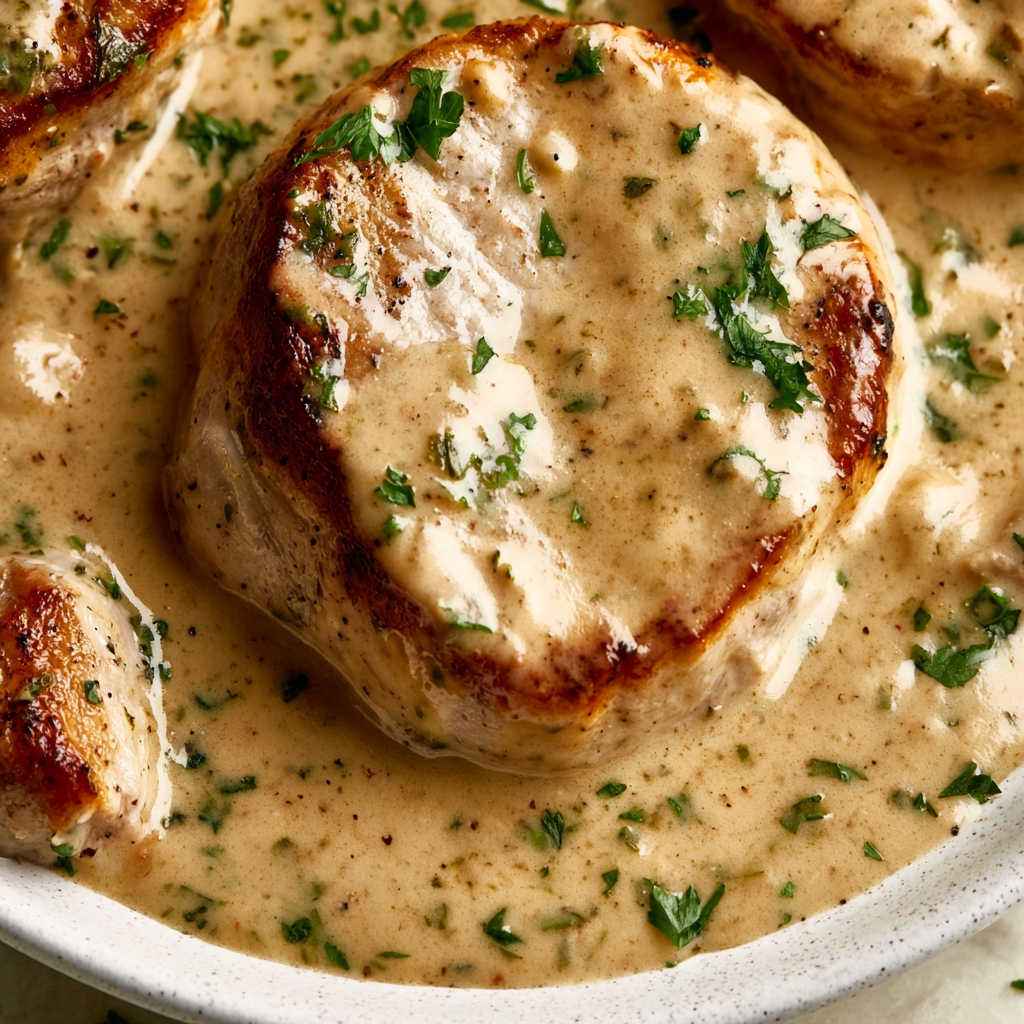
Pork tenderloin is especially useful when you want something that feels a little special without committing to a long roast. Slicing it into medallions means the pork cooks quickly, while a light flour coating helps each piece develop a nicely browned exterior.
The sauce is equally straightforward. Garlic, broth or dry white wine, Dijon mustard, herbs, and heavy cream come together right in the same skillet, picking up all the savory browned bits left behind from searing the pork. The result is rich and comforting without requiring a complicated cooking method.
Herb Creamy Pork Tenderloin Ingredients
Pork tenderloin: Slice the tenderloin crosswise into roughly 1/2-inch medallions so the pieces cook quickly and evenly.
All-purpose flour: A very light coating encourages browning on the pork and also helps give the finished cream sauce a little extra body.
Salt and black pepper: Season the pork before cooking and adjust the final sauce as needed.
Olive oil: Provides enough heat tolerance to give the medallions a good sear without relying entirely on butter.
Unsalted butter: Adds richness during searing and complements the creamy pan sauce.
Fresh garlic: Gives the sauce its savory aromatic base. Mince it finely so it disperses throughout the cream.
Chicken broth or dry white wine: Loosens the flavorful browned bits from the skillet and creates the foundation for the sauce.
Dijon mustard: Adds a gentle tang that balances the richness of the heavy cream.
Herbes de Provence: Brings a fragrant blend of dried herbs that pairs naturally with pork and cream.
Heavy cream: Forms the smooth, full-bodied sauce and reduces quickly in the skillet.
Fresh parsley: Adds freshness and a little color just before serving.

Cooking Steps
STEP 1: Slice the pork tenderloin crosswise into medallions approximately 1/2 inch thick. Pat the pieces dry so they sear rather than steam, then season both sides with salt and freshly ground black pepper. Place the flour in a shallow dish, season it lightly, and dust each piece of pork on both sides. Shake away any obvious excess.
STEP 2: Heat a large skillet over medium-high heat. Add the olive oil along with about half of the butter. Once the butter is foaming and the pan is properly hot, arrange the pork medallions in a single layer. Avoid packing them tightly together because overcrowding will reduce browning.
STEP 3: Let the pork cook relatively undisturbed for about 3 minutes on the first side. Turn the medallions and cook for approximately another 3 minutes. They should have a good golden surface but do not need to be completely cooked in the center yet. Transfer them to a clean plate while you prepare the sauce.
STEP 4: Keep the skillet over the heat and add the finely minced garlic. Stir for about 30 seconds, just until aromatic. Watch it carefully at this stage because browned or scorched garlic can make an otherwise creamy sauce taste bitter.
STEP 5: Pour in the chicken broth or dry white wine, then stir in the Dijon mustard and herbes de Provence. Scrape the bottom of the skillet as the liquid bubbles so all of the browned pork bits become part of the sauce. Let the mixture simmer for roughly 1 minute.
STEP 6: Reduce the heat to medium and slowly stir in the heavy cream. Keep the sauce at a gentle simmer for about 2 minutes, stirring occasionally, until it begins to thicken. It does not need to become extremely thick because it will continue reducing as the pork finishes cooking.
STEP 7: Return the pork medallions and any juices from the plate to the skillet. Coat the pieces in the cream sauce and simmer gently for around 5 minutes, turning once, until the pork is cooked through and the sauce comfortably coats each medallion.
STEP 8: Taste the sauce and adjust the salt or pepper if necessary. Spoon the pork and plenty of sauce onto plates, then finish with freshly chopped parsley. Serve while the sauce is warm and smooth.
What to Serve with Herb Creamy Pork Tenderloin
Mashed potatoes: Creamy mashed potatoes are particularly good here because they absorb the garlic herb sauce and turn the skillet juices into part of the side dish.
Roasted vegetables: Green beans, asparagus, broccoli, or roasted carrots add color and a less-rich element alongside the creamy pork.
Rice or buttered noodles: Both are useful when you want a simple starch that lets the pork and sauce remain the main attraction. Spoon extra sauce over the top just before serving.

Can I use chicken broth instead of white wine?
Yes. Chicken broth works very well and produces a savory, family-friendly sauce without changing the cooking method. Dry white wine gives the sauce slightly more acidity and complexity, but it is completely optional. Use the same amount whichever liquid you choose.
How do I keep pork tenderloin from becoming dry?
The biggest factor is avoiding overcooking. Because the tenderloin is sliced into thin medallions, it cooks much faster than a whole pork tenderloin. Sear it briefly, remove it from the skillet, and let it finish gently in the cream sauce rather than continuing to cook over high heat.
How do I know when the pork medallions are done?
Cooking time will vary slightly depending on the thickness of your slices and the heat of your skillet. For the most reliable result, check the thickest medallion with an instant-read thermometer. Pork is considered safely cooked at an internal temperature of 145°F, followed by a short rest.
Can I make creamy pork tenderloin ahead of time?
You can prepare it ahead, although the texture is at its best shortly after cooking. Cream sauces tend to thicken substantially once refrigerated. If making the dish in advance, reheat it slowly and add a small splash of broth or cream if the sauce needs loosening.
Can I use pork loin instead of pork tenderloin?
Pork loin and pork tenderloin are different cuts, so they are not always interchangeable without adjustments. Pork loin is larger and generally needs different slicing and cooking times. For the quick skillet method described here, pork tenderloin is the more reliable choice.
Recipe Tips
- Pat the pork dry before coating it. Excess surface moisture prevents the medallions from developing a deep golden sear.
- Cook in batches when necessary. Leaving a little space between the pieces allows moisture to escape and keeps the skillet hot.
- Keep the cream at a gentle simmer. Aggressive boiling can reduce the sauce too quickly and may affect its smooth consistency.
How to Store & Reheat
Let leftover pork and cream sauce cool before transferring them to an airtight container. Refrigerate the leftovers promptly and use them within 3 to 4 days.
A cream-based sauce can change texture after freezing, so refrigeration is preferable when possible. If you do freeze the pork, place it with plenty of sauce in a freezer-safe container and use it within about 1 to 2 months. Thaw it overnight in the refrigerator before reheating.
For the smoothest sauce, reheat the pork gently in a skillet over low to medium-low heat. Add a splash of chicken broth or heavy cream if the refrigerated sauce has become too thick. Stir occasionally and heat only until the pork is warmed through. Avoid prolonged high heat, which can overcook the tender medallions and cause the cream sauce to separate.
Herb Creamy Pork Tenderloin
Ingredients
For the Pork Medallions
- About 2 tablespoons all-purpose flour for a light coating
- 1 pound pork tenderloin cut crosswise into rounds approximately 1/2 inch thick
- Fine salt and freshly ground black pepper according to taste
For the Creamy Herb Sauce
- 1 cup heavy cream for a full-bodied, silky sauce
- 1/4 teaspoon herbes de Provence preferably freshly ground for a stronger aroma
- 2 tablespoons unsalted butter such as Kerrygold
- 2 garlic cloves very finely chopped, approximately 1 tablespoon
- 1 tablespoon olive oil or another neutral cooking oil such as canola
- 1/2 teaspoon Dijon mustard for gentle acidity and depth
- 1/4 cup chicken broth or an equal quantity of dry white wine
For Serving
- 1/2 tablespoon fresh parsley finely minced
Instructions
- Cut the pork tenderloin crosswise into rounds about 1/2 inch thick. Blot the medallions thoroughly with paper towels, then season both surfaces with salt and black pepper.
- Place the flour in a shallow dish and season it with a small amount of salt and pepper. Coat each pork medallion lightly on both sides, then shake away the excess flour. This thin coating encourages an evenly browned exterior during searing.
- Finely mince the garlic and parsley. Keep them separate and set both aside until needed.
- Place a large skillet over medium-high heat. Add the olive oil along with 1 tablespoon of the butter, heating until the butter begins to foam and the skillet is thoroughly hot.
- Arrange the flour-coated pork medallions in the skillet without crowding them, cooking in batches when necessary. Sear for approximately 3 minutes on each side, leaving the pieces relatively undisturbed so that a deep golden crust can develop.
- Transfer the browned pork to a clean plate. The medallions do not need to be completely cooked at this stage because they will finish cooking in the sauce.
- Keep the same skillet on the heat without cleaning it, preserving the browned bits left behind from the pork. Add the minced garlic and cook for approximately 30 seconds, stirring continuously, just until fragrant. Do not allow the garlic to brown.
- Stir in the Dijon mustard, chicken broth or dry white wine, and herbes de Provence. Allow the mixture to simmer for about 1 minute, giving the liquid time to reduce slightly while the flavors combine.
- Reduce the heat to medium. Gradually pour the heavy cream into the skillet while stirring continuously to produce a smooth sauce.
- Maintain a gentle simmer for approximately 2 minutes, stirring from time to time, until the sauce thickens slightly and is able to coat the back of a spoon.
- Return the seared pork medallions to the skillet and arrange them in a single layer. Turn each piece gently so that it becomes coated with the creamy herb sauce.
- Simmer the pork in the sauce for approximately 5 minutes, turning the medallions once midway through cooking. Continue until the pork is cooked through, tender, and firm without becoming tough.
- Arrange the finished pork medallions on individual plates or a serving platter, either in one layer or with the pieces slightly overlapping.
- Spoon the warm creamy herb sauce generously over and around the pork so that every medallion is well coated.
- Scatter the freshly minced parsley over the finished dish immediately before serving, adding fresh herbal flavor and color to the rich cream sauce.