
Latke Eggs Benedict is a crisp, savory brunch favorite that swaps the usual English muffin for golden potato latkes, then adds cold-smoked salmon, tender poached eggs, and buttery lemon hollandaise. It feels special enough for holidays while still being practical to prepare in stages.
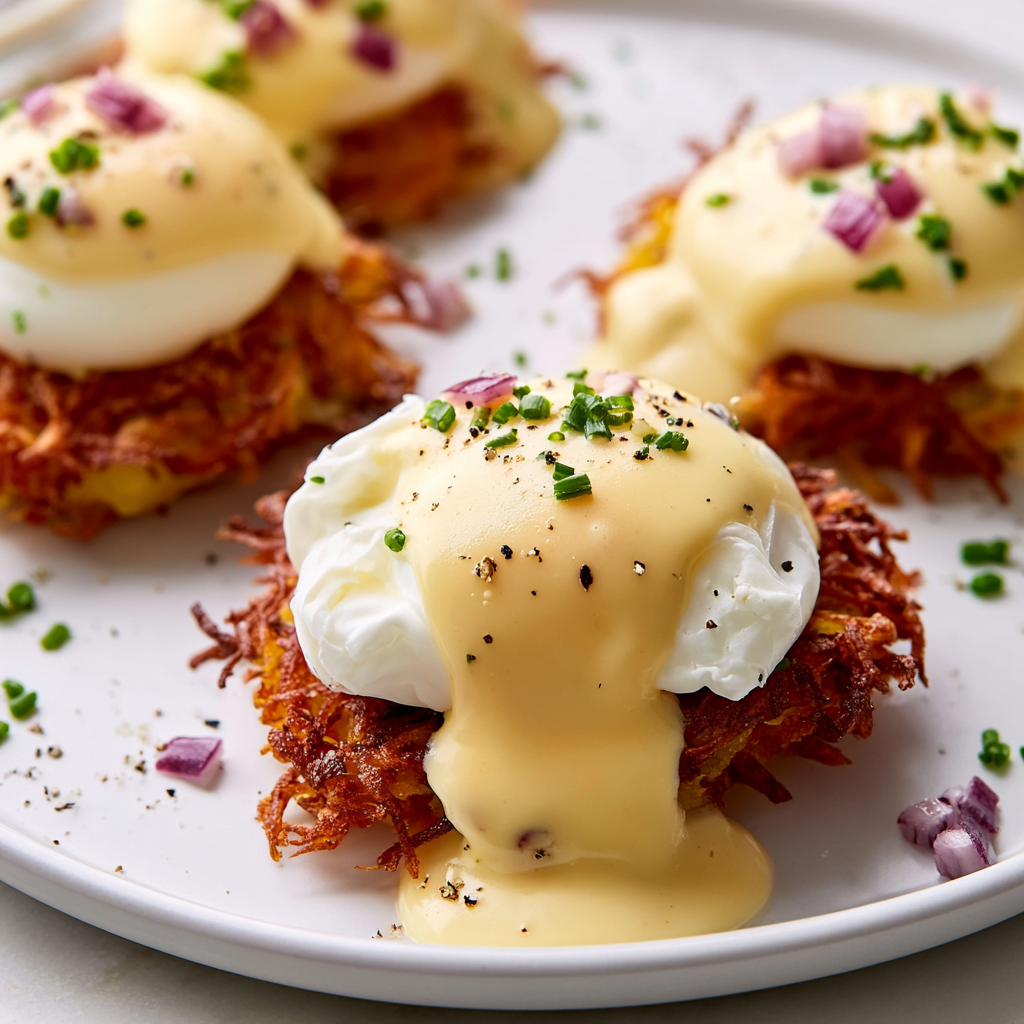
If you love classic Eggs Benedict but want something with more texture and character, this version delivers. The contrast between the crunchy potato base, silky egg yolk, cool smoked salmon, and warm hollandaise makes every bite satisfying without needing a long list of ingredients.
The key is managing the components in the right order. You can fry the latkes first and keep them warm, poach the eggs shortly before serving, and make the hollandaise last so it stays smooth and pourable. Once everything is ready, assembly takes only a few minutes.
This is especially good for a weekend brunch, holiday breakfast, or any meal when you want something a little more impressive than standard eggs and potatoes.
Latke Eggs Benedict Ingredients
Russet potatoes: Their higher starch content helps create sturdy latkes with crisp edges once the excess moisture is thoroughly removed.
Yellow onion: Finely grated onion adds savory flavor throughout the potato mixture without creating large pieces.
Egg: One lightly beaten egg helps hold the latkes together as they fry.
Matzo meal: Gives the shredded potato mixture additional structure and contributes to the crisp exterior.
Kosher salt and black pepper: Simple seasoning lets the potato, salmon, and hollandaise remain the main flavors.
Vegetable oil: Use enough to create a shallow frying layer so the latkes cook evenly and develop deeply golden edges.
Egg yolks: These create the rich, creamy base of the hollandaise.
Unsalted butter: Slowly incorporated into the yolks to form the smooth, buttery sauce.
Fresh lemon juice: Cuts through the richness of the butter and gives the hollandaise its classic brightness.
Fresh eggs: Very fresh eggs are particularly useful for poaching because their whites hold together more neatly in the water.
White vinegar: A small splash in the poaching water encourages the egg whites to set around the yolks.
Cold-smoked salmon: Adds a delicate smoky, salty layer between each potato latke and poached egg.
Chives and red onion: These fresh garnishes provide color, mild sharpness, and contrast to the richer ingredients.
Flaky salt and black pepper: A light finishing touch is all the assembled Benedict needs.

Step-by-Step Latke Eggs Benedict
STEP 1: Finely grate the peeled russet potatoes and yellow onion. Place the potatoes in lightly salted water and let them soak for 20 to 30 minutes. This helps remove some excess starch and keeps the grated potato from darkening while you prepare the other ingredients.
STEP 2: Drain the potatoes very thoroughly. Transfer them to a clean kitchen towel and squeeze firmly until you have removed as much liquid as possible. Combine the potatoes with the grated onion, beaten egg, matzo meal, kosher salt, and pepper. Fold gently until the mixture is evenly moistened and holds together.
STEP 3: Heat about 1/4 inch of vegetable oil in a large skillet over medium heat. When a small strand of potato sizzles immediately, the oil is ready. Drop 3 to 4 tablespoons of mixture into the skillet for each latke and flatten each portion into a roughly 3-inch round.
STEP 4: Fry only a few latkes at a time so the temperature of the oil stays steady. Cook until the first side is deeply golden and crisp, about 6 to 10 minutes, then turn carefully and cook the second side for another 5 to 6 minutes. Transfer to a baking sheet or wire rack and keep warm while you finish the batches.
STEP 5: For the poached eggs, bring about 2 inches of water to a very gentle simmer and add a splash of white vinegar. Crack each egg into a small cup before carefully sliding it into the water. Cook for about 4 1/2 to 5 minutes for fully set whites and a soft, jammy yolk. Remove gently and place on a lightly oiled plate.
STEP 6: Make the hollandaise by blending the egg yolks with lemon juice and kosher salt until smooth. With the blender running on low, very slowly drizzle in the hot melted butter. Continue until the sauce is thick, glossy, and fully emulsified. Keep it warm without placing it directly over high heat.
STEP 7: Set one warm latke on each plate and top with a thin layer of cold-smoked salmon. Add a poached egg, spoon warm hollandaise over the top, and finish with chopped chives, finely diced red onion, flaky salt, and freshly ground pepper. Serve immediately.
What to Serve with Latke Eggs Benedict
A simple fresh fruit salad works particularly well because its brightness balances the rich hollandaise, fried potatoes, and smoked salmon.
For a larger brunch spread, serve the Benedict with lightly dressed mixed greens. A sharp, lemony dressing keeps the meal from becoming too heavy.
You can also add roasted or sautéed vegetables for a savory side that complements the potatoes without competing with the salmon and hollandaise.
Can I make the latkes ahead of time?
Yes. Fry the latkes in advance, allow them to cool, and refrigerate them separately from the other components. For the crispiest results, place them on a wire rack over a baking sheet and reheat at 350°F until hot and crisp rather than microwaving them.
How do I keep the latkes crispy before serving?
Avoid stacking freshly fried latkes because trapped steam can soften their surfaces. Transfer them to a wire rack or baking sheet in a warm oven while you finish frying. Keeping them uncovered helps preserve those crisp, golden edges.
Why is my hollandaise too thin?
The butter may have been incorporated too quickly, or the sauce may simply need a little more gentle warmth. Place the hollandaise in a heatproof bowl over barely simmering water and whisk carefully until it thickens. Keep the temperature low so the yolks do not scramble.
Can I poach the eggs before brunch?
You can poach them shortly ahead of serving. Once cooked, transfer the eggs carefully to a plate and rewarm them for about 30 seconds in gently simmering water. This is useful when preparing several Benedict servings at the same time.

How can I tell when a poached egg is ready?
The white should be completely set while the yolk remains tender. Around 4 1/2 to 5 minutes gives this recipe a jammy yolk. If you prefer a firmer center, leave the egg in the gently simmering water for roughly another 30 seconds.
Helpful Tips
- Squeeze the potatoes extremely well. Excess water is one of the biggest obstacles to crisp latkes, so take time to wring out the grated potatoes before adding the remaining ingredients.
- Keep the poaching water gentle. Rapidly boiling water can break apart the egg whites. Small bubbles and minimal movement produce a neater poached egg.
- Add the butter slowly to the hollandaise. Begin with a very thin drizzle so the yolks and butter have time to emulsify before you pour more quickly.
How to Store & Reheat
Latke Eggs Benedict is at its best immediately after assembly because you want the potatoes crisp, the hollandaise warm, and the poached eggs tender. If you do have leftovers, store the components separately rather than refrigerating fully assembled servings.
Keep cooked latkes in an airtight container in the refrigerator for up to 3 days. Reheat them on a wire rack in a 350°F oven until thoroughly hot and crisp. The oven works much better than the microwave for restoring their texture.
The cooked latkes can also be frozen. Cool them completely, separate the layers with parchment paper, and freeze in an airtight container for about 1 month. Reheat directly in the oven until crisp and heated through.
Refrigerate leftover poached eggs promptly and use them within about 1 day for the best quality. Rewarm them briefly in hot, gently simmering water instead of using the microwave.
Hollandaise is more delicate and is best made fresh. If you need to hold it before serving, keep it warm for up to about 30 minutes over a warm water bath, away from direct heat. Refrigerated leftover hollandaise can separate when reheated, so warm it very gently while whisking.
Keep the smoked salmon chilled until you are ready to assemble. When all the components are prepared separately and brought together just before serving, you get the defining contrast that makes this brunch dish work: crisp potato latkes, cool smoky salmon, delicate eggs, and silky warm hollandaise.
Latke Eggs Benedict
Ingredients
For the Potato Latkes
- 1 1/2 pounds russet potatoes peeled and finely grated
- 1 teaspoon kosher salt
- 1/2 medium yellow onion finely grated
- 2 tablespoons matzo meal preferably Streit’s for added crispness
- 1/2 teaspoon freshly ground black pepper
- 1 large egg lightly whisked
- Vegetable oil enough to create a 1/4-inch layer in the frying pan
For the Hollandaise Sauce
- 1/2 cup unsalted butter gently melted and allowed to cool slightly
- 1 tablespoon freshly squeezed lemon juice
- 1/4 teaspoon kosher salt
- 3 large egg yolks
For the Poached Eggs
- 8 large very fresh eggs
- A splash of white vinegar
For Serving
- Chives finely chopped
- 4 ounces cold-smoked salmon thinly sliced
- Red onion finely diced
- Flaky salt to taste
- Freshly ground black pepper to taste
Instructions
- Finely grate the peeled russet potatoes and yellow onion. A food processor fitted with a fine shredding or grating attachment may be used to make this process more efficient.
- Transfer the grated potatoes to a large bowl filled with lightly salted water. Allow them to soak for 20 to 30 minutes, or for as long as 1 hour when time permits. This soaking period removes excess starch while helping prevent discoloration.
- Thoroughly drain the soaked potatoes, then remove as much residual liquid as possible. Wrap them in a clean kitchen towel and firmly wring out the moisture, or use a salad spinner lined with paper towels.
- Place the well-drained potatoes in a large mixing bowl with the grated onion, lightly beaten egg, matzo meal, kosher salt, and black pepper. Fold the ingredients together gently with a fork until everything is evenly distributed and the mixture holds together.
- Set a large skillet over medium heat. Once the pan is hot, pour in enough vegetable oil to reach approximately 1/4 inch up the sides.
- Allow the oil to heat until shimmering. Test the temperature with a small piece of the potato mixture; it should begin sizzling as soon as it touches the oil.
- Spoon approximately 3 to 4 tablespoons of potato mixture into the skillet for each latke, shaping each portion into a round about 3 inches across. Fry only 3 to 4 latkes at once so the pan does not become overcrowded.
- Cook the latkes for approximately 6 to 10 minutes on the first side, or until richly golden. Turn them carefully and continue frying for another 5 to 6 minutes.
- Lift the cooked latkes from the oil with a slotted spatula and transfer them to a baking sheet to drain. Keep them warm in the oven while frying the remaining batches.
- Crack each egg individually into a small ramekin or cup.
- Fill a saucepan with approximately 2 inches of water and stir in a splash of white vinegar. Heat over medium until the water reaches a very gentle simmer, with small bubbles appearing at the bottom but no vigorous boiling.
- Carefully slide each egg into the simmering water. Poach for 4 1/2 to 5 minutes, until the whites are completely set and the yolks have a jammy consistency. For slightly firmer yolks, extend the cooking time by approximately 30 seconds.
- Remove each poached egg carefully and place it on a lightly oiled plate. Continue until all 8 eggs have been cooked.
- Add the egg yolks, fresh lemon juice, and kosher salt to a blender. Process at medium-high speed until the mixture becomes smooth.
- Melt the unsalted butter until hot without allowing it to bubble. Reduce the blender to low speed and begin adding the butter in a very slow drizzle, allowing the sauce to emulsify.
- Continue pouring cautiously at first. Once the hollandaise begins to thicken, gradually incorporate the remaining melted butter until the sauce is smooth and cohesive.
- If the hollandaise remains too thin, transfer it to a bowl and whisk it gently over a simmering water bath until it thickens slightly. Avoid excessive heat, which can cause the yolks to curdle.
- Place one warm latke on each serving plate. Arrange a slice of cold-smoked salmon over the latke, followed by one freshly poached egg.
- Spoon a generous amount of warm hollandaise over each egg. Finish with chopped chives, finely diced red onion, flaky salt, and freshly ground black pepper to taste.
- Serve the Latke Eggs Benedict immediately while the latkes remain crisp and the hollandaise is warm.