
This caramelized onions jam is a rich, savory-sweet condiment made with slowly softened yellow onions, balsamic vinegar, sugar, and aromatic herbs. It cooks down into a glossy, spoonable preserve that pairs beautifully with cheese boards, roasted meats, sandwiches, and appetizers.
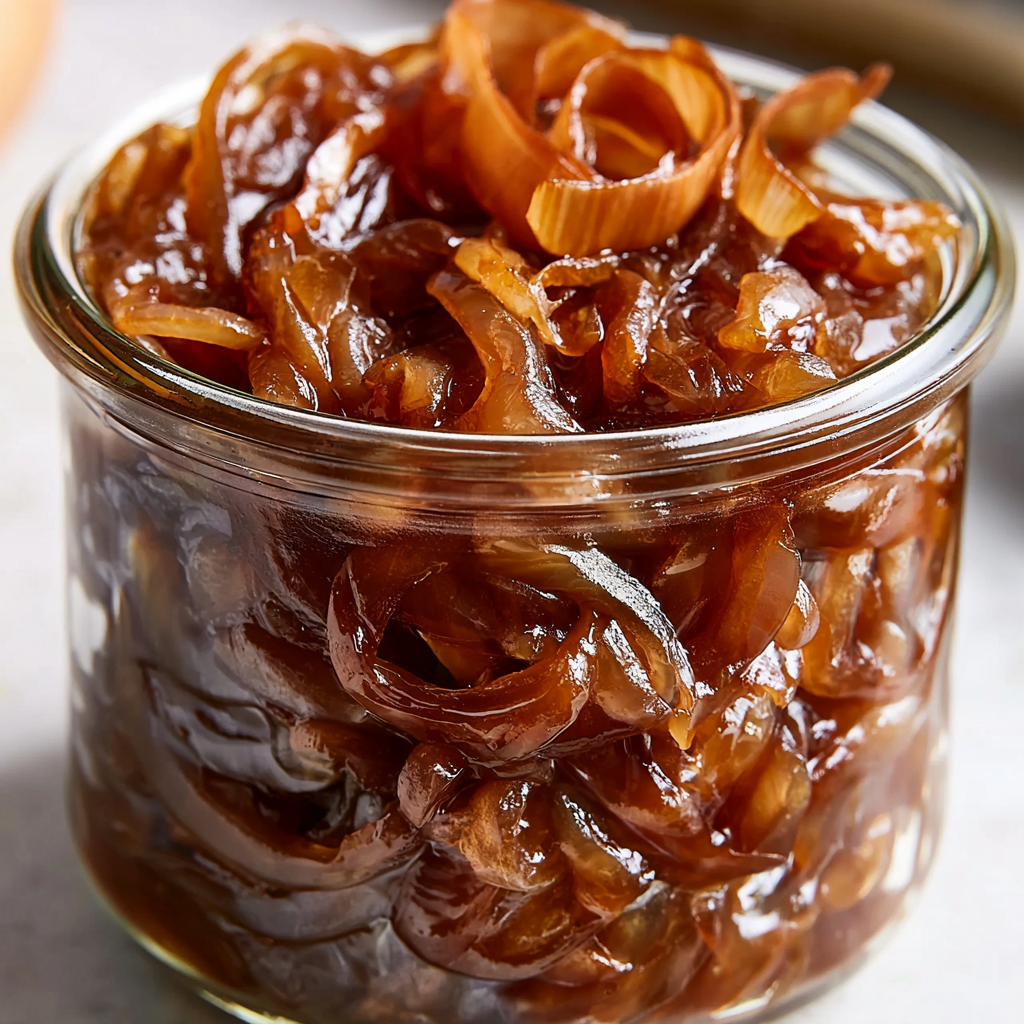
When you want a condiment that can instantly make a simple meal feel more complete, onion jam is worth having in your refrigerator. The long, gentle cooking process brings out the onions’ natural sweetness while balsamic vinegar adds enough tang to keep the finished jam from tasting overly sugary.
The key is patience rather than complicated technique. Giving the onions time to soften and develop color before adding the vinegar and sugar creates a deeper flavor than simply boiling everything together.
Once reduced, the mixture becomes thick and syrupy, with savory herbs and black pepper balancing the sweetness. Serve it warm, room temperature, or chilled depending on how you plan to use it.
Caramelized Onions Jam Ingredients
Sweet yellow onions: Thinly sliced onions form the foundation of the jam. Their mild flavor becomes noticeably sweeter and more concentrated as they cook.
Extra-virgin olive oil: Helps the onions soften gradually and prevents them from sticking during the first stage of cooking.
Balsamic vinegar: Adds acidity, dark color, and a sweet-tart depth that complements the caramelized onions.
Granulated sugar: Encourages a thick, glossy consistency while balancing the sharper notes of the balsamic vinegar.
Summer savory: Gives the finished spread a gently herbal flavor. A combination of thyme and rosemary can stand in when summer savory is unavailable.
Sea salt: Sharpens the sweet and savory flavors and keeps the jam from tasting flat.
Freshly ground black pepper: Adds mild warmth and a little contrast to the concentrated onion flavor.

Cooking Steps
STEP 1: Slice the yellow onions as thinly and evenly as possible. Uniform slices cook at roughly the same rate, making it easier to achieve soft onions without leaving larger pieces undercooked.
STEP 2: Heat the olive oil in a large heavy-bottomed skillet, saucepan, or Dutch oven over medium heat. Add the sliced onions and cook for about 10 to 15 minutes, stirring periodically. Let them soften and gradually take on a light golden color rather than trying to brown them quickly over high heat.
STEP 3: Once the onions have softened considerably, stir in the granulated sugar and balsamic vinegar. Make sure the onions are evenly coated, then keep the mixture at a steady but controlled simmer.
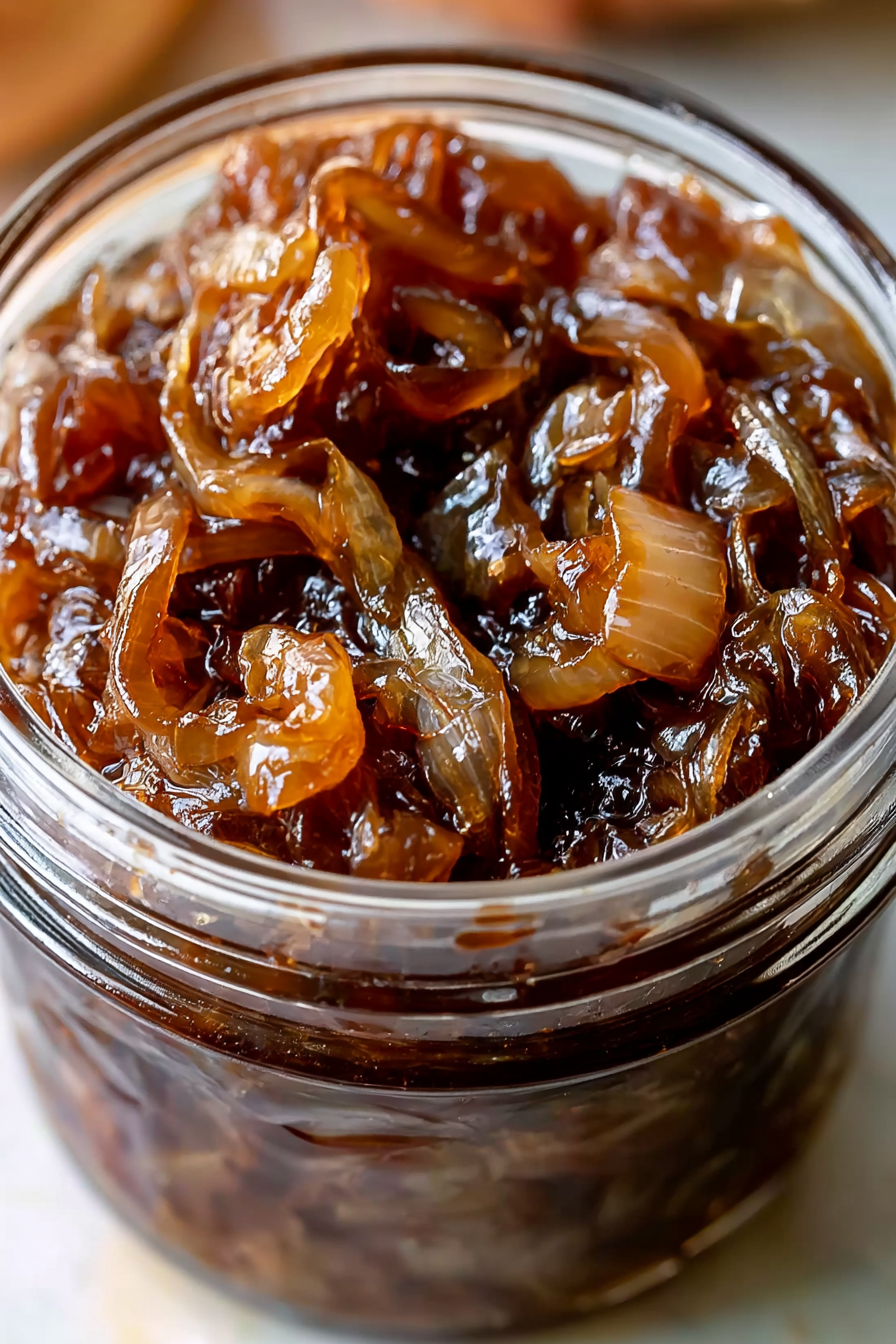
STEP 4: Continue cooking for roughly 40 to 45 minutes. Stir more frequently as the liquid evaporates because the jam will become increasingly likely to stick near the end. You are looking for onions surrounded by a thick, glossy syrup rather than a loose pool of vinegar.
STEP 5: Stir in the sea salt, black pepper, and finely minced summer savory during the final portion of cooking. If you are substituting thyme and rosemary, use them to give the jam a similar savory herbal note without overwhelming the onions.
STEP 6: Check the consistency before removing the pan from the heat. The jam should be noticeably reduced and spoonable, and a spoon dragged through the pan should briefly leave a visible trail. Remember that it will continue to thicken somewhat as it cools.
STEP 7: For refrigerator storage, cool the onion jam before transferring it to clean airtight containers or jars. Although the original preparation includes optional water-bath canning directions, onions are naturally a low-acid vegetable, and safe boiling-water processing depends on a specifically tested level of acidification. Unless this exact formula and processing method come from a research-tested canning source, keep the finished jam refrigerated rather than assuming it is shelf-stable.
What to Serve with Caramelized Onions Jam
A good onion jam works especially well with foods that benefit from a little sweetness and acidity.
Sharp or aged cheese: Spoon a small amount alongside cheddar or other strongly flavored cheeses. The balsamic sweetness gives you a useful contrast to salty, assertive cheese.
Roasted meats: Serve it as a condiment with roasted beef, pork, or other savory meat dishes. You only need a small spoonful because the flavor is concentrated.
Crackers and charcuterie: Add a small bowl to a charcuterie spread with crackers, cheese, and your favorite savory accompaniments. Guests can add as much or as little as they like.
It also makes an excellent sandwich condiment. Instead of using a large amount like a traditional sauce, spread a thin layer where its sweet onion flavor can complement cheese or roasted meat without dominating the other ingredients.
How do I know when onion jam is done?
Look at the liquid rather than relying only on the clock. Most of the vinegar mixture should have reduced into a thick syrup that clings to the softened onions.
When you scrape a spoon or spatula across the bottom of the pan, the mixture should separate briefly before slowly flowing back together. Stop cooking before it becomes dry or sticky like candy.
Can I make onion jam ahead of time?
Yes. In fact, preparing it ahead is especially convenient because the jam needs time to cool before refrigerator storage.
Once chilled, the flavors also have a chance to settle together. Bring the amount you plan to serve closer to room temperature if you prefer a softer, more spreadable consistency.
Can I substitute herbs for summer savory?
Yes. The recipe already works well with a combination of thyme and rosemary when summer savory is difficult to find.
Use the herbs as supporting flavors rather than trying to make them dominant. The caramelized onions and balsamic vinegar should remain the main flavor combination.
Why is my onion jam still runny?
It usually needs more reduction. Onion moisture and cooking-pan size can affect how quickly the liquid evaporates, so the exact cooking time may vary.
Continue simmering gently and stir regularly. As more moisture cooks away, the vinegar and sugar mixture should become thicker and coat the onions more noticeably.
Can I water-bath can homemade onion jam?
Only when you are following a research-tested recipe and its exact processing directions. Fresh onions are low-acid, and simply adding vinegar does not automatically establish that an untested mixture has been adequately acidified for boiling-water canning. The National Center for Home Food Preservation recommends research-based methods for preserved onion products and notes that plain onions require pressure canning.
For this particular preparation, refrigerator storage is the conservative choice unless you can match it to a tested home-canning formulation. Research-based preservation guidance is important because safe water-bath processing depends on both acidity and the validated preparation method.
Helpful Tips
- Keep the heat moderate. Higher heat can brown or scorch the edges of the onions before the rest have softened. Slow cooking develops a more even caramelized flavor.
- Slice the onions consistently. Very thick and very thin pieces in the same batch will cook differently. Thin, relatively uniform slices create the most cohesive jam-like texture.
- Watch the final minutes closely. Reduction happens more noticeably as the mixture thickens. Stir frequently near the end so the sugar and balsamic syrup do not catch on the bottom of the pan.
How to Store & Reheat
Once the caramelized onion jam has cooled, transfer it to clean airtight containers and refrigerate it. Keeping the batch refrigerated is particularly important when you are using a homemade formula that has not been verified as a research-tested shelf-stable canning recipe. Homemade cooked sauces, spreads, and similar foods that have not undergone an approved preservation process should remain refrigerated.
For longer storage, freeze the jam in freezer-safe containers while leaving a little room for expansion. Dividing it into smaller portions can be useful because you can thaw only what you need for a cheese board, sandwich, or dinner.
Thaw frozen onion jam in the refrigerator. You can serve it chilled or allow a portion to come toward room temperature for a softer texture.
If you prefer it warm, place the amount you need in a small saucepan and heat gently over low heat, stirring until loosened. Avoid prolonged high heat because the reduced sugar and balsamic mixture can become overly sticky.
Whether you spoon it beside sharp cheese, serve it with roasted meat, or spread a little onto a sandwich, this balsamic onion jam delivers plenty of flavor from a short ingredient list. The combination of slowly cooked onions, vinegar, herbs, and seasoning gives you a versatile condiment that is especially useful when you want to add a sweet-savory finishing touch without preparing a separate sauce.
Caramelized Onions Jam
Ingredients
- 1 1/2 cups balsamic vinegar
- 2 tablespoons summer savory finely minced, or an equivalent combination of thyme and rosemary
- 4 tablespoons extra-virgin olive oil
- 1 teaspoon freshly ground black pepper
- 4 pounds sweet yellow onions sliced very thinly
- 2 teaspoons sea salt
- 1 1/2 cups granulated sugar
Instructions
- Fill a canning pot with water, cover it, and bring the water to a boil. Starting this process early is helpful because a large quantity of water may require considerable time to reach the proper temperature.
- Select clean canning jars and inspect the rims carefully. Do not use jars with chips, cracks, or damaged edges that could interfere with sealing.
- Clean the canning lids and screw bands with hot, soapy water. When using specialty or non-standard lids, prepare them according to the manufacturer’s directions.
- Pour the extra-virgin olive oil into a large heavy-bottomed saucepan, Dutch oven, or spacious skillet, then add the finely sliced sweet yellow onions.
- Cook over medium heat for approximately 10–15 minutes, stirring occasionally rather than continuously. Allow the onions to soften gradually and develop an even golden color. Avoid increasing the heat to speed up the process, as gentle caramelization is important for developing the intended flavor.
- Add the granulated sugar and balsamic vinegar directly to the caramelized onions and their cooking oil.
- Continue cooking over medium heat for approximately 45 minutes. Stir from time to time as the liquid reduces and the mixture becomes thick, glossy, and syrup-like.
- Toward the end of the cooking period, stir in the sea salt, freshly ground black pepper, and finely chopped summer savory. If summer savory is unavailable, use a blend of thyme and rosemary with a similar herbal character.
- Taste the finished mixture and adjust the existing seasonings only if necessary, keeping the original flavor profile intact.
- While the onion jam is still hot, ladle it into the prepared jars. A canning funnel may be used for easier filling. Leave approximately 1/4 inch of headspace between the jam and the top of each jar.
- Carefully wipe the jar rims clean, position the lids, and secure the screw bands until they are finger-tight.
- Using a jar lifter, lower the filled jars into the boiling-water canner. Make certain the jars are covered by at least 1 inch of water.
- Return the water to a simmer and process the jars for 10 minutes. For higher elevations, add 1 additional minute of processing time for every 1,000 feet of altitude as needed.
- Lift the jars from the canner and place them upright on a towel-covered surface. Leave them undisturbed for 24 hours to cool completely.
- After the 24-hour cooling period, inspect each jar to confirm that it has sealed. A properly sealed lid should be drawn firmly downward and should not flex when pressed.
- Remove the screw bands and clean the exterior surfaces of the jars before storing them in a cool, dry location.
- Any jar that has failed to seal should be refrigerated and used before the properly sealed jars.
- When the jam is not being canned, allow it to cool before transferring it to airtight containers and storing it in the refrigerator.