
Cottage Cheese Lemon Ice Cream is a creamy, refreshing frozen dessert with bright citrus flavor, gentle natural sweetness, and a smooth texture. A simple freeze-and-blend method makes it deliciously scoopable without an ice cream maker.
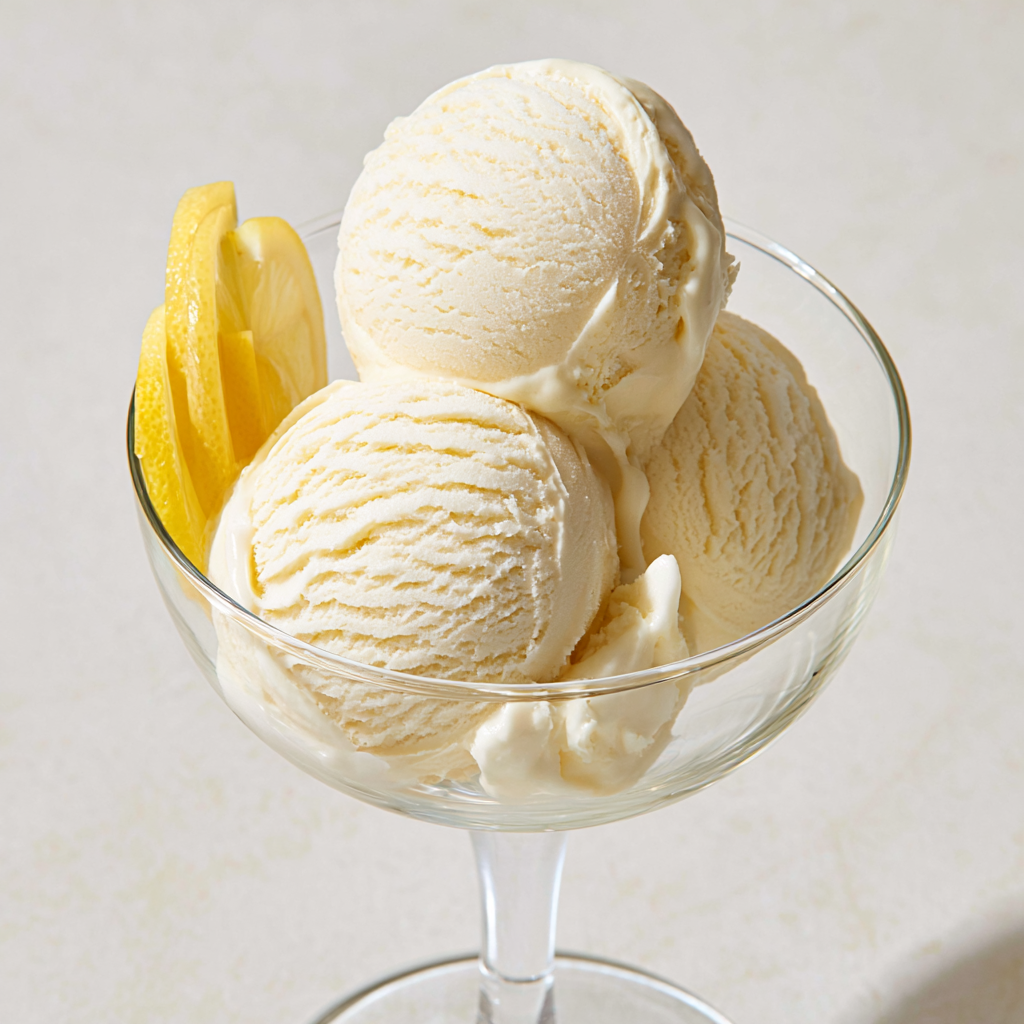
When you want a homemade frozen treat without making a traditional custard base, this lemon cottage cheese ice cream is a practical option to keep in mind. The ingredient list is short, the blender does most of the work, and you can easily control whether the finished dessert is thick enough for scoops or soft enough to eat straight from the blender.
Fresh lemon juice and zest give the ice cream its clean citrus flavor, while full-fat cottage cheese provides a creamy base. Maple syrup or honey adds just enough sweetness to soften the tart lemon without overwhelming it.
The method is also what makes this dessert work so well. Blending the cottage cheese before freezing removes its characteristic curds, while freezing the mixture in cubes makes it much easier to blend again into a smooth frozen consistency. That second blend is the key to getting an ice-cream-style texture from such simple ingredients.
Cottage Cheese Lemon Ice Cream Ingredients
You only need a handful of ingredients for this frozen dessert, so each one plays an important role in the final flavor and texture.
- Full-fat cottage cheese: Creates the rich, creamy foundation. Full-fat cottage cheese works especially well because its higher fat content helps produce a smoother frozen texture.
- Fresh lemon juice: Provides the bright, tart citrus flavor that balances the creamy cottage cheese and sweetener.
- Lemon zest: Intensifies the lemon flavor without adding additional liquid. Finely grated zest distributes more evenly throughout the mixture.
- Maple syrup or honey: Sweetens the ice cream while helping balance the sharpness of the fresh lemon. You can adjust the amount slightly according to your preferred level of sweetness.
- Milk: Helps the blender process the mixture and allows you to control the final consistency. Dairy or a suitable non-dairy milk can be used.
Step-by-Step Cottage Cheese Lemon Ice Cream
STEP 1: Add the full-fat cottage cheese, freshly squeezed lemon juice, lemon zest, and maple syrup or honey to a blender. Blend thoroughly until the mixture is completely smooth. Take enough time with this first blend to remove any noticeable cottage cheese curds.
STEP 2: Check the consistency while blending. If the mixture is too thick for the blades to circulate properly, add about 1 tablespoon of milk. Blend again until the base is creamy, uniform, and easily moving through the blender.
STEP 3: Pour or spoon the smooth lemon cottage cheese mixture into an ice cube tray. Distributing it into smaller portions makes the frozen mixture much easier to process later than freezing the entire batch in one solid container.
STEP 4: Transfer the tray to the freezer and leave it undisturbed until the cottage cheese mixture is completely solid. The exact freezing time can vary depending on your freezer and the size of the ice cube compartments, so focus on making sure the cubes are frozen all the way through.
STEP 5: Remove the frozen cottage cheese cubes from the tray and place them back into the blender. Add a small amount of the remaining milk, using only enough to help the blades begin moving.
STEP 6: Blend the frozen cubes until they break down into a thick, smooth, creamy mixture. Stop and scrape down the blender as needed. Add milk gradually rather than all at once because too much liquid can quickly turn the mixture from scoopable ice cream into soft serve.
STEP 7: Serve immediately for a softer frozen dessert, or transfer the blended mixture to an airtight freezer-safe container and freeze for another 1–2 hours. This additional freezing time helps create a firmer consistency that is easier to scoop.

Serving Ideas for Cottage Cheese Lemon Ice Cream
This lemon ice cream is flavorful enough to serve completely on its own, especially when you want the fresh citrus notes to remain the focus. A few simple pairings can make it feel a little more special without covering up its bright flavor.
- Fresh berries: Strawberries, blueberries, or raspberries complement the tart lemon and creamy base particularly well.
- Fresh fruit: Serve a scoop alongside sliced peaches, mango, or another naturally sweet fruit for a refreshing dessert.
- A small drizzle of maple syrup or honey: If you prefer a slightly sweeter finish, add just a little of the same sweetener used in the ice cream.
Can I make cottage cheese ice cream without an ice cream maker?
Yes. This method is specifically designed to work without an ice cream machine. The cottage cheese mixture is blended until smooth, frozen in small cubes, and then blended again. The second blending breaks down the frozen mixture and creates a much creamier texture than simply freezing the blended base in one container.
Why should I freeze the mixture in ice cube trays?
Freezing the base in an ice cube tray creates smaller frozen pieces that a blender can process more efficiently. A large solid block of frozen cottage cheese mixture would be much harder on the blender and could require considerably more liquid, which may make the finished ice cream too soft.
Can I use non-dairy milk?
Yes. Either dairy milk or a suitable non-dairy alternative can be used. Because the milk primarily helps with blending and consistency, you only need a small amount. Start with as little as possible during the second blend and increase it gradually until the texture is right.
Why is my cottage cheese ice cream too hard?
Homemade frozen desserts can become quite firm after spending additional time in the freezer. If your lemon cottage cheese ice cream is too hard to scoop, leave the container at room temperature for approximately 15–20 minutes. Once slightly softened, it should be much easier to portion.
Can I make it more like soft serve?
Absolutely. The amount of milk you add during the final blending stage determines much of the finished consistency. For soft serve, gradually blend in additional milk until the mixture becomes lighter and softer. For firmer scoops, keep the amount of added milk to a minimum.
Pro Tips for Cottage Cheese Lemon Ice Cream
- Blend the first mixture thoroughly. A completely smooth cottage cheese base gives you a noticeably creamier finished dessert, so avoid rushing the initial blending step.
- Add milk slowly after freezing. You can always add another spoonful, but you cannot easily remove excess liquid once the mixture becomes too thin.
- Use full-fat cottage cheese when possible. It provides the richest base and helps the frozen dessert maintain a pleasantly creamy texture.

How to Store & Reheat
Store Cottage Cheese Lemon Ice Cream in an airtight freezer-safe container. Keeping the container tightly sealed helps limit exposure to air and reduces the development of ice crystals.
For the creamiest texture, enjoy it relatively soon after preparing it. As with many simple homemade frozen desserts, longer freezer storage can make the mixture increasingly firm and icy because the recipe does not use the stabilizers commonly found in commercial ice cream.
If you are freezing the ice cream after its second blend specifically to create firmer scoops, allow approximately 1–2 additional hours in the freezer before serving.
There is no reheating involved with this recipe. Instead, think of the final step as softening. If the ice cream has frozen too firmly to scoop comfortably, remove it from the freezer and leave it at room temperature for around 15–20 minutes.
Check it periodically rather than allowing it to soften completely. You want the edges and surface to become slightly softer while the center remains cold and frozen. Once a spoon or ice cream scoop moves through it comfortably, it is ready to serve.
The texture is also easy to adjust if you want to return it to a softer consistency. You can place slightly softened portions back into the blender with a very small splash of milk and blend briefly. This recreates the smooth, soft-serve-style texture while keeping the fresh lemon flavor front and center.
Whether you serve it immediately after blending or give it additional freezer time for firmer scoops, this cottage cheese lemon ice cream is a straightforward way to turn a few everyday ingredients into a bright, creamy frozen dessert. The combination of fresh lemon, smooth cottage cheese, and gentle sweetness makes it especially refreshing when you want something simple that can be prepared entirely with a blender and freezer.
Cottage Cheese Lemon Ice Cream
Ingredients
- 1 ½ tablespoons freshly squeezed lemon juice
- 2 tablespoons maple syrup or honey according to taste
- 1 cup full-fat cottage cheese preferably for the creamiest texture
- 1 teaspoon finely grated lemon zest
- 4 –5 tablespoons milk using either dairy or a suitable non-dairy alternative
Instructions
- Place the cottage cheese, fresh lemon juice, lemon zest, and maple syrup in a blender.
- Blend until the ingredients form a completely smooth and evenly combined mixture.
- If the mixture is too thick for the blender to process efficiently, add 1 tablespoon of the milk and continue blending until smooth.
- Transfer the blended cottage cheese mixture evenly into an ice cube tray.
- Place the tray in the freezer and leave it there until the mixture has frozen completely into solid cubes.
- When ready to prepare the ice cream, remove the frozen cubes from the tray and place them in the blender.
- Add only enough of the remaining milk to allow the blender blades to move freely.
- Blend until the frozen mixture becomes creamy and smooth.
- For a thicker, scoopable ice cream, use only a small amount of milk during the final blending stage.
- Transfer the creamy mixture to a bowl once it reaches the desired scoopable consistency.
- For a softer, soft-serve-style texture, gradually incorporate additional milk while blending until the mixture becomes lighter and softer.
- For a firmer ice cream texture, spoon the blended mixture into an airtight container and freeze for an additional 1–2 hours.
- If the ice cream becomes excessively firm after freezing, leave it at room temperature for approximately 15–20 minutes before serving.