
Baked apple cider donuts bring concentrated fall flavor into a soft, tender oven-baked treat with warm spice, Greek yogurt, and a buttery cinnamon-sugar coating. They’re quick to bake, reliable, and ideal for cozy mornings.
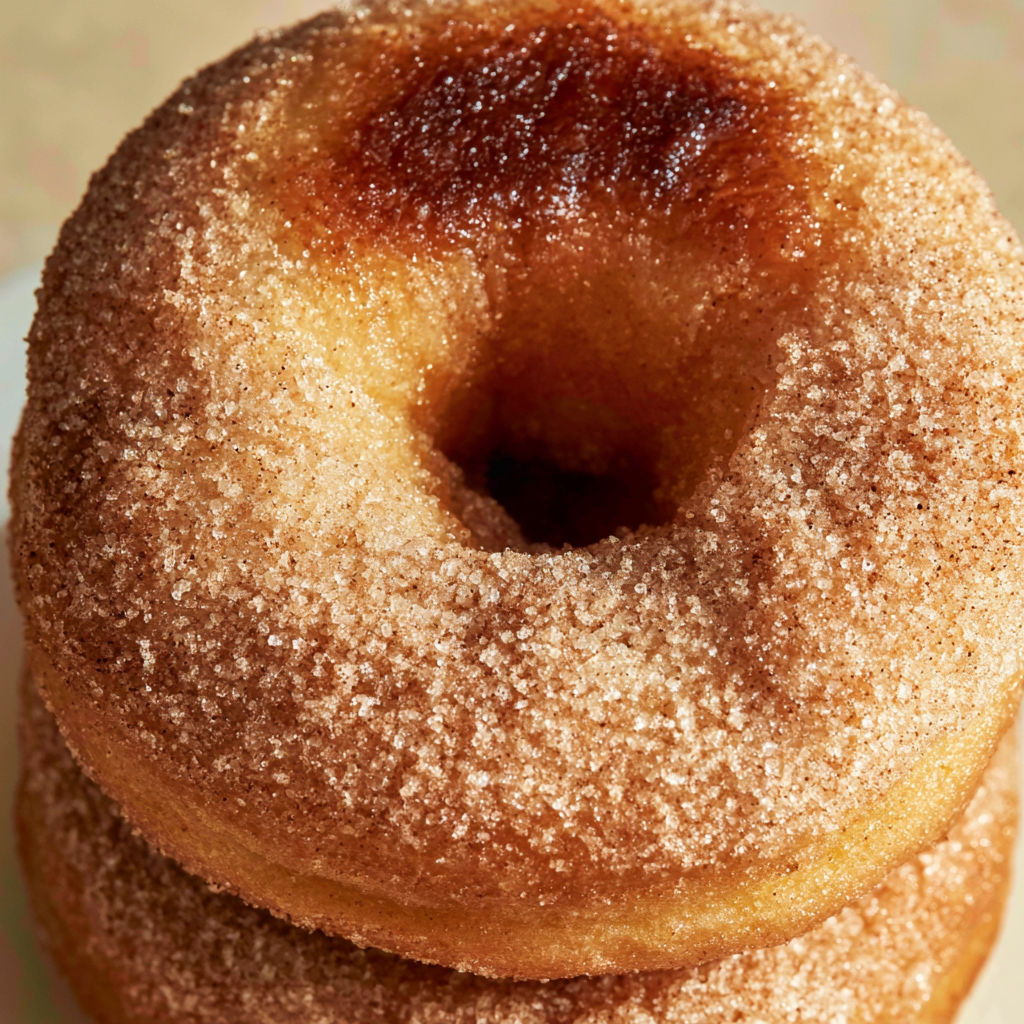
If you love the flavor of an apple orchard donut but would rather skip deep frying, these are a great option for your kitchen. Reducing the cider first concentrates its apple flavor, so it doesn’t disappear once the batter meets the flour and spices.
The combination of cinnamon, nutmeg, cloves, and vanilla gives the donuts a warm, familiar flavor without overwhelming the cider. Greek yogurt keeps the crumb tender, while melted butter adds richness without requiring a mixer or a lengthy creaming step.
The finishing touch is what makes these especially satisfying. While the donuts are still warm, they’re dipped in a buttery cider mixture and rolled generously in cinnamon sugar. That gives each one a lightly crisp, sparkly exterior wrapped around a soft baked center.
Apple Cider Donut Ingredients
Apple cider: The main flavor of the donuts. Reducing it from 1 cup to 1/2 cup concentrates the apple notes without adding too much extra liquid to the batter.
All-purpose flour: Provides enough structure for the donuts to rise while still keeping the interior tender.
Granulated sugar: Sweetens the batter and is also used for the cinnamon-sugar coating.
Unsalted butter: Melted butter enriches the batter, while another portion helps the cinnamon sugar stick to the finished donuts.
Greek yogurt: Adds moisture and a subtle tang that helps prevent the baked donuts from becoming dry.
Egg: Binds the batter and supports a soft, cohesive crumb. A room-temperature egg mixes more smoothly with the other wet ingredients.
Vanilla extract: Rounds out the cider and spice flavors with a little extra warmth.
Cinnamon, nutmeg, and cloves: This simple spice combination gives the donuts their cozy autumn character. Nutmeg and cloves are used sparingly so the apple cider remains noticeable.
Baking powder and baking soda: The two leaveners work together to give the baked donuts a lighter texture.
Salt: A small amount balances the sweetness and brings out the cider and spice flavors.
Reserved reduced cider: A little of the concentrated cider is saved for the coating, reinforcing the apple flavor after baking.

Cooking Steps
STEP 1: Reduce the apple cider until 1 cup becomes approximately 1/2 cup. You can do this in a small saucepan or in the microwave. Heat the oven to 350°F while the cider reduces, and grease the donut pan thoroughly so the baked donuts release cleanly.
STEP 2: Stir the warm reduced cider together with the melted butter and let the mixture cool slightly. Reserve about 2 tablespoons for coating the donuts later. Whisk the remaining cider mixture with the sugar, egg, Greek yogurt, and vanilla until smooth and evenly combined.
STEP 3: In another bowl, whisk the flour with cinnamon, baking powder, baking soda, nutmeg, cloves, and salt. Mixing the spices and leaveners into the flour first helps them distribute evenly throughout every donut.
STEP 4: Add the wet ingredients to the flour mixture and fold gently with a spatula. Stop once the visible dry streaks have disappeared. The batter does not need to be perfectly smooth, and leaving it alone as soon as it comes together helps preserve a softer texture.
STEP 5: Transfer the batter to a piping bag or a zip-top bag with one corner snipped off. Pipe it evenly into the greased donut cavities, filling each about two-thirds full. Bake for 9–11 minutes, until the donuts are lightly golden and a toothpick comes out clean or with a few moist crumbs.
STEP 6: Leave the donuts in the pan for about 2–3 minutes before carefully removing them. Combine the reserved cider mixture with the melted butter in one shallow bowl and stir the cinnamon and sugar together in another. Dip each warm donut into the cider-butter mixture, then immediately coat it thoroughly with cinnamon sugar.
How to Store & Reheat
These donuts have their nicest texture on the day they are baked, especially while the cinnamon-sugar coating is still slightly crisp. Once completely cool, keep leftovers in a tightly covered container at room temperature for about 1–2 days.
For longer storage, refrigerate them in an airtight container for up to 4 days. The refrigerator can make baked donuts slightly firmer and may soften the cinnamon coating, so allow them to come closer to room temperature before serving.
For freezing, the best option is to freeze the donuts before adding the cider-butter and cinnamon-sugar coating. Arrange the cooled donuts in a freezer-safe container with parchment between layers and freeze for up to 2 months. Thaw at room temperature, warm briefly if desired, then add the coating.
To refresh a donut, microwave it for only a few seconds or place an uncoated donut in a 300°F oven for several minutes. Avoid prolonged reheating, which can dry out the soft crumb.
Why should I reduce the apple cider first?
Reducing the cider removes some of its water and intensifies its flavor. If you add the full amount of unreduced cider, the batter would contain considerably more liquid while the apple flavor would remain relatively mild. Concentration gives you stronger cider character without upsetting the balance of the batter.
Can I make the batter ahead of time?
It is better to bake the batter shortly after combining the wet and dry ingredients. Once the baking soda and baking powder become wet, they begin contributing to the rise. For advance preparation, reduce the cider and measure your dry ingredients separately, then mix everything just before baking.
How do I know when baked donuts are done?
Look for donuts that have risen, appear lightly golden around the edges, and spring back gently when touched. A toothpick inserted into the thickest part should come out clean or with a couple of moist crumbs. Pulling them from the oven on time helps keep the interior tender.
Can I make these without a piping bag?
Yes. A zip-top storage bag works well as an inexpensive substitute. Spoon the batter into the bag, press out excess air, and snip a small opening from one corner. You can also carefully spoon the batter into the pan, although piping makes it easier to fill the cavities neatly.
Why did my cinnamon sugar not stick?
The coating adheres most effectively while the donuts are still warm. Dip each donut lightly but thoroughly in the cider-butter mixture before immediately rolling it in cinnamon sugar. If the donuts cool completely first, the butter can sit on the surface less evenly and the sugar may not cling as well.

Pro Tips for Apple Cider Donuts
- Measure the cider after reducing it. Reduction times can vary depending on your saucepan, microwave, and heat level, so volume is more reliable than timing. You want approximately 1/2 cup of concentrated cider before continuing.
- Mix the batter gently. Once flour is added, fold only until everything comes together. Excessive mixing develops more gluten and can turn what should be a tender baked donut into a firmer one.
- Coat while warm, not piping hot. Let the donuts rest just long enough to handle comfortably. Warm surfaces accept the buttery cider coating and cinnamon sugar much more readily than completely cooled donuts.
Serving Ideas for Apple Cider Donuts
Serve these donuts slightly warm with hot coffee or cold brew for a simple breakfast or afternoon treat. The cinnamon and concentrated cider pair especially well with roasted coffee flavors.
For a more substantial brunch, add fresh apple slices or a seasonal fruit bowl alongside the donuts. The fresh fruit provides a lighter contrast to the buttery cinnamon-sugar coating.
They also work nicely with plain Greek yogurt at breakfast. Its mild tang balances the sweetness of the coating and echoes the yogurt already used to keep the donuts soft and tender.
Baked Apple Cider Donuts
Ingredients
For the Donut Batter
- 1 large egg brought to room temperature
- 1/2 teaspoon baking powder
- 2 tablespoons plain Greek yogurt
- Pinch of ground cloves
- 1 cup apple cider simmered or microwaved until reduced to 1/2 cup
- 1/2 teaspoon ground cinnamon preferably freshly ground
- 3 tablespoons unsalted butter melted and allowed to cool slightly
- 1/4 cup granulated sugar
- Pinch of salt
- 1/2 teaspoon pure vanilla extract
- 1 cup all-purpose flour such as King Arthur
- Pinch of ground nutmeg preferably freshly grated
- 1/2 teaspoon baking soda
For the Cinnamon Sugar Topping
- 3 tablespoons unsalted butter melted
- 1 1/2 teaspoons ground cinnamon preferably freshly ground
- 2 tablespoons reserved reduced cider
- 1/2 cup granulated sugar for coating
Instructions
- Reduce the 1 cup of apple cider until only 1/2 cup remains. This can be done in the microwave for approximately 8–10 minutes or in a saucepan on the stovetop for about 10 minutes.
- While the cider is reducing, heat the oven to 350°F. Thoroughly grease the cavities of the donut pans with butter or nonstick cooking spray, taking care to cover the edges and crevices.
- After the cider has reduced, combine it with the 3 tablespoons of melted butter and allow the mixture to cool slightly. Measure out 2 tablespoons and set this portion aside for use with the final coating.
- Place the remaining cider-butter mixture in a large mixing bowl. Add the 1/4 cup sugar, room-temperature egg, Greek yogurt, and vanilla extract.
- Whisk until the ingredients form a smooth, evenly blended mixture. The Greek yogurt contributes moisture and a mild tang while helping produce a tender crumb.
- Using an egg at room temperature allows it to incorporate more readily into the liquid ingredients and promotes a more uniform mixture.
- In a separate bowl, whisk together the all-purpose flour, 1/2 teaspoon cinnamon, baking soda, baking powder, nutmeg, cloves, and salt until the spices and leavening agents are evenly distributed.
- Add the wet mixture to the dry ingredients. Using a spatula, gently fold everything together only until no large streaks of dry flour remain.
- Avoid excessive mixing. A few small lumps may remain in the batter; overworking it can develop too much gluten and lead to donuts with a firmer, denser texture.
- Spoon the prepared batter into a piping bag, or use a zip-top bag with one corner trimmed away.
- Pipe the batter into the prepared donut cavities, filling each approximately two-thirds full to provide enough space for rising during baking.
- Bake at 350°F for 9–11 minutes, or until the donuts are lightly golden and a toothpick inserted into one comes out clean or with only a few moist crumbs attached.
- Remove the pans from the oven and allow the donuts to rest inside them for 2–3 minutes before carefully releasing them. Avoid overbaking, as the donuts will continue cooking slightly from residual heat while cooling.
- Place the 3 tablespoons of melted butter in a shallow bowl and stir in the 2 tablespoons of reserved cider mixture.
- In a second shallow bowl, thoroughly combine the 1/2 cup sugar with the 1 1/2 teaspoons ground cinnamon.
- Keep both coatings ready before dipping the donuts so they can be coated while still warm.
- When the baked donuts have cooled for approximately 2–3 minutes and can be comfortably handled, dip each one into the cider-butter mixture, coating both sides.
- Immediately transfer each glazed donut to the cinnamon sugar and cover it generously on all surfaces.
- Place the coated donuts on a wire cooling rack or a sheet of parchment paper and allow them to cool completely.