
Garlic Bread Focaccia is a deeply golden, airy bread with a crisp olive oil-rich crust, a soft interior, and a savory finish of warm garlic butter, parsley, flaky sea salt, and freshly grated Parmigiano Reggiano. The overnight fermentation does most of the flavor-building work for you, making this a reliable make-ahead bread for dinners, gatherings, and weekend baking.
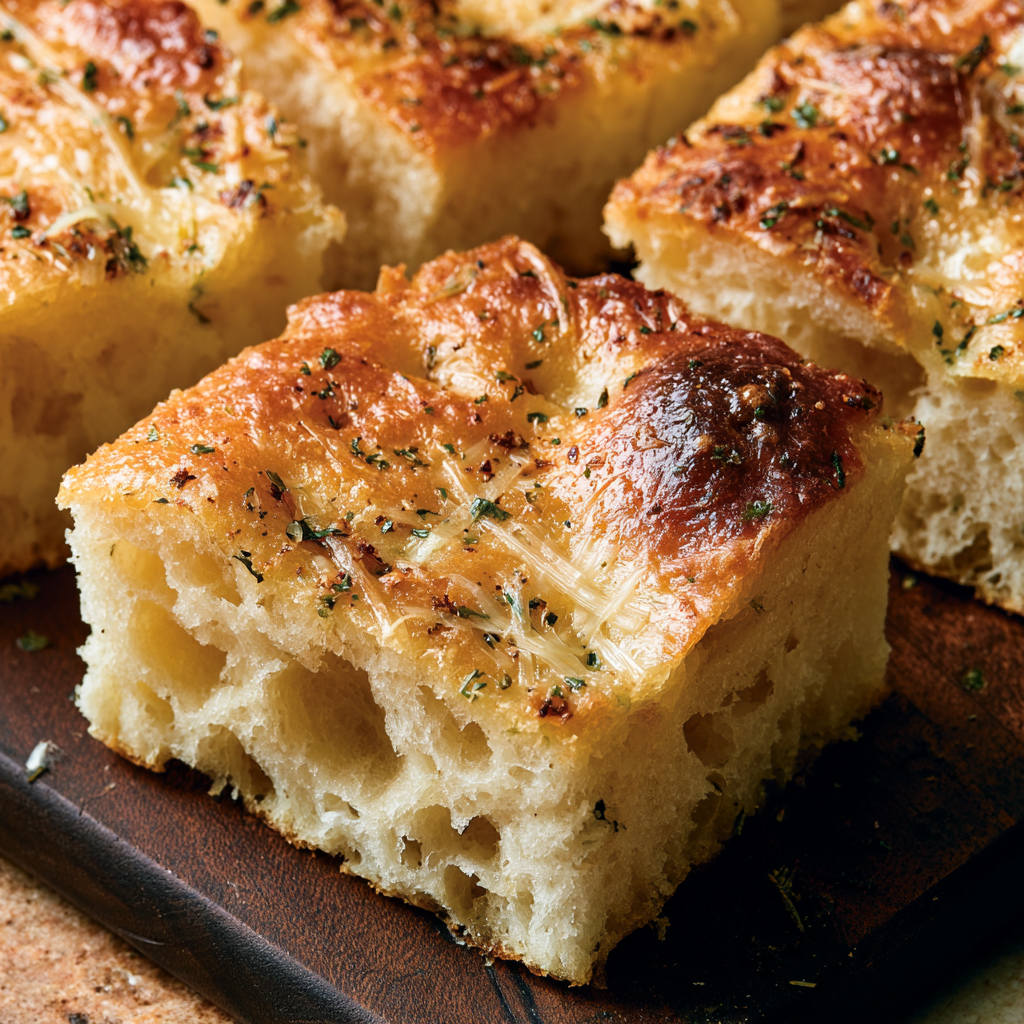
If you love the buttery flavor of classic garlic bread but want something with more texture and character, this focaccia gives you both. Each slice has a tender, bubbly center surrounded by crisp edges, while the garlic butter soaks into those deep dimples after baking.
The long refrigerated rise is especially important here. Rather than rushing the dough, you give the yeast a full 24 hours to slowly develop flavor and structure. The dough then gets a final room-temperature proof before baking in a generously oiled metal pan.
What really makes this bread memorable is the finish. Garlic is gently cooked in salted butter just until fragrant, then brushed across the focaccia while the loaf is still hot. Parsley and Parmigiano Reggiano complete the savory topping without overwhelming the simple fermented dough underneath.
Garlic Bread Focaccia Ingredients
All-purpose flour: Forms the main structure of the dough while still producing a tender, airy focaccia.
Active dry yeast: Provides the rise and creates the bubbles that give the bread its characteristic open interior.
Warm water: Hydrates the flour and helps activate the yeast. Keep it around 105 to 115°F so it is warm enough for activation without damaging the yeast.
Granulated sugar: Gives the yeast a small amount of readily available food during activation.
Kosher salt: Seasons the dough throughout rather than leaving all the flavor on the surface.
Extra-virgin olive oil: Adds richness to the dough while also coating the pan and helping the bottom and edges become beautifully golden.
Salted butter: Creates the rich finishing mixture that turns the baked focaccia into garlic bread-inspired focaccia.
Fresh garlic: Adds the unmistakable aromatic garlic flavor. Finely minced or pressed garlic distributes especially well through the butter.
Flaky sea salt: Adds small bursts of saltiness across the top and emphasizes the focaccia’s crisp surface.
Parmigiano Reggiano: Gives the warm bread a nutty, savory cheese finish.
Fresh parsley: Adds freshness and a mild herbal contrast to the butter and Parmesan.

Step-by-Step Garlic Bread Focaccia
STEP 1: Combine the warm water, active dry yeast, and sugar in a mixing bowl. Whisk briefly, then leave the mixture alone for about 10 minutes. You should see foam developing on top. This is a useful sign that the yeast is active before you add it to the flour.
STEP 2: Place the flour and kosher salt in the bowl of a stand mixer and mix them briefly so the salt is evenly dispersed. Pour in the activated yeast mixture. Using the dough hook, knead on low speed for about 6 minutes. The finished dough should look elastic and begin releasing from the sides of the bowl. You can also knead by hand until the dough feels smooth and stretchy.
STEP 3: Lightly oil a large clean bowl with extra-virgin olive oil. Transfer the dough to the bowl and turn it once or twice so the surface receives a light coating. Cover the bowl securely and refrigerate it for 24 hours. This slow fermentation helps produce both deeper flavor and a lighter internal structure.
STEP 4: The following day, add 1/4 cup olive oil to a 9 x 13-inch metal pan. Transfer the cold dough directly into the pan and gently begin stretching it outward. If it resists, do not force it. Cover the pan, wait about 15 minutes, and then stretch it again. Once the dough reaches the edges, cover it and let it rise at room temperature for approximately 3 hours.
STEP 5: Heat the oven to 450°F. Give the oven another 5 to 10 minutes after it reaches temperature so it is thoroughly preheated. Drizzle roughly 2 tablespoons of olive oil over the risen dough. Press your fingertips firmly into the surface to create deep dimples, then sprinkle the top with flaky sea salt.
STEP 6: Bake the focaccia for 20 to 25 minutes, rotating the pan halfway through. Look for a richly golden top as well as browned edges and sides. While the bread bakes, melt the salted butter over medium-low heat, add the garlic, and cook for about 1 minute. Remove it from the heat as soon as the garlic smells fragrant and develops just a hint of color.
STEP 7: Pour the garlic butter over the focaccia immediately after it comes out of the oven. Use a pastry brush to spread the garlic and butter into the dimples and across the crust. Finish with chopped parsley and plenty of freshly grated Parmigiano Reggiano. Let it cool briefly before transferring it to a rack, or serve it warm if you prefer a softer, buttery finish.
What should properly proofed focaccia dough look like?
After its final three-hour rise, the dough should appear noticeably puffed and relaxed, with visible air developing beneath the surface. When you press your fingertips into it, the dough should accept the dimples without immediately springing completely flat again.
Avoid aggressively stretching the dough right before baking. Most of the shaping should already be finished before the final rise so you can preserve as much of that accumulated air as possible.
Why does the dough need 24 hours in the refrigerator?
Cold fermentation slows the activity of the yeast and gives the dough more time to develop flavor. It also contributes to the airy, slightly chewy structure associated with good focaccia.
The refrigerated rise is therefore more than a scheduling convenience. It is one of the most important parts of this particular bread, so plan to give the dough the full fermentation period rather than shortening it dramatically.
Recipe Tips
- Let resistant dough rest. If the cold dough keeps shrinking back while you stretch it across the pan, cover it and wait another 10 to 15 minutes. Relaxed dough is much easier to shape without tearing.
- Preheat the oven thoroughly. Focaccia benefits from going into a very hot oven. Allowing an extra few minutes after the oven reaches 450°F helps promote strong browning along the crust and bottom.
- Watch the garlic closely. Garlic can move from fragrant to burned quickly in hot butter. Cook it only briefly, then transfer the finished garlic butter away from the hot pan.

Can I prepare focaccia dough the night before?
Yes. In fact, this focaccia is designed around an overnight refrigerated fermentation. Prepare and knead the dough, place it in the oiled bowl, cover it securely, and refrigerate it for about 24 hours.
Remember that the dough still needs additional time the following day. After transferring it to the pan, it rests briefly and then rises at room temperature for about three hours before baking.
What to Serve with Garlic Bread Focaccia
Garlic focaccia works especially well alongside meals that give you a reason to tear off pieces and use them to catch sauce.
Pasta with tomato sauce is a natural pairing because the focaccia can soak up the extra sauce left on the plate. Its garlic and Parmesan topping fits comfortably with both simple marinara and richer pasta dishes.
Soup is another practical option. Serve thick slices beside tomato soup, vegetable soup, or an Italian-inspired bean soup for an especially comforting meal.
A crisp green salad creates a lighter contrast. A simple salad with lettuce, vegetables, and a bright vinaigrette balances the rich garlic butter and olive oil in the bread.
Can I use a glass pan instead of metal?
A metal 9 x 13-inch pan is preferable because metal conducts heat efficiently and encourages stronger browning on the bottom and sides.
A different baking vessel can change how quickly the focaccia cooks and how crisp the crust becomes. If you substitute another type of pan, monitor the bread carefully near the end rather than relying entirely on the suggested baking time.
Keeping Leftovers Fresh
Let leftover focaccia cool completely before storing it. Once cool, keep it tightly wrapped or in an airtight container at room temperature for about 1 to 2 days. For slightly longer storage, refrigerate it, although refrigeration can make bread firm more quickly.
For longer storage, freeze individual slices or portions in a well-sealed freezer container or freezer bag for approximately 2 to 3 months. Separating portions before freezing makes it easier to reheat only what you need.
To restore the crust, warm focaccia in a moderate oven until heated through. A few minutes in the oven generally produces a better texture than microwaving because the dry heat helps the exterior crisp again.
If reheating from frozen, you can thaw the bread first or warm individual pieces directly from frozen, allowing additional time as needed. Keep an eye on the garlic and Parmesan topping so the surface does not become overly dark.
Can I serve garlic focaccia immediately after baking?
Yes, and warm focaccia is especially good because the freshly applied garlic butter remains aromatic and the Parmesan softens slightly against the hot crust.
For the crispest bottom and sides, however, let the loaf rest briefly and transfer it from the baking pan to a wire rack. Leaving it sitting in the hot pan for too long can trap steam underneath and gradually soften the crust.
This focaccia is a particularly useful choice when you want bread that can be largely prepared ahead without sacrificing texture or flavor. The overnight dough develops slowly in the refrigerator, the final proof creates an airy interior, and the combination of olive oil and high oven heat produces those deeply browned edges that make focaccia so satisfying.
Then the garlic bread treatment comes in at exactly the right moment. Brushing the baked loaf with fragrant garlic butter allows the topping to settle into every dimple while keeping the garlic from burning in the intense oven. Add parsley, flaky salt, and freshly grated Parmigiano Reggiano, and you have a savory loaf that works just as comfortably beside a weeknight pasta as it does in the center of a dinner table.
Garlic Bread Focaccia
Ingredients
For the Focaccia Dough
- 5 cups plain all-purpose flour
- 2 1/4 teaspoons active dry yeast
- 1/4 cup extra-virgin olive oil
- 1 teaspoon granulated sugar
- 1 1/2 tablespoons kosher salt
- 2 cups water warmed to approximately 105–115°F
For the Garlic Butter
- 4 garlic cloves finely minced or pressed
- 4 tablespoons salted butter
For Topping and Finishing
- Flaky sea salt several pinches
- Freshly grated Parmigiano Reggiano as needed
- Chopped flat-leaf parsley for garnishing
- Olive oil as needed for drizzling
Instructions
- Pour the 2 cups of warm water into a medium mixing bowl. Add the active dry yeast and granulated sugar, then whisk until thoroughly combined.
- Leave the mixture undisturbed for 10 minutes. A layer of foam should develop across the surface, indicating that the yeast has activated.
- Add the all-purpose flour and kosher salt to the bowl of a stand mixer fitted with a dough hook. Briefly whisk the dry ingredients together to distribute the salt evenly.
- Pour the activated yeast mixture into the flour mixture. Knead on low speed for 6 minutes, or until the dough becomes elastic and begins pulling cleanly away from the sides of the bowl.
- If kneading without a stand mixer, work the dough by hand until it develops a smooth, stretchy, and elastic texture.
- Lightly coat the inside of a large bowl with extra-virgin olive oil. Transfer the kneaded dough to the prepared bowl and turn it so the exterior is lightly covered with oil.
- Seal the bowl securely with plastic wrap and refrigerate for 24 hours. This extended cold fermentation develops the focaccia’s flavor and contributes to its airy texture.
- Remove the refrigerated dough. Pour 1/4 cup extra-virgin olive oil into a 9 × 13-inch metal baking or cake pan, spreading it evenly over the base.
- Set the chilled dough in the oiled pan and gently stretch it toward the edges. Cover the pan and allow the dough to rest at room temperature for 15 minutes.
- Once rested, the dough should be easier to handle. Using your fingertips, carefully extend it until it reaches the edges of the pan.
- Cover the pan tightly once more and leave the dough to rise at room temperature for 3 hours.
- Preheat the oven to 450°F. Once the oven reaches temperature, allow it to remain heated for an additional 5–10 minutes so the interior is thoroughly hot.
- Remove the covering from the risen dough. Drizzle approximately 2 tablespoons of olive oil over the surface, then press your fingertips deeply into the dough to form characteristic focaccia dimples throughout.
- Scatter several pinches of flaky sea salt over the top.
- Bake for 20–25 minutes, until both the surface and sides are richly golden brown. Rotate the pan halfway through the baking period to encourage even coloring.
- While the focaccia bakes, melt the salted butter in a small saucepan or skillet over medium to medium-low heat.
- Stir in the minced or pressed garlic and cook for approximately 1 minute, just until fragrant and beginning to develop a light golden color.
- Immediately remove the pan from the heat and pour the garlic butter into a heatproof bowl so the garlic does not continue cooking and burn.
- As soon as the focaccia comes out of the oven, pour the warm garlic butter evenly across the surface. Use a pastry brush to distribute the butter and garlic over the entire top.
- Scatter chopped flat-leaf parsley over the bread, then generously finish with freshly grated Parmigiano Reggiano.
- Allow the focaccia to cool slightly on a wire rack to help preserve its crisp exterior, or slice and serve while it remains warm.