
These gingerbread cookie bars are soft, warmly spiced, and simple to bake in one 9 × 13-inch pan, with rich molasses flavor and a smooth cream cheese icing. They’re a reliable holiday dessert that slices easily and works beautifully for parties, cookie trays, or make-ahead treats.
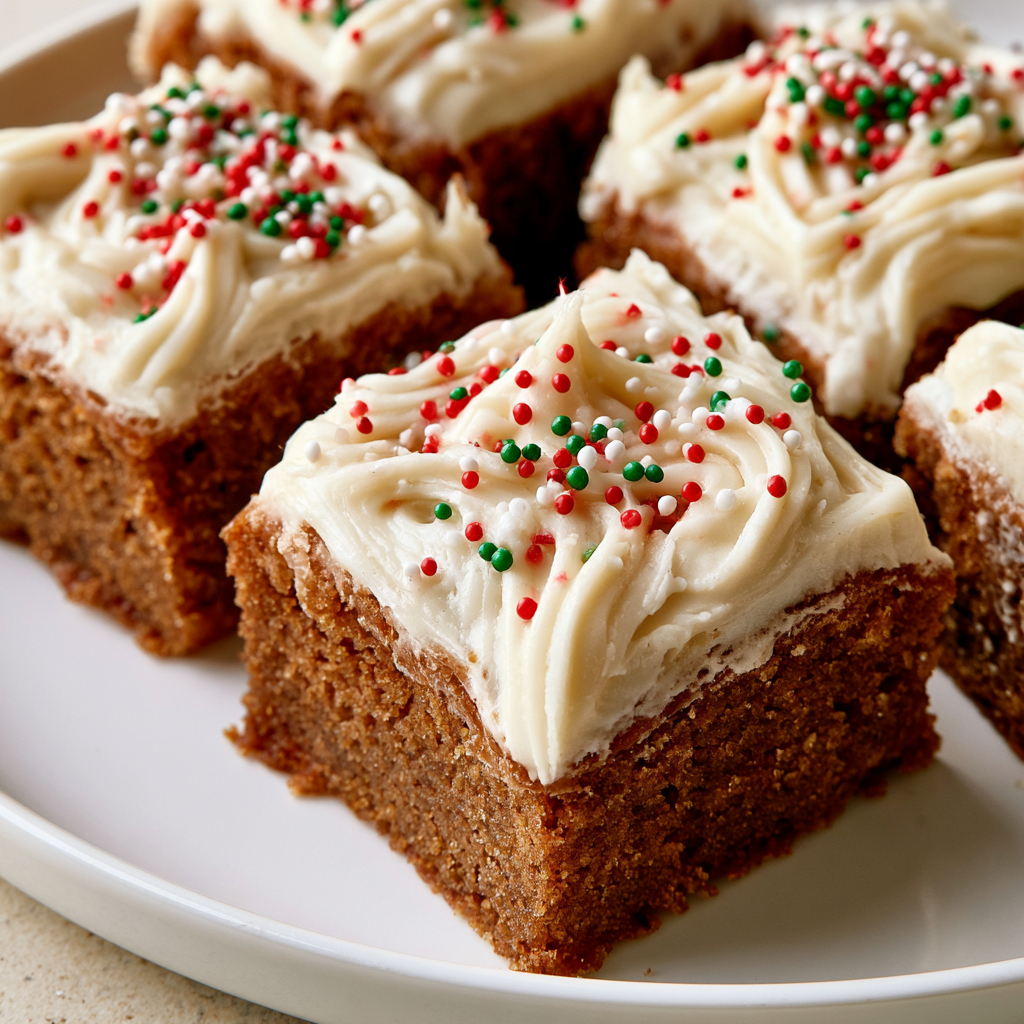
If you love traditional gingerbread flavor but don’t want to roll, cut, and decorate individual cookies, these bars are a much more practical option. You get the familiar combination of molasses, cinnamon, ginger, and cloves in a tender cookie base that comes together without shaping dough or baking multiple batches.
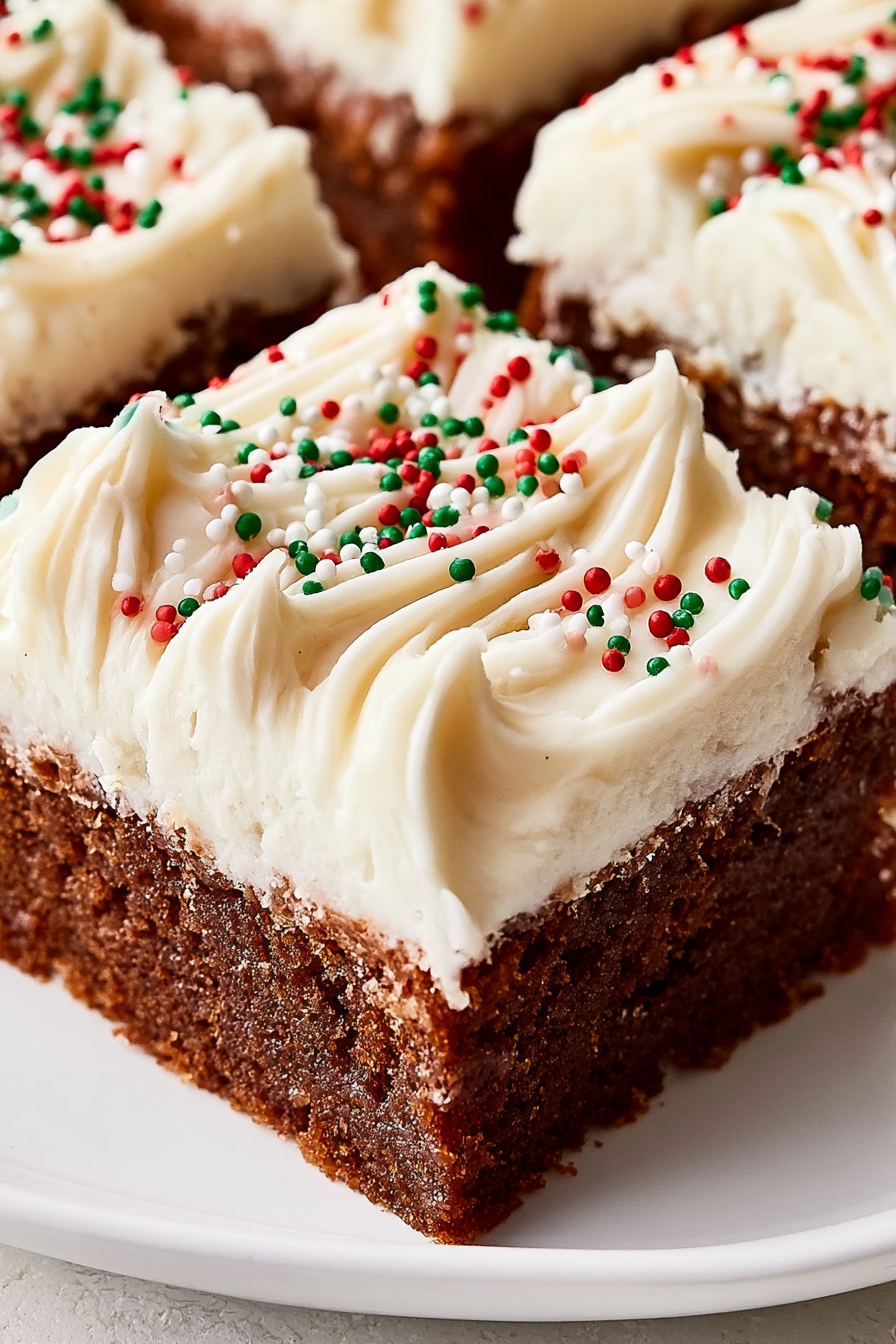
The cream cheese icing adds a cool, creamy finish that balances the deeper spice and molasses notes. You can keep the top simple or scatter holiday sprinkles over the frosting when you want something more festive for December gatherings, school parties, or a Christmas dessert table.
Another reason this recipe works so well is the short baking time. The key is pulling the pan from the oven while the center still has a little softness. As the bars cool, they continue setting into that soft, tender texture you want rather than becoming dry or overly firm.
Gingerbread Cookie Bar Ingredients
All-purpose flour: Forms the structure of the cookie base while still allowing the bars to stay tender when the dough is mixed gently.
Unsalted butter: Melted butter creates a rich base and helps give the bars their soft, dense cookie texture. Let it cool before combining it with the sugars.
Light brown sugar: Adds moisture, sweetness, and a mild caramel note that pairs especially well with molasses and warm spices.
Granulated sugar: Balances the brown sugar and contributes additional sweetness without making the molasses flavor too dominant.
Unsulphured molasses: Supplies the dark color and signature gingerbread depth. Use regular unsulphured molasses rather than blackstrap, which can taste much more bitter and intense.
Egg: Helps bind the ingredients while contributing structure and tenderness to the baked bars.
Ground cinnamon: Provides the strongest warm spice note and complements both the ginger and molasses.
Ground ginger: Gives the bars their traditional gingerbread warmth and a gently peppery finish.
Ground cloves: Adds deeper spice in a smaller amount so the gingerbread flavor tastes layered rather than simply sweet.
Fresh ginger: An optional addition that brings a sharper, brighter ginger note alongside the dried spice.
Baking soda: Provides the leavening needed for a soft cookie-bar texture.
Salt: Keeps the sweetness balanced and helps the spices stand out.
Cream cheese: Use softened full-fat block cream cheese for a thick, smooth frosting that spreads easily over the cooled bars.
Powdered sugar: Sweetens and thickens the cream cheese icing while keeping its texture smooth.
Vanilla extract: Rounds out the tanginess of the frosting and complements the warm spices in the bars.
Holiday sprinkles: Optional, but useful when you want to turn the finished pan into a festive Christmas dessert.

Step-by-Step Gingerbread Cookie Bars
STEP 1: Heat your oven to 350°F and prepare a 9 × 13-inch baking pan with parchment paper or a light coating of grease. In a separate bowl, whisk together the flour, baking soda, salt, cinnamon, dried ginger, and cloves until the seasonings are evenly distributed.
STEP 2: Add the cooled melted butter, light brown sugar, and granulated sugar to a large mixing bowl. Beat for about 2 minutes, until the mixture looks lighter and more thoroughly combined. Letting the butter cool first prevents it from heating the egg during the next step.
STEP 3: Beat in the unsulphured molasses and room-temperature egg. Add the freshly grated ginger here if you want a stronger ginger flavor. Scrape around the sides and bottom of the bowl so no thick streaks of molasses remain.
STEP 4: Add the flour mixture to the wet ingredients and mix on low speed just until the dough comes together. Stop as soon as the flour disappears. Overmixing at this stage can make the finished cookie bars firmer than intended.
STEP 5: Transfer the thick dough to your prepared pan. Spread and press it into an even layer, making sure the corners are filled so the bars bake as uniformly as possible. An offset spatula or the flat back of a measuring cup can make this easier.
STEP 6: Bake for 16–18 minutes. Look for edges that appear set while the center still feels slightly soft. Avoid waiting for the entire surface to become firm, since the bars continue setting from residual heat after the pan leaves the oven. Cool completely before frosting.
STEP 7: Beat the softened cream cheese and softened butter until completely smooth. Gradually add the sifted powdered sugar and vanilla, then continue beating until the icing is light and creamy. Spread it over the fully cooled cookie layer and add sprinkles, if desired, before slicing.
How to Store & Reheat
Because these bars are topped with cream cheese icing, store frosted leftovers in an airtight container in the refrigerator. They should keep well for about 3–4 days. If stacking them, place parchment paper carefully between the layers so the frosting does not stick excessively.
For the softest texture, you can let a refrigerated bar sit at room temperature for around 15–20 minutes before serving. This takes some of the chill off the cookie base and softens the frosting slightly.
Unfrosted bars are particularly convenient for freezing. Once completely cool, wrap them tightly and place them in a freezer-safe container for up to about 2 months. Thaw them before adding freshly prepared cream cheese icing.
Reheating is generally unnecessary because these bars are intended to be served at room temperature or slightly chilled. If you prefer the cookie base warm, warm an unfrosted portion briefly and add icing only after it has cooled again.
Can I make these bars ahead of time?
Yes. You can bake the gingerbread base a day ahead, allow it to cool completely, and keep it well covered. Prepare and spread the cream cheese icing closer to serving, or refrigerate the fully frosted bars overnight in an airtight container.
Why should I avoid blackstrap molasses?
Blackstrap molasses is much stronger, more concentrated, and more bitter than regular unsulphured molasses. Using it can overwhelm the cinnamon, ginger, and cloves. Regular unsulphured molasses gives you the deep gingerbread flavor and dark color without an excessively bitter finish.
How do I know when gingerbread bars are done?
Check the pan near the 16-minute mark. The outer edges should look set and lightly firm, but the middle can still have a little softness. If you bake until the center feels completely firm, the bars may become drier as they cool.
Do I need to use fresh ginger?
No. Ground ginger provides plenty of traditional gingerbread character on its own. Freshly grated ginger is optional and is most useful if you enjoy a brighter, slightly sharper ginger bite. Adding it gives the spice profile another layer without changing the basic method.
Why does the cream cheese icing need softened ingredients?
Softened cream cheese and butter blend together much more evenly than cold ingredients. Starting with both at a similar temperature helps prevent small lumps and creates a smoother frosting before the powdered sugar and vanilla are added.
Perfect Pairings
These bars work especially well as part of a holiday dessert spread. Serve them alongside simple sugar cookies or shortbread when you want contrasting textures and flavors without having several heavily spiced desserts competing with one another.
For drinks, a warm cup of coffee is a natural match for the darker molasses notes, while hot chocolate makes them especially cozy for a winter dessert. A cold glass of milk is another simple option that balances the spices and creamy frosting.
You can also cut the pan into smaller squares for cookie exchanges, Christmas parties, or dessert platters where guests will be sampling several sweets.
Helpful Tips
- Do not overbake the bars. Removing them while the center retains a little softness is one of the most important steps for keeping the finished gingerbread tender rather than dry.
- Cool the base completely before frosting. Even slight residual warmth can soften the cream cheese icing and make it difficult to create an even layer.
- Sift the powdered sugar when needed. Breaking up lumps before mixing makes it much easier to achieve a smooth, creamy frosting with minimal beating.
Gingerbread Cookie Bars
Ingredients
Gingerbread Cookie Bar Base
- 3/4 cup firmly packed light brown sugar
- 1 teaspoon ground ginger
- 1 large egg brought to room temperature
- 1/2 cup unsalted butter melted and allowed to cool to room temperature
- 1 tablespoon ground cinnamon preferably freshly ground for a more aromatic flavor
- 1/3 cup unsulphured molasses; avoid blackstrap molasses
- 2 cups all-purpose flour
- 1/2 teaspoon fine salt
- 1/4 cup granulated white sugar
- 1/2 teaspoon ground cloves
- 1 1/2 teaspoons baking soda
- 1 teaspoon freshly grated ginger optional, for a more pronounced fresh-ginger bite
Cream Cheese Icing
- 1 teaspoon vanilla extract
- 1 1/2 cups powdered sugar sifted to eliminate lumps
- 1/4 cup unsalted butter softened
- 1 cup full-fat block-style cream cheese, softened; do not use whipped cream cheese
Garnish
- Holiday sprinkles optional
Instructions
- Preheat the oven to 350°F. Line a 9 × 13-inch baking pan with parchment paper or coat it lightly with grease to prevent the bars from sticking and to make removal easier.
- Place the all-purpose flour, baking soda, salt, cinnamon, ground ginger, and cloves in a medium mixing bowl. Whisk thoroughly so that the spices and leavening agent are distributed evenly throughout the flour.
- Freshly ground cinnamon may be used when available for a brighter and more aromatic cinnamon flavor.
- Place the melted butter, after it has cooled to room temperature, in the bowl of a stand mixer or a large bowl suitable for a hand mixer. Add the packed light brown sugar and granulated sugar.
- Beat the mixture for approximately 2 minutes, or until it appears paler, lighter, and fluffier in texture. Properly beating these ingredients incorporates air and contributes to the tender texture of the finished bars.
- With the mixer operating, add the unsulphured molasses, room-temperature egg, and the optional freshly grated ginger.
- Continue beating until the mixture is completely uniform. Scrape the sides and bottom of the bowl with a spatula as necessary, since the thick molasses can collect around the edges or remain in small pockets.
- The optional fresh ginger supplies a sharper, livelier ginger flavor than ground ginger alone.
- Add the previously combined dry ingredients to the wet mixture. Mix on low speed only until the flour and spices have been incorporated and no dry streaks remain.
- Avoid excessive mixing at this stage. Working the dough longer than necessary can encourage gluten development and produce firmer, tougher bars rather than a tender texture.
- Step 5: Spread and Bake
- Transfer the finished dough to the prepared baking pan. Press and spread it into an even layer across the bottom of the pan, using an offset spatula or the back of a measuring cup to smooth the surface if needed.
- Bake for 16–18 minutes. The bars are ready when the outer edges are set and feel lightly firm while the center retains a small amount of softness or give.
- Remove the pan from the oven. The residual heat will continue cooking the gingerbread slightly as it cools.
- Allow the gingerbread layer to cool completely to room temperature before applying the icing. Frosting the bars while warm can cause the cream cheese topping to soften or melt.
- In a clean mixing bowl, beat the softened full-fat block cream cheese together with the softened unsalted butter for approximately 1 minute, or until the mixture is smooth and creamy.
- Both ingredients should be softened to room temperature so they combine evenly without forming lumps.
- Gradually incorporate the sifted powdered sugar along with the vanilla extract. Beat on medium speed for another 1–2 minutes, until the icing becomes light, fluffy, smooth, and easy to spread.
- Sifting the powdered sugar beforehand helps prevent unwanted lumps and produces a finer-textured icing.
- Spread the prepared cream cheese icing evenly over the completely cooled gingerbread base with an offset spatula or the back of a spoon.
- While the icing is still slightly tacky, scatter holiday sprinkles over the surface so they adhere securely.
- Slice the frosted gingerbread into squares and serve.