
This pineapple upside-down cake in a cast-iron skillet combines buttery caramel, juicy pineapple rings, and a tender buttermilk crumb in one classic dessert. The skillet creates beautifully browned edges while keeping the center soft and moist.
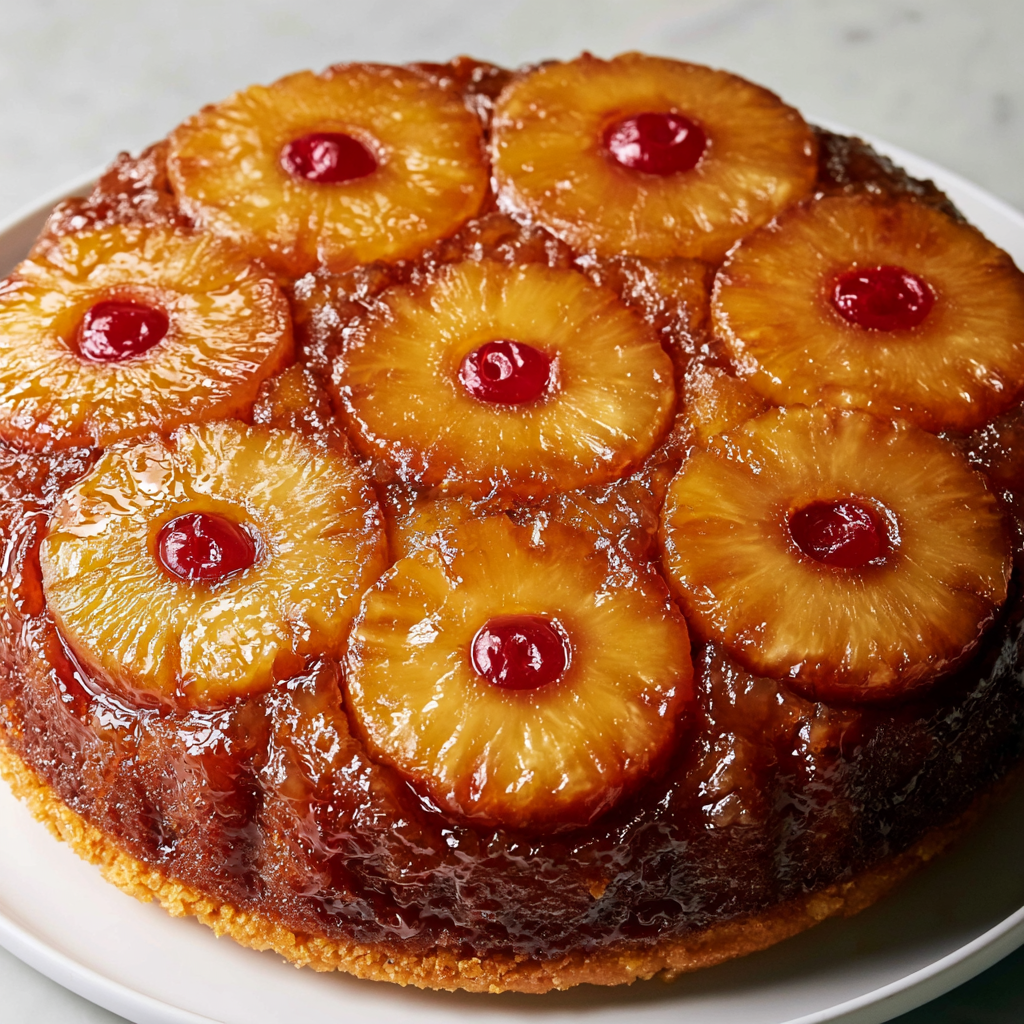
This is the kind of cake to make when you want a familiar dessert that still looks impressive on the table. The glossy pineapple topping forms directly in the skillet, so there is no need to prepare a separate glaze or decorate the finished cake.
Dark brown sugar and reserved pineapple juice cook into a rich syrup beneath the fruit. As the cake bakes, that mixture thickens further and settles into the surface, giving every slice a sweet, caramelized finish.
The buttermilk batter balances the topping with a tender, lightly tangy crumb. Serve the cake slightly warm for a comforting dessert, or prepare it earlier in the day and invert it shortly before your meal.
Pineapple Upside-Down Cake Ingredients
Pineapple rings: Canned pineapple rings create the recognizable patterned topping. Reserve the juice because it adds fruit flavor and moisture to the caramel.
Dark brown sugar: Its deeper molasses flavor produces a richer caramelized topping than granulated sugar.
Butter: Butter forms the syrup in the skillet and also gives the cake batter a tender texture.
Maraschino cherries: These are optional, but they add a traditional pop of color in the center of each pineapple ring.
All-purpose flour: This provides enough structure to support the moist fruit topping without making the cake heavy.
Light brown sugar: Used in the batter, it contributes sweetness, moisture, and a subtle caramel flavor.
Buttermilk: The acidity in buttermilk helps create a soft, delicate crumb while balancing the sweetness of the topping.
Eggs: Room-temperature eggs blend more smoothly into the creamed butter and help the cake rise evenly.
Baking powder: This gives the batter the lift it needs beneath the weight of the pineapple and caramel.
Vanilla extract: Vanilla rounds out the brown sugar and pineapple flavors without overpowering them.
Salt: A small amount sharpens the buttery caramel flavor and prevents the dessert from tasting overly sweet.

Cooking Steps
STEP 1: Preheat the oven to 350°F (175°C). Set an 8-inch cast-iron skillet over medium-high heat so it is ready for the caramel topping. Choose a serving plate that is wider than the skillet and keep it nearby for later.
STEP 2: Melt the topping butter in the warm skillet. Pour in the reserved pineapple juice and stir in the dark brown sugar. Cook the mixture for 5 to 7 minutes, stirring continuously, until it bubbles and begins to look slightly thickened and glossy.
STEP 3: Remove the skillet from the heat. Arrange the drained pineapple rings over the caramel, beginning along the outer edge and placing the remaining rings toward the center. Add a maraschino cherry to the middle of each ring when using them. Place the skillet in the oven to keep the topping warm while you mix the batter.
STEP 4: Beat the cold butter for about one minute in a stand mixer or large mixing bowl. Add the light brown sugar and continue beating until the mixture appears smooth, pale, and creamy. This step incorporates air and helps produce a finer crumb.
STEP 5: Add the room-temperature eggs one at a time, mixing well after each addition. Blend in the vanilla. In another bowl, whisk the flour, baking powder, and salt so the leavening is evenly distributed.
STEP 6: With the mixer on low speed, add the dry ingredients and buttermilk in alternating portions. Start with some of the flour mixture, follow with buttermilk, and continue until everything has been added, finishing with the dry ingredients. Stop mixing as soon as the batter becomes smooth.
STEP 7: Carefully remove the hot skillet from the oven. Spoon the batter over the arranged pineapple and gently spread it to the edges without disturbing the fruit underneath. Bake for about 45 minutes, or until the top is golden and a toothpick inserted near the center comes out clean.
STEP 8: Let the cake rest in the skillet for 10 minutes. Place the serving plate upside down over the skillet, hold both firmly with oven mitts, and invert them in one controlled motion. Lift away the skillet and return any loose fruit or caramel to the top of the cake.
How to Store and Reheat
Allow the cake to cool before covering it. It can remain at room temperature for up to one day when your kitchen is cool, but refrigeration is the better choice for longer storage because of the moist fruit topping.
Keep leftovers in an airtight container in the refrigerator for up to four days. You can also cover the serving plate tightly, although a container provides better protection against drying and refrigerator odors.
Individual slices may be frozen for up to two months. Wrap each cooled slice in plastic wrap, then place the portions in a freezer-safe container. Thaw them overnight in the refrigerator before reheating.
For a warm serving, microwave one slice for approximately 15 to 20 seconds. You can also place several slices in a covered baking dish and warm them at 300°F (150°C) until heated through. Avoid overheating, which can make the cake rubbery and cause the topping to become excessively sticky.
Can I use fresh pineapple instead of canned?
Fresh pineapple can be used, but canned rings are more reliable because they are evenly sized and already softened. Fresh pineapple should be sliced thinly and consistently. Since it does not provide reserved syrup, replace the canned juice with pineapple juice or a small amount of water.
Why did the cake stick to the skillet?
The cake may stick when it cools too long before inversion or when the caramel becomes overly thick. Let it rest for approximately 10 minutes, then invert it while the topping is still warm. Carefully loosen the outer edge with a thin knife when necessary.

How do I know when the caramel is ready?
The butter, brown sugar, and pineapple juice should reach a steady boil and begin to coat the spoon lightly. It does not need to become extremely thick on the stovetop because it continues cooking in the oven. Removing it too late can produce a hard or bitter topping.
Can this cake be made ahead?
You can bake and invert the cake several hours before serving. Keep it covered at room temperature once it has cooled, or refrigerate it for longer storage. For the freshest appearance, avoid making it more than one day ahead because the pineapple topping gradually releases moisture.
What if the cake browns before the center is done?
Loosely place a sheet of foil over the skillet during the final 10 minutes of baking. Do not press the foil against the cake. The cover slows surface browning while allowing the center to finish baking.
Pro Tips for Cast-Iron Pineapple Cake
- Beat the cold butter for a full minute before adding the light brown sugar. This softens it gradually while incorporating air for a lighter, more delicate cake.
- Mix the batter only until the final streaks of flour disappear. Excess mixing develops too much gluten and can make the crumb firm rather than tender.
- Invert the cake after exactly 10 minutes of cooling. Turning it out immediately can make the syrup run, while waiting too long may cause the caramel to adhere to the skillet.
Serving Ideas for Pineapple Upside-Down Cake
Vanilla ice cream: A scoop of cold vanilla ice cream melts gently against a warm slice and balances the caramelized topping.
Lightly whipped cream: Unsweetened or mildly sweetened whipped cream provides a soft, creamy contrast without making the dessert too rich.
Fresh berries: Strawberries, raspberries, or blueberries add a bright, slightly tart element alongside the buttery pineapple cake.
This cast-iron dessert is especially appealing when brought to the table whole, with the golden pineapple pattern visible on top. Cut it with a sharp knife and use a thin cake server to lift each slice without disturbing the caramelized fruit.
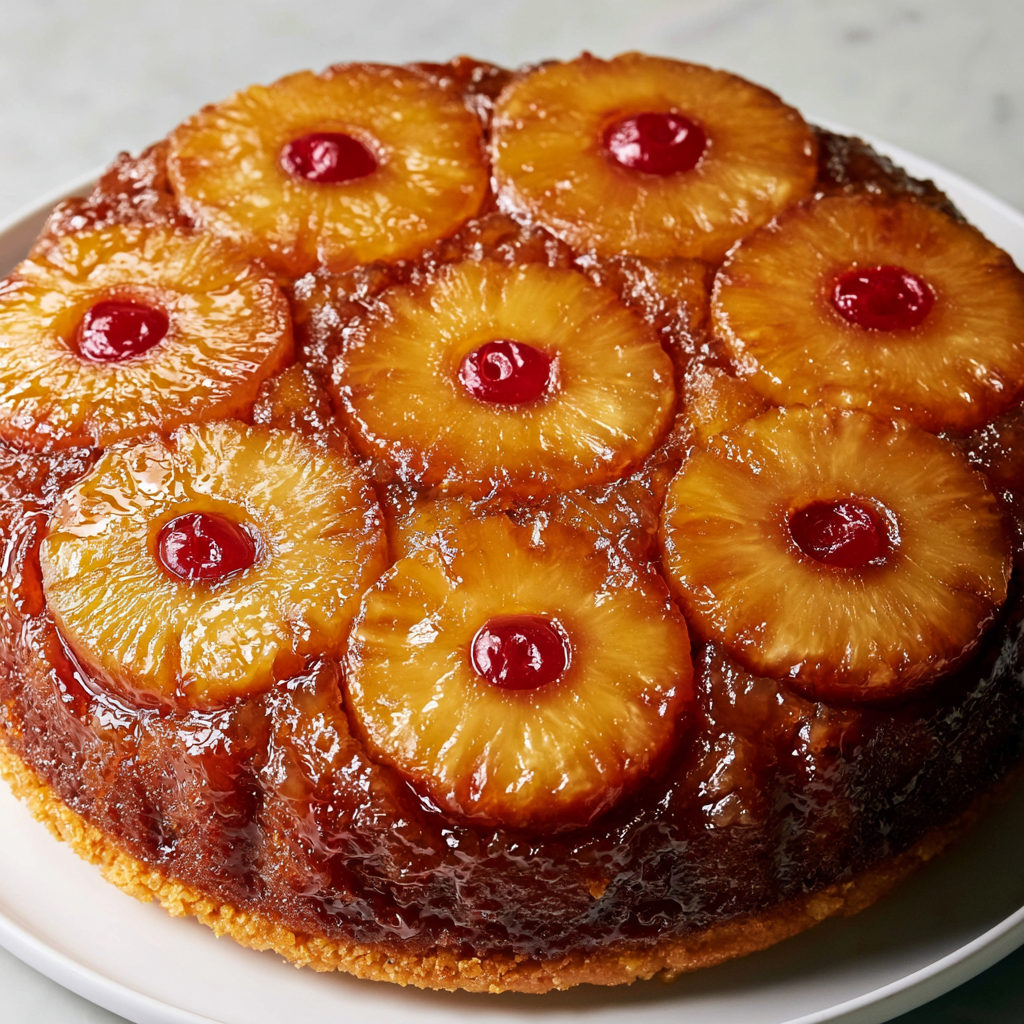
Pineapple Upside-Down Cake in a Cast-Iron Skillet
Ingredients
For the Pineapple Topping
- ½ cup firmly packed dark brown sugar preferably Golden Barrel
- 4 tablespoons butter
- Maraschino cherries optional
- 1 can pineapple rings 18–20 ounces, with the juice reserved
For the Cake Batter
- 1 cup buttermilk
- 2 large eggs brought to room temperature
- 1½ teaspoons baking powder
- 4 tablespoons cold butter
- ½ teaspoon salt
- 1 teaspoon pure vanilla extract
- 1½ cups all-purpose flour
- 1 cup packed light brown sugar preferably Golden Barrel
Instructions
- Preheat the oven to 350°F (175°C). Place an 8-inch cast-iron skillet over medium-high heat.
- Add 4 tablespoons of butter to the heated skillet. Pour in the reserved pineapple juice, then stir in the dark brown sugar. Cook while stirring continuously until the mixture reaches a boil and begins to thicken, approximately 5–7 minutes.
- Remove the skillet from the heat. Carefully position the pineapple rings in the thickened syrup, beginning around the outside edge and working toward the center. Place a maraschino cherry inside each ring, if using.
- Transfer the skillet to the preheated oven while the cake batter is being prepared.
- Place the cold butter in the bowl of a stand mixer or a large mixing bowl. Beat for approximately 1 minute, then add the light brown sugar. Continue mixing until the combination becomes pale, smooth, and creamy.
- Beat in the eggs individually, allowing each one to blend fully before adding the next. Add the vanilla extract and mix until evenly incorporated.
- In a separate bowl, whisk together the all-purpose flour, baking powder, and salt until uniformly distributed.
- With the mixer operating on low speed, alternately add the flour mixture and buttermilk to the creamed butter mixture. Begin and finish with the dry ingredients. Mix only until the batter comes together to prevent the cake from becoming dense.
- Carefully remove the hot skillet from the oven. Spoon or pour the prepared batter evenly over the pineapple rings and syrup. Gently spread the surface so the fruit is fully covered.
- Return the skillet to the oven and bake for approximately 45 minutes. The cake is ready when the surface is golden and a toothpick inserted near the center comes out clean.
- Remove the skillet from the oven and allow the cake to rest for 10 minutes.
- Position a serving plate or platter wider than the skillet over its opening. Using oven protection, firmly hold the plate and skillet together, then turn them over in one swift, careful motion. Lift away the skillet.
- Should any pineapple rings or caramelized syrup remain in the skillet, carefully transfer them back onto the surface of the cake.
Notes
Pure vanilla extract provides the fullest flavor.
Room-temperature eggs blend more evenly into the butter mixture.
Avoid excessive mixing after adding the flour, as overworking the batter may reduce tenderness.
When the cake begins browning too quickly, loosely cover the skillet with foil during the final 10 minutes of baking.
Resting the cake for 10 minutes before inversion helps the topping remain in place rather than running off the surface.