
Fig Bars layer a jammy fresh-fig filling between a buttery oat base and golden crumble topping. They are simple to prepare, slice cleanly after cooling, and make a dependable dessert for gatherings, lunchboxes, or afternoon coffee.
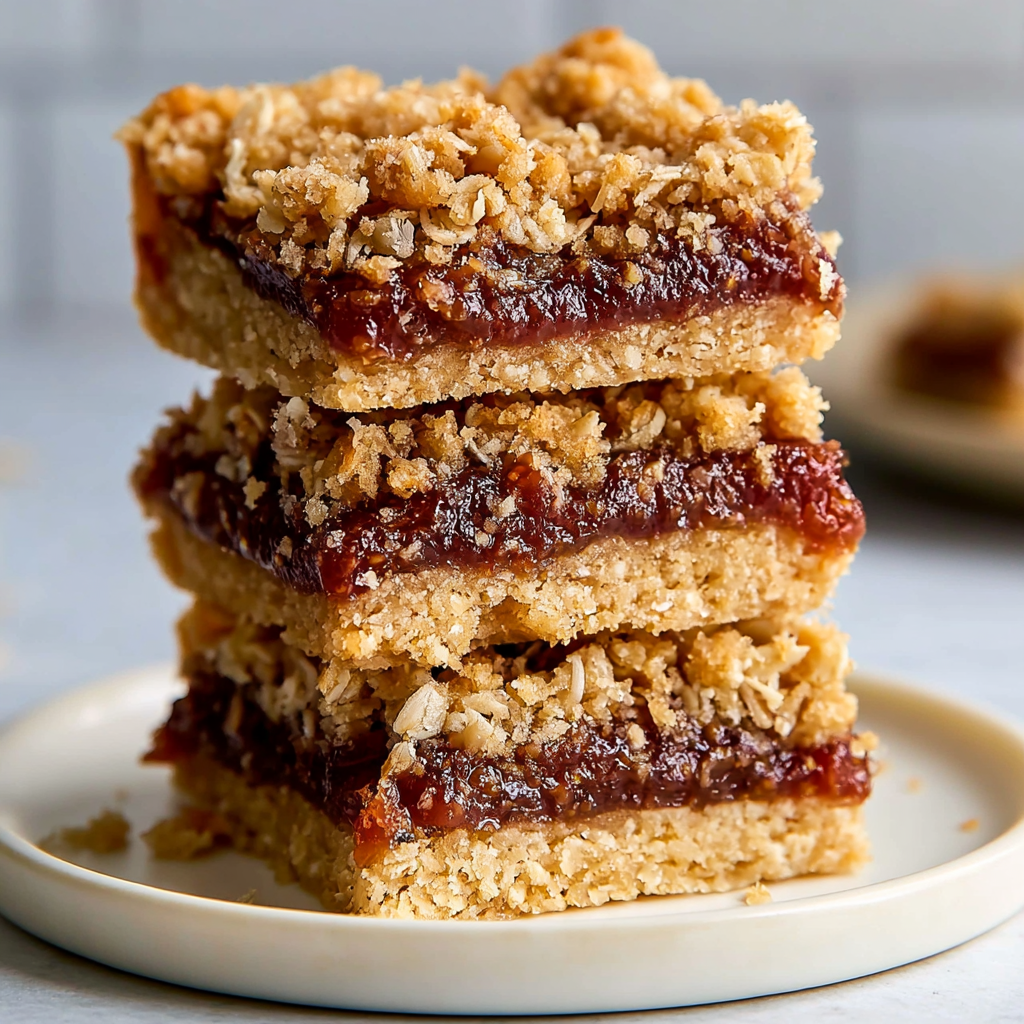
These homemade bars are especially useful when you have a generous supply of ripe figs and want something more substantial than jam. Slowly simmering the fruit concentrates its natural sweetness and creates a soft filling that holds its shape between the two oat layers.
The buttery crumble mixture does double duty as both the crust and topping, which keeps the preparation manageable. Pressing most of it firmly into the pan creates a sturdy base, while the reserved portion bakes into crisp, golden clusters over the fruit.
You can leave the filling slightly chunky for a rustic finish or blend it until smooth. Either way, let the finished slab cool completely before cutting. That cooling time allows the fig layer to settle and helps you produce neat, bakery-style portions.
Fresh Fig Bar Ingredients
Fresh figs: About 24 small or medium figs form the naturally sweet, fruit-forward center. Quartering them helps the fruit soften evenly while it simmers.
Brown sugar: Used in both the filling and oat mixture, brown sugar adds sweetness along with a subtle caramel flavor.
Fresh lemon peel: A tablespoon of finely grated peel brightens the figs and balances their concentrated sweetness.
Vanilla extract: Vanilla rounds out both the fruit filling and the buttery crumble without overpowering the fresh figs.
Kosher salt: A small amount in the filling sharpens the fruit flavor and prevents the mixture from tasting flat.
Old-fashioned rolled oats: The oats give the crust and topping their hearty texture. Old-fashioned oats work better than instant oats because they retain more structure during baking.
All-purpose flour: Flour binds the melted butter, oats, and sugar into a firm mixture that can function as both a base and a crumble topping.
Unsalted butter: Melted butter evenly coats the dry ingredients and helps the crust bake into a rich, crisp layer.
Baking powder: A modest amount keeps the oat mixture from becoming overly dense or hard.
Salt: Salt in the crumble balances the brown sugar and emphasizes the buttery, toasted flavors.

Cooking Steps
STEP 1: Add the quartered fresh figs to a heavy-bottomed saucepan with the brown sugar, lemon peel, kosher salt, and vanilla. Stir everything together, then place the pan over medium heat. Cook until the figs begin releasing their juices and the liquid reaches a gentle boil.
STEP 2: Reduce the heat and simmer the fig mixture for approximately 45 minutes. Stir occasionally to prevent scorching, pressing larger pieces of fruit against the side of the pan with a wooden spoon. The filling should gradually become thick, soft, and spoonable rather than watery.
STEP 3: Remove the filling from the heat and allow it to cool. For a smooth, jam-like layer, carefully blend the cooled fruit with an immersion blender or food processor. For a more rustic texture, leave several small pieces of softened fig intact.
STEP 4: Preheat your oven to 350°F. Line a 9 × 13-inch baking pan with foil, leaving an overhang on two sides so the cooled slab can be lifted out easily. Lightly grease the foil to reduce sticking.
STEP 5: Melt the butter in a large mixing bowl. Add the oats, flour, brown sugar, baking powder, salt, and vanilla. Stir until the ingredients are evenly moistened and no dry pockets remain. The mixture should feel dense and crumbly when pressed between your fingers.
STEP 6: Reserve about 1½ cups of the oat mixture for the topping. Transfer the rest to the prepared pan and press it firmly into an even layer. The flat bottom of a measuring cup or drinking glass can help compact the crust, especially around the corners.
STEP 7: Spread the cooled fig filling evenly over the crust, taking it almost to the edges. Sprinkle the reserved oat mixture across the surface. Leave a few small spaces between the crumbs so hints of the fig layer remain visible.
STEP 8: Bake for 30 to 35 minutes, until the filling bubbles gently and the crumble topping turns golden brown. Cool completely in the pan. Use the foil handles to lift out the slab, then chill it for 30 minutes when especially clean, defined slices are desired.
Keeping Leftovers Fresh
Once the bars have cooled completely, place them in an airtight container with parchment paper between stacked layers. They can remain at room temperature for up to two days when your kitchen is cool and dry.
For longer storage, refrigerate the bars for up to five days. Chilling also makes the filling firmer, so refrigerated portions tend to hold their shape particularly well.
You can freeze the sliced bars for up to two months. Wrap each piece individually or arrange the bars in a freezer-safe container separated by parchment. Thaw them overnight in the refrigerator or leave individual portions at room temperature until softened.
These bars are enjoyable at room temperature or chilled. For a warmer, crisper serving, place them in a 300°F oven for about 8 minutes. Avoid overheating them in the microwave, which can soften the oat crust and make the filling unusually hot.
How do I know when the fig filling is thick enough?
The filling is ready when the figs are very tender and a spoon drawn across the bottom of the saucepan leaves a visible path for a moment. It should resemble thick preserves and should not release a pool of thin liquid when spooned onto a plate.
Why should the filling cool before assembly?
Cooling gives the cooked figs time to thicken and prevents the hot filling from melting the butter in the unbaked crust. A cooler, thicker filling is also easier to spread evenly without disturbing the firmly packed oat base.
Helpful Tips
- Press the bottom layer firmly and evenly. A loosely packed crust may crumble when the finished dessert is sliced or lifted from the pan.
- Toast the rolled oats briefly in a dry skillet for a deeper, nuttier flavor. Let them cool slightly before mixing them with the butter and remaining crumble ingredients.
- Wait until the slab is completely cool before cutting. For exceptionally neat edges, refrigerate it for 30 minutes and wipe the knife clean between slices.

Perfect Pairings
Vanilla ice cream: A warm or room-temperature bar with a small scoop of vanilla ice cream makes a simple plated dessert. The cold, creamy texture contrasts with the oat crumble and concentrated fig center.
Coffee or black tea: The caramel notes from the brown sugar and toasted oats pair naturally with an afternoon cup of coffee or a robust tea.
Plain or vanilla yogurt: Serve a smaller bar with thick yogurt for a lightly sweet breakfast-style plate or relaxed weekend brunch.
Can I prepare these bars ahead of time?
Yes. Bake them one day before serving and refrigerate the cooled slab without cutting it. Chilling overnight helps the layers settle, and you can slice the bars shortly before serving for cleaner edges and a fresher presentation.
Can dried figs replace fresh figs?
Dried figs are not a direct one-for-one substitute because they contain much less moisture. They would need to be chopped, rehydrated, and cooked with additional liquid. For the intended soft, fresh-fruit filling, ripe fresh figs provide the most reliable result.
Can I make the filling less smooth?
Absolutely. Skip the blender and use a wooden spoon to break up only the largest pieces while the figs simmer. Leaving a few small fruit pieces creates a rustic texture without making the filling difficult to spread or slice.
Fig Bars
Ingredients
Fresh Fig Filling
- 1 tablespoon finely grated lemon peel
- 1 teaspoon pure vanilla extract
- 24 small or medium fresh figs approximately 720 grams, quartered
- 1/4 teaspoon kosher salt
- 1/3 cup firmly packed brown sugar
Oat Crust and Crumble
- 3/4 teaspoon baking powder
- 2 teaspoons pure vanilla extract
- 2 cups old-fashioned rolled oats approximately 178 grams
- 1 cup unsalted butter melted, approximately 226 grams
- 1/2 teaspoon salt
- 1 cup packed brown sugar approximately 213 grams
- 2 cups all-purpose flour approximately 240 grams
Instructions
- Place the quartered figs in a medium, heavy-bottomed saucepan. Add the packed brown sugar, grated lemon peel, kosher salt, and vanilla extract, then stir to combine.
- Set the saucepan over medium heat. Cook until the figs begin releasing their liquid and the mixture reaches a gentle boil.
- Lower the heat and allow the fruit mixture to simmer for 45 minutes. Stir periodically, using the back of a wooden spoon to crush any particularly large pieces of fig.
- When the filling has thickened and the figs are tender, remove the saucepan from the heat and leave the mixture to cool.
- For a more uniform filling, process the cooled mixture with an immersion blender, countertop blender, or food processor. Alternatively, retain a few pieces of fruit for a chunkier, rustic consistency.
- Preheat the oven to 350°F (175°C).
- Line a 9 × 13-inch baking pan with aluminum foil, leaving enough excess foil over the sides to serve as handles when removing the baked bars. Lightly coat the foil with cooking spray.
- Place the unsalted butter in a large microwave-safe mixing bowl and melt it completely.
- Add the rolled oats, all-purpose flour, packed brown sugar, baking powder, salt, and vanilla extract to the melted butter.
- Mix until the ingredients are thoroughly incorporated and no visible patches of dry flour remain. The finished mixture should have a dense, crumbly consistency. Use clean hands to complete the mixing process when necessary.
- For a deeper oat flavor, the rolled oats may be lightly toasted in a dry skillet before they are incorporated into the crust mixture.
- Transfer the remaining oat mixture to the prepared baking pan. Press it firmly and evenly across the bottom, using your hands or the flat base of a drinking glass to create a compact crust.
- Spoon the cooled fig filling over the crust and spread it into an even layer that reaches the edges.
- Scatter the reserved oat mixture across the fig filling. Distribute the crumbs evenly while allowing small portions of the fruit layer to remain visible.
- Bake the assembled bars at 350°F (175°C) for 30–35 minutes. The bars are ready when the fig filling is bubbling and the oat topping has developed a golden-brown color.
- Allow the bars to cool completely in the baking pan.
- After cooling, grasp the overhanging foil and carefully lift the entire slab from the pan.
- Cut into individual bars and serve.