
Butter Swim Buttermilk Biscuits bake up tall, tender, and outrageously buttery—golden edges, plush middles, and no cutting or kneading required.
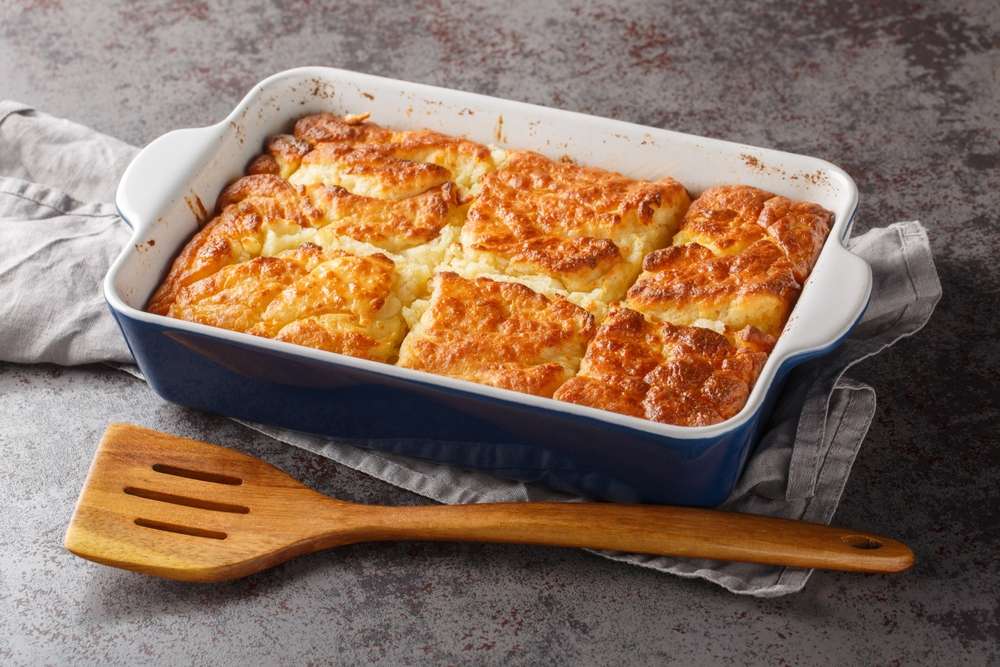
If you’ve only known cut-out biscuits, meet their breezy cousin: a pourable, shaggy dough that “swims” in melted butter, then bakes into crackly-edged squares with custardy-soft centers. The trick is simple—stir, spread, score, and let a hot oven do the magic.
Because the dough is wetter than traditional biscuits, there’s zero fussing with cold butter or laminated layers. A quick rest hydrates the flour, melted butter seasons every bite, and a few confident cuts before baking help the biscuits rise into neat, pull-apart portions.
What You Need to Make These Butter Swim Biscuits
- All-purpose flour — The sturdy base that turns the wet batter into pillowy crumb.
- Buttermilk (well-shaken) — Tangy lift and tenderness; its acidity activates the leaveners.
- Baking powder & baking soda — Team up for reliable oven spring and lightness.
- Kosher salt & a touch of sugar — Balances flavor and helps browning.
- Unsalted butter — Melted in the pan so the dough literally fries as it bakes—hello, crisp, lacy edges.
- Cooking spray — A quick insurance policy for clean release and sharp corners.
Step-by-Step: Butter Swim Buttermilk Biscuits
- Mix the batter. Whisk dry ingredients in a bowl, pour in buttermilk, and stir just until a wet, lumpy dough forms. Rest 5 minutes to hydrate.
- Melt the butter. Drop the butter into an 8–9-inch square pan and warm in a 450°F oven until fully melted.
- Spread to the edges. Scrape the dough into the buttered pan; gently nudge it to all sides. Some butter will pool on top—good!
- Score portions. Mist a knife or bench scraper and cut the raw dough into a 3×3 grid. Re-trace the lines once for clearer seams.
- Bake hot. Bake until deep golden, pulling slightly from the sides and audibly sizzling around the edges. Rotate the pan halfway for even color.
- Rest & serve. Cool at least 5 minutes so the butter absorbs. Slice along the scores and serve warm.

Can I use self-rising flour?
Yes. Skip the baking powder, baking soda, and most of the salt (self-rising contains both). Taste the baked biscuits and finish with a pinch of flaky salt if desired.
No buttermilk on hand—what’s the swap?
Combine whole milk with a tablespoon of lemon juice or white vinegar per cup, let stand 5 minutes, then use. It’s not identical, but it delivers the needed acidity.
Cast-iron or glass—does the pan matter?
Any 8–9-inch square pan works, but cast-iron browns the edges best. Glass may bake a touch slower; watch the color and extend a minute or two if needed.
How do I get taller biscuits?
Don’t overmix, let the batter rest briefly, and avoid spreading too thin—press just to the edges. A hot oven and thoroughly preheated butter are key to lift.
Can I add mix-ins?
Absolutely. Fold in a handful of sharp cheddar and chives, everything seasoning, or a spoon of honey. Keep additions modest so the batter stays pourable.
Perfect Pairings
- Honey butter or jam—the salty-sweet contrast makes the crumb sing.
- Sausage gravy or fried eggs for a full breakfast plate.
- Chili or soup—these biscuits are ace dunkers with their crisp edges.
Pro Tips for Butter Swim Buttermilk Biscuits
- Mind the mix. Stop stirring when no dry pockets remain—lumps are fine and keep the crumb tender.
- Keep it hot. Butter should be fully melted and sizzling when the dough goes in.
- Score smart. Oiled blade = clean cuts; those seams help the biscuits pull apart neatly after baking.

Storage & Reheating
Best the day they’re baked. Wrap leftovers and keep at room temperature up to 2 days. Reheat at 350°F for 5–10 minutes (loosely wrapped in foil for softness; uncovered for extra-crisp edges). For longer keeping, freeze well-wrapped squares up to 1 month; thaw at room temp and refresh briefly in the oven.
Enjoy the utter simplicity—no pastry cutter, no fuss—just buttery, sky-high biscuits you’ll want on repeat for breakfasts, soups, and everything in between.
Butter Swim Buttermilk Biscuits
Ingredients
- 2 cups well-shaken cultured buttermilk
- 8 tablespoons 113g unsalted butter
- 1 tablespoon granulated sugar
- 1 teaspoon coarse kosher salt
- 2 teaspoons aluminum-free baking powder
- Nonstick cooking spray for greasing
- 2 1/2 cups approximately 300 grams plain all-purpose flour
- 1 teaspoon baking soda
Instructions
- Set your oven to 450°F (232°C) and allow it to preheat fully.
- In a spacious mixing bowl, whisk together the flour, sugar, baking powder, baking soda, and salt until uniformly blended. Pour in the buttermilk and stir gently until a loose, somewhat lumpy dough develops. Avoid overmixing. Let the mixture sit for 5 minutes to hydrate.
- Place the butter in an 8 or 9-inch square baking dish. Insert the dish into the oven for 3 to 5 minutes, or until the butter has fully liquefied. Carefully remove the hot pan.
- Using a spatula, spoon the dough into the pan over the melted butter. Spread it out lightly until it evenly reaches all four edges. Some melted butter may rise to the surface — this is expected and contributes to the final texture.
- Lightly coat a bench scraper or large kitchen knife with cooking spray. Cut the unbaked dough into a 3×3 grid, yielding nine squares. Wipe and respray the blade as needed, making a second pass along the lines to define the sections. The dough will be fluid, and the cuts may begin to close — this is normal.
- Slide the pan into the oven and bake for 20 to 25 minutes, rotating the dish halfway through to ensure even browning. The biscuits are ready when the tops are golden and they have begun to pull away from the pan’s edges. Butter may still be bubbling along the sides.
- Remove the biscuits from the oven and allow them to rest for at least 5 minutes. This brief pause lets the butter finish soaking into the layers. Cut along the pre-scored lines and serve warm.