
Beef and Vegetable Casserole is a slow-braised, one-pot winter classic loaded with tender beef, hearty veg, and a rich red wine gravy.
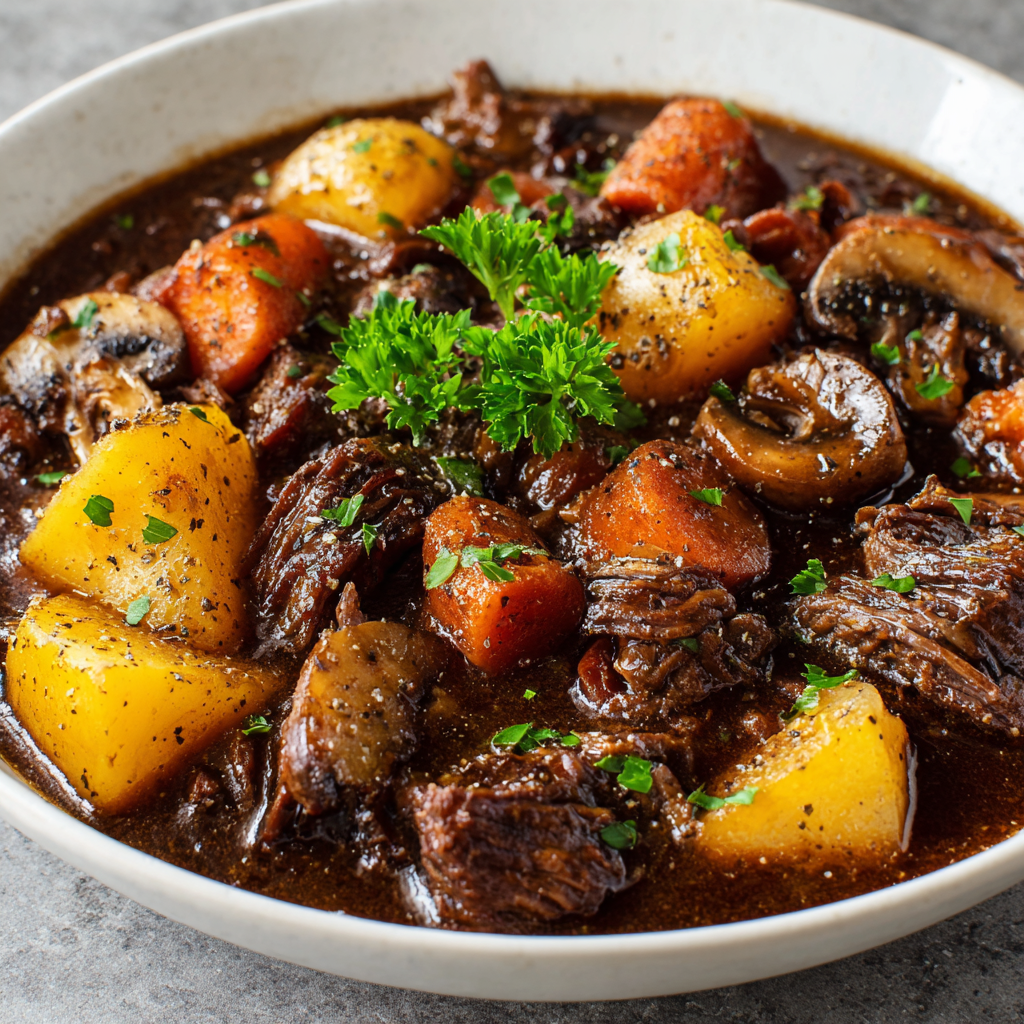
When you’re craving something cozy that practically cooks itself, this casserole delivers. The beef turns silky in the oven while the vegetables give sweetness and depth, all wrapped in a glossy, spoon-coating sauce. It’s the kind of meal you set up, slide into the oven, and let time do the delicious work.
The method is simple: sear, sauté, deglaze, then braise low and slow. Adding potatoes toward the end keeps them creamy, not blown-out, and a handful of parsley brightens everything just before serving. Make it for a laid-back Sunday or cook it a day ahead—the flavors only get better.
Beef and Vegetable Casserole Ingredients
- Beef (oyster blade or chuck) — well-marbled, forgiving cut that becomes meltingly tender with long, gentle heat.
- Plain flour — light dusting for searing; it also helps the gravy thicken naturally.
- Sea salt & black pepper — fundamental seasoning that wakes everything up.
- Brown onions — sweet, savory base that softens into the sauce.
- Carrots — add color and gentle sweetness to balance richness.
- Celery — savory backbone and classic mirepoix aroma.
- Button mushrooms — meaty texture with earthy depth.
- Potatoes — added late so they stay intact and creamy.
- Tomato purée — body, color, and a touch of acidity.
- Red wine — deglazes the pot and builds complex, beefy flavor.
- Beef stock — savory braising liquid that carries the sauce.
- Fresh thyme & bay leaves — warm, herbal perfume throughout the braise.
- Olive oil — for browning the meat and sautéing veg.
- Parsley — bright, fresh finish at the end.
- Crusty bread — for the table; every glossy drop deserves mopping.
How to Make This Beef and Vegetable Casserole
- Cut beef into chunky cubes and toss with seasoned flour.
- Heat oil in a heavy, oven-safe pot; sear beef in batches until browned. Deglaze any floury bits with a splash of wine.
- Sauté onions, carrots, and celery with thyme and bay until softened. Stir in tomato purée and mushrooms; cook briefly.
- Pour in red wine and simmer a few minutes to cook off the alcohol.
- Return beef and juices; add enough stock to cover by a few centimeters. Bring to a boil, cover, and bake at 150°C for about 3 hours, stirring occasionally.
- Add potatoes, season to taste, and continue baking with the lid slightly ajar for about 1 hour. If the sauce needs more body, uncover for an additional 20–30 minutes.
- Rest 10 minutes off heat. Stir in parsley and serve with plenty of bread.

What’s the best cut of beef for casseroles?
Look for well-marbled, hardworking cuts that reward slow cooking: oyster blade, chuck, or blade steak are all excellent. They have connective tissue that breaks down into gelatin, giving you that luxurious, silky sauce. Leaner cuts dry out, so save those for quick sears or grilling instead.
Can I make it without red wine?
Yes. Replace wine with extra beef stock and a tablespoon of balsamic vinegar or tomato paste to add the acidity wine would bring. You’ll still deglaze the pot and lift those caramelized bits, which matter more for flavor than the alcohol itself. The result stays rich and savory.
How do I thicken the sauce if it’s runny?
First, remove the lid and simmer until the liquid reduces and naturally thickens. If you want more body, whisk a teaspoon of flour into a little cold stock and stir it in, letting it bubble for a few minutes. Alternatively, mash a few potato cubes into the sauce—they thicken beautifully.
Can I cook this in a slow cooker?
You can. Brown the floured beef and sauté the aromatics on the stovetop first (that step builds flavor), then transfer everything to the slow cooker with stock and herbs. Cook on Low for 7–8 hours. Add the potatoes for the final 2 hours so they turn tender but don’t fall apart.
Can I prepare it a day ahead?
Absolutely. In fact, the casserole tastes even better the next day. Chill it in the pot once cool, then reheat gently until bubbling. As it rests, the flavors marry and the sauce thickens slightly, making it perfect for entertaining when you’d like the work done before guests arrive.
Helpful Tips
- Brown in batches so the beef sears, not steams; a deep brown crust equals deeper flavor in the finished sauce.
- Keep potatoes in cold water until needed; adding them late keeps their edges intact and centers creamy.
- Taste for salt after reducing—flavors concentrate as the liquid cooks down, so season gradually.
What to Serve with Beef and Vegetable Casserole
- Creamy mashed potatoes or soft polenta for an ultra-comforting base (skip potatoes in the pot if you plan this route).
- Garlic-butter green beans or peas, bringing fresh snap to balance the rich sauce.
- Simple green salad with mustard vinaigrette and plenty of crusty bread to catch every drop.

Storage & Reheating
Refrigerate leftovers in a covered container for 3–4 days. Reheat gently on the stovetop over medium-low with a splash of water or stock, stirring until hot and glossy. For longer keeping, freeze up to 3 months; thaw overnight in the fridge. Rewarm in a 160°C oven, covered, until piping hot, then finish with fresh parsley.
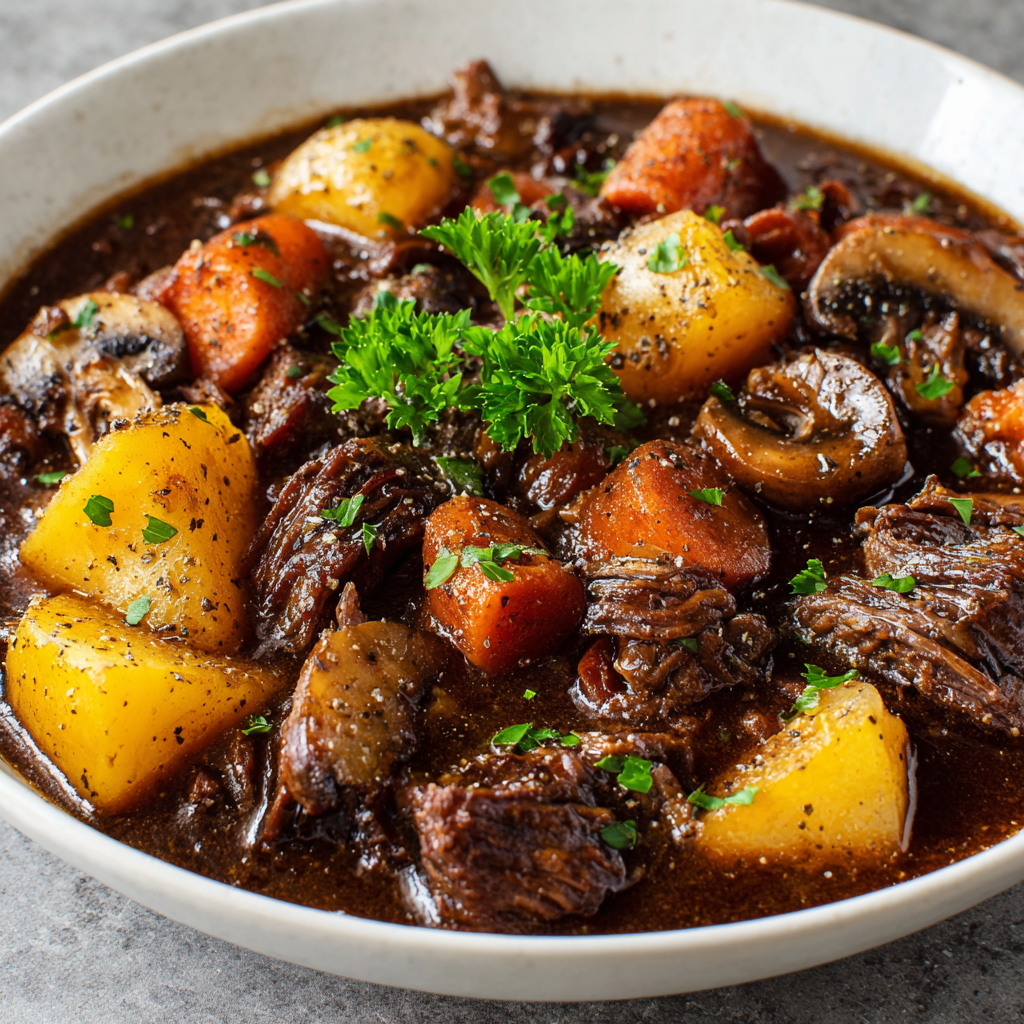
Beef and Vegetable Casserole
Ingredients
- 2 brown onions peeled and cut into large wedges
- 750 ml quality beef broth
- 4 tablespoons extra virgin olive oil
- 3 bay leaves whole
- 4 tablespoons fresh parsley roughly chopped
- 1 kilogram oyster blade or similar cut of beef trimmed and cut into 3 cm pieces
- 3 tablespoons all-purpose flour
- 2 large carrots peeled and chopped into chunks
- 500 ml dry red wine
- 3 stalks celery ends removed and diced
- 8 sprigs fresh thyme leaves only
- 250 grams button mushrooms halved or quartered
- 400 grams tomato passata
- Sea salt 1 teaspoon
- 1 teaspoon freshly ground black pepper
- 2 large potatoes peeled and roughly chopped
- Crusty bread to accompany
Instructions
- Cut the beef into large cubes, removing any visible fat. Toss the pieces in a bowl with the flour, salt, and black pepper until coated evenly. Set aside.
- Roughly chop the onions, celery, and carrots into thick, uniform chunks. Halve or quarter the mushrooms so they are similar in size to the other vegetables. Cut the potatoes into large pieces and keep them submerged in cold water until needed.
- Heat a heavy-based, oven-proof pot over high heat. Pour in a portion of the olive oil and sear the floured beef pieces in batches until browned on all sides. If the base becomes sticky, deglaze with a small splash of wine and scrape up the browned bits. Transfer the browned meat to a separate bowl and set aside.
- Preheat the oven to 150°C. Adjust the racks so the pot can sit in the center of the oven.
- Lower the heat to medium-high and add a little more olive oil to the pot. Sauté the onions, carrots, celery, thyme leaves, and bay leaves for around 5 minutes, stirring occasionally, until the onions begin to soften. Stir in the tomato passata and mushrooms, cooking for another 2–3 minutes to combine.
- Pour in the red wine, bring to a simmer, and let it bubble for 2–3 minutes to allow the alcohol to evaporate. Return the beef and any juices to the pot, season generously, and add the beef broth. Ensure the contents are covered by about 3–4 cm of liquid. Bring to a boil, cover with a lid, and place in the oven.
- Let the casserole cook for 3 hours, stirring once per hour.
- After 3 hours, remove the pot from the oven and stir in the drained potatoes. Taste and adjust seasoning if needed. Return the pot to the oven with the lid slightly ajar and cook for another hour, or until the potatoes are tender and the sauce has thickened. If a thicker consistency is desired, remove the lid completely and cook for an additional 30 minutes, stirring occasionally.
- Once done, allow the casserole to rest for 10 minutes. Mix in half of the chopped parsley, and ladle into bowls. Sprinkle with the remaining parsley and serve with slices of crusty bread.