
This Italian Carbonara Recipe delivers weeknight pasta that tastes like a Roman trattoria. It is silky, peppery, and intensely savory.
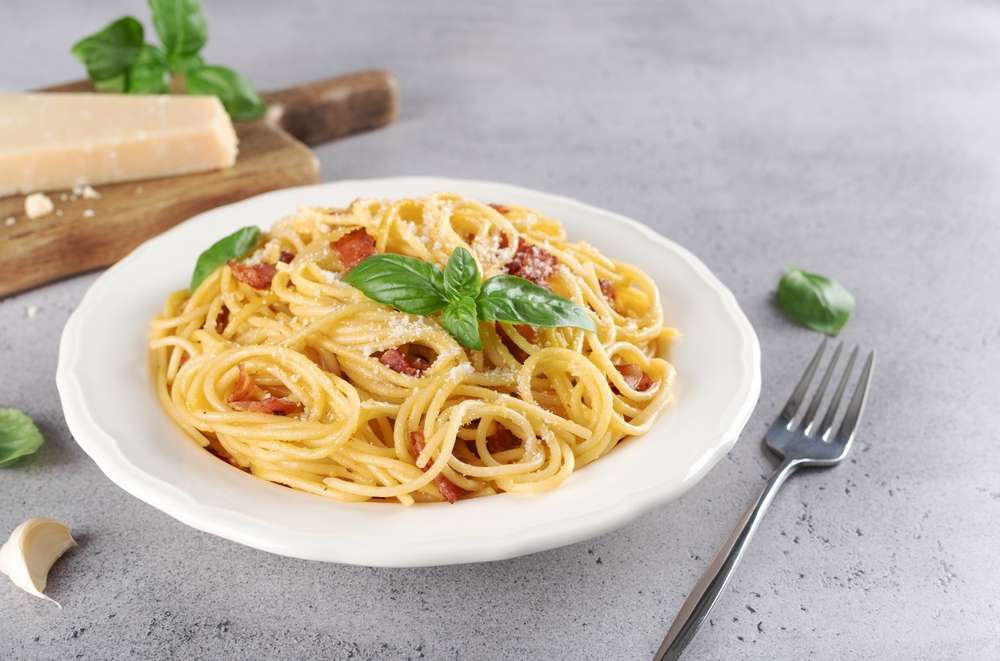
Eggs, aged cheese, and cured pork—never cream—create a glossy sauce. With steady heat and vigorous tossing, strands turn satiny and beautifully simple.
Two pans and about twenty minutes turn pantry staples into a restaurant-worthy plate. The magic is timing and gentle heat.
Render guanciale until the fat melts, then whisk eggs and cheese into a paste. Off the heat, marry everything with starchy pasta water for a glossy finish.
Each bite balances salt, fat, and the pepper’s bite.
Italian Carbonara Recipe — Core Ingredients with Purpose
- Eggs provide the emulsifying power that turns fat and cheese into a glossy, custardy sauce.
- Pecorino Romano or Parmigiano Reggiano supply a salty, nutty backbone, with Pecorino sharper and Parmigiano rounder and nuttier.
- Guanciale, pancetta, or bacon render deeply flavored fat and meaty bites that season the whole dish.
- Coarsely ground black pepper provides carbonara’s signature heat and aroma, so freshly cracked is essential.
- Spaghetti, rigatoni, or bucatini provide a starchy canvas that helps the sauce cling.
Cheese Choice Sets the Salt Level
Pecorino Romano is saltier and more piquant than Parmigiano Reggiano. Your pick sets the dish’s overall salinity and character.
For a bold, peppery carbonara, lean heavier on Pecorino. For a rounder, nuttier finish, shift toward Parmigiano.
A 50/50 blend offers balance and forgives salting missteps in the pasta water.
Because the cheese contributes significant salt, taste before adding more, especially with guanciale.
Grate ultra-fine so it dissolves quickly into the egg paste and emulsifies without clumping when it hits the warm pasta.

How to Make This Italian Carbonara Recipe (Short & Sweet)
- Boil generously salted water and cook the pasta to al dente.
- Whisk eggs with ultra-finely grated cheese and plenty of black pepper into a thick paste.
- Render guanciale from a cold pan until golden and the fat is liquid.
- Toss drained pasta in the warm pork fat, then remove the pan from heat.
- Quickly fold in the egg-cheese paste, loosening with splashes of pasta water until glossy.
- Finish with crisp guanciale and more cheese.
Residual Heat Creates a Silky Emulsion
The most reliable safeguard against scrambled eggs is removing the pan from direct heat before adding the egg-cheese paste.
Residual warmth from the pasta and rendered fat gently thickens the sauce to a luscious, nappe consistency.
Work briskly with tongs, because movement disperses heat and helps the cheese melt evenly.
If the sauce looks tight or grainy, add a tablespoon of hot pasta water and keep tossing.
If it feels thin, wait ten seconds, since carryover heat will thicken it.
Aim for glossy, not soupy, so each strand is lightly coated and never pooled.
Pro Tips & Smart Swaps
- Bring eggs to room temperature so they combine smoothly and resist curdling.
- Start guanciale in a cold pan so the fat renders slowly and stays clear, not burnt.
- Grate the cheese fresh, because anti-caking agents in pre-grated packs can block silkiness.
- Crack the pepper coarsely to deliver aroma without chalkiness.
- Choose long pasta like spaghetti or bucatini for cling, or rigatoni to trap guanciale.
Guanciale Fat Is Liquid Gold
Do not drain it away, because about two tablespoons of rendered fat should coat the pasta before the egg mixture.
That flavorful fat bridges cheese and eggs, helping the sauce emulsify into a cohesive gloss.
If you render more than you need, reserve the extra, and swirl in a teaspoon at the end to revive shine.
When using pancetta or bacon, render gently so smoky bitterness does not overshadow the cheese and pepper.
Aim for clean, porky richness rather than grease, and measure instead of dumping.
How to Store Leftovers (and Reheat Without Scrambling)
Carbonara is at its best immediately, yet leftovers can still be lovely.
Cool quickly, then refrigerate in a shallow, airtight container for up to two days.
Reheat gently by placing the pasta in a skillet with a small splash of water over low heat. Toss until loosened and warmed through.
Take the pan off the heat, then enrich with a teaspoon of reserved guanciale fat or a drizzle of extra-virgin olive oil. Add a little grated cheese to restore sheen.
Gentle Reheating Restores Creaminess
Low heat and small additions are your allies.
A tablespoon or two of water loosens the chilled starch and prevents the eggs from tightening.
Once the strands are warm, remove the pan from the burner, then add fat and cheese for gloss without splitting.
Avoid microwaving on high; if you must, use 50% power in short bursts and stir between intervals so the eggs warm evenly.
Finish with freshly cracked pepper to revive aroma that fades in the fridge.
Frequently Asked Questions
Why doesn’t authentic carbonara use cream?
The sauce is a classic emulsion of eggs, aged cheese, and pork fat. Heat control and starchy pasta water create creaminess, while cream mutes cheese and pepper and shifts the dish from its Roman profile.
Whole eggs or yolks only?
Whole eggs are traditional and easiest, delivering body and sheen without fuss. Extra yolks make the sauce richer and thicker; reduce cheese slightly and add pasta water gradually to keep it glossy, not pasty.
What pasta shape works best?
Spaghetti is the archetype for even coating and twirlability. Bucatini offers a chewier bite, while rigatoni’s ridges and tunnels trap guanciale; bronze-cut pasta clings better to the sauce.
How do I scale for two or a crowd?
Maintain the same ratios: roughly one large egg and about ½ cup finely grated aged cheese per four ounces of pasta. Adjust salt in the water based on your cheese mix, and emulsify off heat in batches so residual warmth stays manageable and the sauce remains silky.
Italian Carbonara Recipe
Ingredients
- 1 lb pasta of choice
- 4 eggs at room temperature
- 2 cups finely grated Parmigiano-Reggiano or Pecorino Romano or a combination
- 1 lb guanciale pancetta, or thick-cut bacon, cut into ¼-inch by ⅓-inch pieces
- Coarsely ground black pepper to taste
Instructions
- Bring a large pot of water to a vigorous boil. Generously salt the water—approximately 2 tablespoons for every 500 grams of pasta. The water should have the salinity of the sea.
- In a mixing bowl, beat the eggs until uniformly combined. Fold in the grated cheese and an assertive amount of freshly ground black pepper. The mixture should be thick and cohesive. Set aside.
- Place the guanciale in a cold skillet and set the heat to medium. Allow the fat to render slowly, cooking until the meat is golden and crisp at the edges, about 5 to 7 minutes. Do not allow it to become overly crisp. Remove from heat, transfer the guanciale to a plate using a slotted spoon, and retain approximately 2 tablespoons of the rendered fat in the pan.
- Cook the pasta in the boiling water until just al dente, following the timing on the package. Reserve ½ cup of the starchy cooking water before draining the pasta.
- Add the hot, drained pasta to the pan containing the reserved pork fat. Toss to evenly coat the noodles. Take the pan completely off the heat to avoid curdling the eggs.
- Gradually add the egg and cheese mixture to the pasta, stirring vigorously or tossing with tongs to form a glossy, emulsified sauce. Incorporate a small amount of the reserved pasta water as needed to loosen and bind the sauce properly.
- Fold in the crisped guanciale, reserving a few pieces for garnish. Serve immediately, topped with additional Pecorino Romano and a final crack of black pepper.
Notes
- Opt for guanciale over pancetta or bacon whenever possible; its higher fat content and nuanced flavor yield a more authentic and luxurious result.
- Use room temperature eggs to ensure a smoother incorporation into the sauce.
- Always remove the pan from heat before introducing the egg mixture to prevent scrambling.
- Vigorously tossing the pasta with the sauce creates the signature creamy texture of carbonara.
- Reserved pasta water is essential—use it sparingly to adjust the consistency of the sauce.
- Freshly cracked black pepper is not merely seasoning; it’s a fundamental flavor element.
- Serve immediately for the best texture and taste—carbonara is best enjoyed fresh from the pan.